
End-to-End Process Control from Seed to Shipment

The Thickening Innovator: Understanding the Power of Blown Castor Oil

Introduction:

While most oils thin with heat, Blown Castor Oil defies this norm. Also known as Oxidized Castor Oil or Polymerized Castor Oil, this specialty derivative undergoes a unique process that significantly alters its viscosity and other physical properties, making it invaluable across a range of industrial applications. By introducing oxygen at elevated temperatures, the oil’s molecules link together, creating a thicker, more stable, and more reactive product. What makes blown castor oil a preferred choice for enhancing viscosity, flexibility, and film formation? Let’s explore the science behind this intriguing transformation.

What is Blown Castor Oil?

Blown Castor Oil is produced by blowing air (oxygen) through natural castor oil at elevated temperatures. This controlled oxidation and polymerization process causes the fatty acid chains to cross-link and polymerize, leading to a substantial increase in viscosity, specific gravity, and iodine value reduction. Depending on the extent of blowing, various grades with different viscosities can be achieved. The resulting oil is highly polar, non-drying, and exhibits enhanced solvency, flexibility, and compatibility compared to raw castor oil. It is typically a viscous, pale yellow to amber liquid.

Key Characteristics and Industrial Advantages:

  • Significantly Increased Viscosity: This is its most defining feature. Blown castor oil offers a controllable, high viscosity, making it an excellent thickener for various formulations.
  • Enhanced Polarity and Solvency: The oxidation process increases its polarity, improving its solvency for resins, polymers, and other hydrophobic materials.
  • Improved Flexibility and Adhesion: When incorporated into films and coatings, it imparts superior flexibility, elasticity, and adhesion properties, reducing brittleness.
  • Good Wettability and Dispersing Properties: Helps in wetting pigments and dispersing solids, leading to more uniform and stable formulations.
  • Excellent Pigment Grinding Aid: Its high viscosity and polarity make it an effective grinding vehicle for pigments in paints and inks.
  • Non-Drying Film Former: Despite the “oxidation” in its production, blown castor oil itself is non-drying and forms flexible, non-tacky films.
  • Compatibility: Enhanced compatibility with a wide range of resins, solvents, and polymers.
  • Bio-based Origin: Derived from renewable castor oil, offering a sustainable option for formulators.

Diverse Applications of Blown Castor Oil:

The unique properties of blown castor oil make it invaluable across a wide range of industries:

  • Paints, Coatings, and Inks: Used as a rheology modifier, plasticizer, wetting agent, and pigment dispersant. It improves flow properties, enhances gloss, increases flexibility of films, and prevents settling. Especially valuable in printing inks, industrial coatings, and varnishes.
  • Adhesives and Sealants: Enhances flexibility, adhesion, and tack in various adhesive formulations, including pressure-sensitive adhesives.
  • Plasticizers for Polymers: Incorporated into various polymers (e.g., PVC, polyurethanes) to impart flexibility and reduce brittleness.
  • Lubricants and Greases: Can be used in specialty lubricants, especially where high viscosity and good film strength are required.
  • Putties and Caulks: Contributes to workability, flexibility, and adhesion in construction materials.
  • Sealants and Fillers: Enhances the consistency and performance of these materials.
  • Chemical Intermediates: Used in the synthesis of specific derivatives where high molecular weight or increased polarity is desired.

Why Choose Our Blown Castor Oil?

We supply high-quality Blown Castor Oil, carefully processed to achieve specific viscosity grades and ensure consistent performance. Our commitment to quality provides a reliable source of this unique derivative, empowering your formulations with enhanced flexibility, solvency, and rheological control. Partner with us for innovative bio-based solutions.

Conclusion:

Blown Castor Oil is a testament to the versatility of natural resources, transformed through controlled oxidation into a highly functional specialty chemical. Its unique ability to provide stable viscosity, enhance flexibility, and improve film formation makes it an indispensable ingredient for formulators in coatings, adhesives, and numerous other industrial applications. Embrace the innovative thickening power of blown castor oil in your next product development.


Relevant Keywords for Blown Castor Oil:


Primary Keywords:

  • Blown Castor Oil
  • Oxidized Castor Oil
  • Polymerized Castor Oil
  • High Viscosity Castor Oil
  • Blown Castor Oil supplier

Secondary Keywords:

  • Castor oil derivative
  • Rheology modifier
  • Plasticizer castor oil
  • Paint additive blown oil
  • Ink ingredient blown oil
  • Adhesive additive
  • Sealant ingredient
  • Flexibility enhancer
  • Pigment dispersant
  • Non-drying oil
  • Bio-based plasticizer
  • Industrial castor oil
  • Oxidative polymerization

Long-Tail Keywords/Phrases:

  • Uses of Blown Castor Oil in paints and coatings
  • Benefits of oxidized castor oil for flexibility
  • How blown castor oil increases viscosity
  • High quality blown castor oil for adhesives
  • Blown castor oil as a pigment grinding aid
  • Suppliers of polymerized castor oil
  • Blown castor oil grades and applications
  • Enhanced solvency with blown castor oil
The Original Green Surfactant: Rediscovering Sulphated Castor Oil (TRO)

Introduction:

Before the advent of many synthetic chemicals, nature provided powerful solutions. Sulphated Castor Oil, commonly known as Turkey Red Oil (TRO), is a testament to this, being one of the first truly water-soluble oils. Historically revered for its pioneering role in textile dyeing, TRO continues to be a highly effective anionic surfactant, emulsifier, and wetting agent across a surprisingly wide range of modern applications. What is the legacy of this “original green surfactant,” and why does its unique chemistry ensure its continued relevance in today’s industrial landscape? Let’s delve into the rich history and enduring utility of Sulphated Castor Oil.

What is Sulphated Castor Oil (TRO)?

Sulphated Castor Oil (Turkey Red Oil or TRO) is produced by reacting castor oil with sulphuric acid. This process introduces sulphate groups onto the hydroxyl groups of the ricinoleic acid in castor oil, transforming the oil into an anionic surfactant. The presence of these polar sulphate groups makes TRO completely water-soluble or highly dispersible, a significant departure from raw castor oil. It is typically supplied as a viscous liquid, ranging from yellow to amber-red, and is known for its excellent wetting, emulsifying, and dispersing properties, even in hard water.

Key Characteristics and Functional Advantages:

  • Exceptional Water Solubility/Dispersibility: This is its defining feature, allowing it to mix seamlessly with water-based systems, unlike natural oils.
  • Anionic Surfactant: As an anionic (negatively charged) surfactant, it reduces the surface tension of water, allowing it to wet surfaces more effectively and penetrate materials.
  • Powerful Emulsifier and Dispersing Agent: TRO efficiently emulsifies oils and fats into water and disperses pigments and solids, leading to stable formulations.
  • Good Wetting Agent: Its ability to lower surface tension makes it an excellent wetting agent, crucial in applications like dyeing and cleaning.
  • High Foaming Properties (in some grades): Depending on its concentration and formulation, it can contribute to foam generation.
  • Mild and Non-Irritating: For certain grades, its mildness allows for use in personal care products.
  • Biodegradable: Derived from natural castor oil, TRO is generally biodegradable, offering an environmentally conscious choice.
  • Stable in Hard Water: It performs well even in the presence of hard water, making it a robust choice for industrial processes.

Diverse Applications of Sulphated Castor Oil (TRO):

TRO’s versatility spans numerous industries, owing to its powerful surfactant properties:

  • Textile Industry: Historically, it revolutionized dyeing (especially with Turkey Red dye, hence the name) and remains a key agent for scouring, mercerizing, dyeing, printing, and finishing, providing excellent wetting, leveling, and dispersing properties. It acts as a lubricant and softener.
  • Soaps and Detergents: Used as an emulsifier and cleansing agent in industrial and household cleaning formulations.
  • Cosmetics and Personal Care: Incorporated into bath oils (allowing essential oils to mix with water), hair care products, facial cleansers, and body washes as an emulsifier, solubilizer, and mild surfactant.
  • Leather Tanning: Utilized as a fatliquoring agent, lubricating and softening leather.
  • Paper Industry: Used as a wetting and dispersing agent in various paper manufacturing processes.
  • Paints and Inks: Acts as a dispersing agent for pigments, improving color strength and stability.
  • Lubricants and Metalworking Fluids: Can be an ingredient in some soluble cutting oils and lubricants.

Why Choose Our Sulphated Castor Oil (TRO)?

We provide high-quality Sulphated Castor Oil, offering consistent performance as a powerful anionic surfactant. Our TRO is meticulously processed to meet the demanding requirements of the textile, cosmetic, and industrial sectors, ensuring excellent wetting, emulsifying, and dispersing capabilities. Partner with us for a reliable supply of this historic yet ever-relevant specialty chemical.

Conclusion:

Sulphated Castor Oil (Turkey Red Oil) stands as a testament to early chemical innovation, transforming a natural oil into a highly effective water-soluble agent. Its enduring legacy in the textile industry and its continued relevance across a diverse range of modern applications underscore its unique value as an anionic surfactant. For formulators seeking powerful, versatile, and biodegradable solutions, TRO remains an outstanding choice.


Relevant Keywords for Sulphated Castor Oil (TRO):


Primary Keywords:

  • Sulphated Castor Oil
  • Turkey Red Oil
  • TRO Oil
  • Anionic Surfactant Castor Oil
  • Water Soluble Castor Oil

Secondary Keywords:

  • Textile processing oil
  • Dyeing assistant
  • Emulsifier TRO
  • Wetting agent TRO
  • Dispersing agent TRO
  • Castor oil derivative
  • Fatliquoring agent
  • Soap ingredient
  • Cosmetic surfactant
  • Biodegradable surfactant
  • Sulphated ricinoleic acid
  • Hard water stable surfactant
  • Scouring agent textile

Long-Tail Keywords/Phrases:

  • Uses of Sulphated Castor Oil in textile dyeing
  • Benefits of Turkey Red Oil in cosmetics
  • High quality TRO for industrial cleaning
  • How Sulphated Castor Oil acts as an emulsifier
  • Historical applications of Turkey Red Oil
  • Suppliers of anionic surfactant TRO
  • Sulphated castor oil for bath oils
  • Properties of water soluble castor oil

The Universal Emulsifier: Unlocking the Power of Ethoxylated Castor Oil (Cremophor/PEG)

Introduction:

In the world of formulations, some ingredients are unsung heroes, silently enabling the perfect blend of disparate components. Ethoxylated Castor Oil (often known by trade names like Cremophor or identified as PEG Castor Oil) is one such indispensable specialty product. This versatile non-ionic surfactant is a cornerstone in everything from pharmaceuticals and cosmetics to industrial applications, known for its exceptional ability to emulsify, solubilize, and stabilize. What makes this modified castor oil so crucial for creating stable and aesthetically pleasing products? Let’s explore the chemistry and widespread utility of ethoxylated castor oil.

What is Ethoxylated Castor Oil (Cremophor/PEG)?

Ethoxylated Castor Oil is a derivative of natural castor oil that has undergone a chemical process called ethoxylation. In this process, ethylene oxide is reacted with the hydroxyl groups of ricinoleic acid within the castor oil molecule, attaching polyethylene glycol (PEG) chains. The number of ethylene oxide units attached determines the specific PEG number (e.g., PEG-40 Hydrogenated Castor Oil, PEG-60 Castor Oil) and influences its hydrophilicity (water-loving properties). This modification transforms the oily, insoluble castor oil into a water-soluble or water-dispersible surfactant, making it an excellent emulsifier, solubilizer, and dispersant. Trade names like Cremophor refer to specific grades often used in pharmaceuticals.

Key Characteristics and Functional Advantages:

  • Exceptional Emulsifying Properties: Its primary function is to form stable emulsions, allowing oil and water to mix homogenically without separating. This is vital for creams, lotions, and other biphasic systems.
  • Powerful Solubilizer: Ethoxylated castor oil can effectively solubilize hydrophobic (oil-loving) substances, such as fragrances, essential oils, and active pharmaceutical ingredients, into aqueous (water-based) solutions. This is particularly important for clear liquid formulations.
  • Non-Ionic Surfactant: As a non-ionic surfactant, it is less sensitive to pH changes and hard water, making it compatible with a wide range of ingredients and applications.
  • Stabilizing Agent: It helps stabilize formulations by preventing phase separation and maintaining the integrity of emulsions over time.
  • Mild and Gentle (Cosmetic/Pharma Grades): High-purity grades are often chosen for their mildness, making them suitable for sensitive skin and internal pharmaceutical applications.
  • Versatile HLB Value: Different degrees of ethoxylation result in different Hydrophilic-Lipophilic Balance (HLB) values, allowing formulators to choose the precise grade for their specific emulsification or solubilization needs.

Diverse Applications of Ethoxylated Castor Oil (Cremophor/PEG):

The versatility of ethoxylated castor oil makes it a staple across numerous industries:

  • Pharmaceuticals: Widely used to solubilize poorly water-soluble drugs for oral, topical, and injectable formulations (e.g., Cremophor EL). It acts as an emulsifier in ointments, creams, and suspensions.
  • Cosmetics and Personal Care: An indispensable ingredient in lotions, creams, shampoos, conditioners, shower gels, liquid soaps, and perfumes. It functions as an emulsifier, solubilizer for fragrances, and mild surfactant.
  • Agrochemicals: Employed as an emulsifier and dispersant in pesticide and herbicide formulations to ensure even distribution and efficacy.
  • Textile and Leather Processing: Used as an emulsifier and wetting agent in dyeing, printing, and finishing processes.
  • Paints and Coatings: Helps in pigment dispersion and acts as an emulsifier in water-based paint systems.
  • Industrial Cleaners: Contributes to the emulsification of oils and greases in various cleaning formulations.

Why Choose Our Ethoxylated Castor Oil (Cremophor/PEG)?

We supply a range of high-quality Ethoxylated Castor Oil grades, including those recognized for pharmaceutical and cosmetic use, carefully processed to deliver superior emulsifying and solubilizing performance. Our commitment to consistent quality ensures that your formulations achieve optimal stability, clarity, and efficacy. Partner with us for a reliable supply of this essential specialty chemical.

Conclusion:

Ethoxylated Castor Oil, whether as Cremophor or a PEG Castor Oil derivative, is a truly transformative ingredient. Its remarkable ability to bridge the gap between oil and water empowers formulators to create stable, effective, and elegant products across a myriad of industries. As a universal emulsifier and solubilizer, it remains an indispensable tool for chemical innovation and product excellence.


Relevant Keywords for Ethoxylated Castor Oil (Cremophor/PEG):


Primary Keywords:

  • Ethoxylated Castor Oil
  • PEG Castor Oil
  • Cremophor (if appropriate to your specific product/branding)
  • Castor Oil Emulsifier
  • Solubilizer Castor Oil

Secondary Keywords:

  • Non-ionic surfactant
  • Polysorbate alternative
  • Cosmetic emulsifier
  • Pharmaceutical solubilizer
  • Castor oil derivative
  • Water soluble castor oil
  • PEG-40 Hydrogenated Castor Oil (if specific grade)
  • Emulsifying agent
  • Dispersing agent
  • Stabilizing agent
  • Agrochemical emulsifier
  • Textile wetting agent
  • Personal care ingredient

Long-Tail Keywords/Phrases:

  • Uses of Ethoxylated Castor Oil in pharmaceutical formulations
  • Benefits of PEG Castor Oil in cosmetics
  • How Ethoxylated Castor Oil solubilizes fragrances
  • High quality castor oil emulsifier supplier
  • Role of Cremophor in drug delivery systems
  • Formulating stable emulsions with ethoxylated castor oil
  • Non-ionic surfactant for personal care products
  • Understanding HLB value of ethoxylated castor oil

The Antimicrobial & Aromatic Builder: Exploring the Power of Undecylenic Acid

Introduction:

From the rich bounty of castor oil emerges Undecylenic Acid, a unique unsaturated fatty acid that plays a vital role in both health and industrial applications. Distinct from its saturated counterparts, undecylenic acid’s eleven-carbon chain and terminal double bond give it specific antimicrobial properties, making it a key ingredient in pharmaceutical and personal care products, as well as a versatile intermediate for fragrances and polymers. What makes this particular fatty acid so valuable, and where does its unique chemistry truly shine? Let’s delve into the distinctive world of undecylenic acid.

What is Undecylenic Acid?

Undecylenic Acid (chemically, 10-undecenoic acid) is an unsaturated fatty acid derived from the pyrolysis (thermal decomposition) of ricinoleic acid, which is the primary fatty acid in castor oil. Its structure is characterized by an 11-carbon chain with a carboxylic acid group at one end and a double bond at the other (specifically, between the 10th and 11th carbon atoms). This terminal double bond is crucial, making it highly reactive and enabling its use in polymerization reactions, while its overall structure contributes to its well-known antifungal and antimicrobial properties.

Key Characteristics and Industrial Advantages:

  • Antifungal and Antimicrobial Properties: This is perhaps its most significant characteristic. Undecylenic acid is a recognized antifungal agent, particularly effective against fungal infections of the skin.
  • Unsaturated Double Bond: The terminal double bond makes it an excellent chemical intermediate for synthesizing a variety of derivatives, including esters, amides, and polymers. It can undergo addition reactions, opening pathways to new compounds.
  • Bio-based Origin: Like other castor derivatives, undecylenic acid is derived from renewable castor oil, offering a sustainable alternative to petrochemicals.
  • Versatile Chemical Intermediate: Its bifunctional nature (carboxylic acid and double bond) allows for a wide range of chemical modifications, leading to diverse end products.
  • Low Toxicity: Generally considered safe for use in cosmetic and pharmaceutical applications at appropriate concentrations.
  • Distinctive Odor: It has a characteristic odor, which can be modified or leveraged in fragrance applications.

Diverse Applications of Undecylenic Acid:

The unique properties of undecylenic acid make it indispensable in several key industries:

  • Pharmaceuticals & Antifungal Medications: Widely used in over-the-counter and prescription topical antifungal treatments for conditions like athlete’s foot, ringworm, and other superficial fungal infections of the skin.
  • Cosmetics and Personal Care: Incorporated into deodorants (as an antimicrobial agent), anti-dandruff shampoos, foot powders, and other skin care products for its protective and cleansing properties.
  • Fragrance and Flavor Industry: Serves as a raw material for synthesizing various aroma chemicals, particularly those with musk or animalic notes, which are used in perfumes and flavorings.
  • Polymers and Resins: Can be polymerized or used to synthesize monomers for specialty polyamides (e.g., Nylon 11), polyesters, and other polymers where its unique chain length and reactivity are beneficial. These polymers find use in engineering plastics, coatings, and fibers.
  • Lubricants: Used in the synthesis of certain specialty esters for lubricants.

Why Choose Our Undecylenic Acid?

We supply high-purity Undecylenic Acid, meticulously produced from renewable castor oil to ensure optimal performance in your pharmaceutical, cosmetic, or industrial applications. Our commitment to quality provides a consistent and reliable supply of this versatile fatty acid, empowering your innovations with effective and sustainable solutions.

Conclusion:

Undecylenic Acid, with its dual functionality as an effective antimicrobial agent and a versatile chemical intermediate, stands as a prime example of the innovative power of castor derivatives. From soothing fungal infections to building advanced polymers and enhancing fragrances, its unique chemical structure makes it an invaluable asset across numerous industries. Embrace the distinctive advantages of undecylenic acid in your next product development.


Relevant Keywords for Undecylenic Acid:


Primary Keywords:

  • Undecylenic Acid
  • 10-Undecenoic Acid
  • Antifungal Fatty Acid
  • Castor Oil Derivative
  • Undecylenic Acid supplier

Secondary Keywords:

  • Antifungal agent
  • Topical antifungal
  • Athlete’s foot treatment
  • Ringworm treatment
  • Cosmetic antimicrobial
  • Fragrance intermediate
  • Polymer monomer
  • Nylon 11 precursor
  • Unsaturated fatty acid
  • Bio-based chemical
  • Castor chemical
  • Deodorant ingredient
  • Skin care active ingredient

Long-Tail Keywords/Phrases:

  • Uses of Undecylenic Acid in pharmaceutical products
  • Benefits of undecylenic acid for fungal infections
  • High purity undecylenic acid for cosmetics
  • Undecylenic acid as a precursor for nylon 11
  • Natural antifungal properties of undecylenic acid
  • Where to buy undecylenic acid
  • Chemical synthesis and applications of undecylenic acid

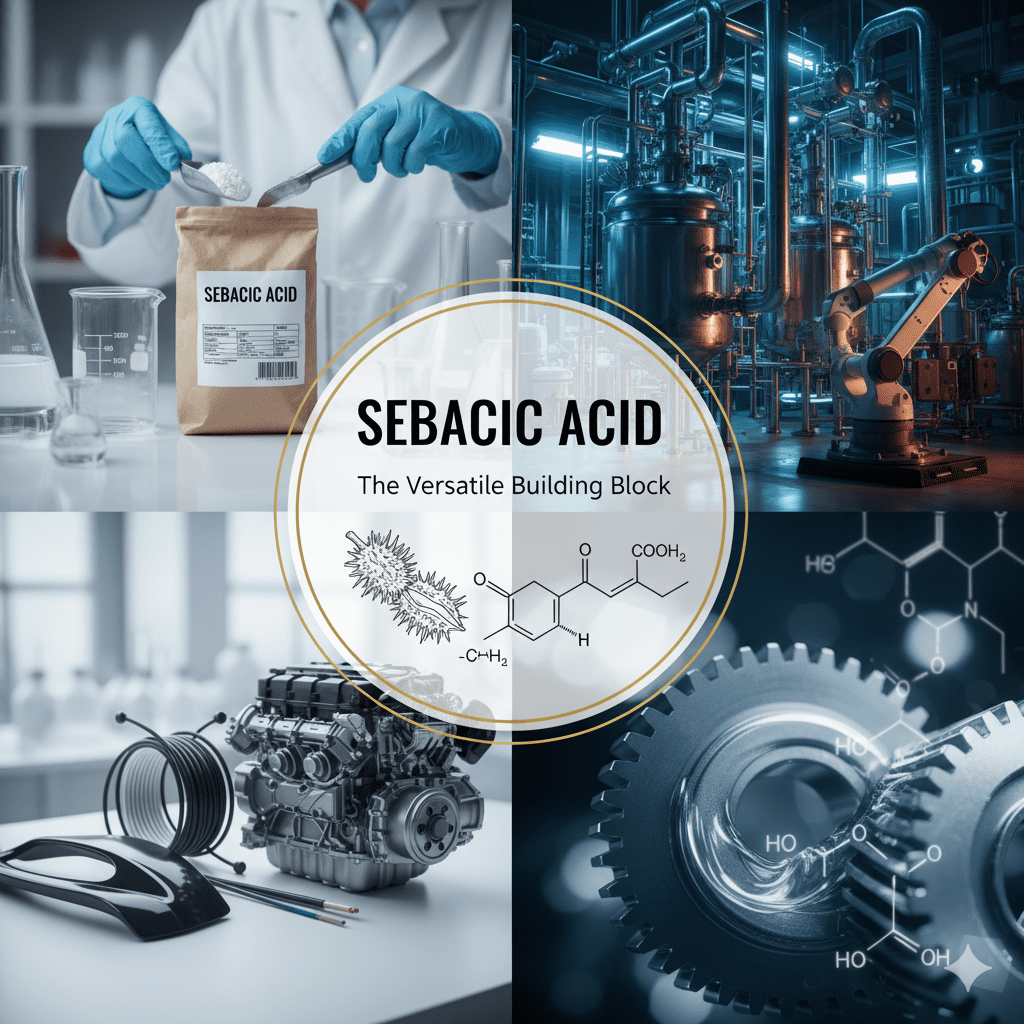
The Versatile Building Block: Unlocking the Potential of Sebacic Acid

Introduction:

While many focus on the direct applications of castor oil, one of its most valuable and high-performance derivatives is Sebacic Acid. This dicarboxylic acid, a white crystalline powder, serves as a fundamental building block in the chemical industry, enabling the creation of advanced polymers, plasticizers, lubricants, and much more. Derived from renewable castor oil, sebacic acid offers a bio-based advantage in a world increasingly seeking sustainable solutions. What makes sebacic acid such a vital chemical intermediate, and where does its unique structure lead to groundbreaking innovations? Let’s explore its extensive capabilities.

What is Sebacic Acid?

Sebacic Acid (chemically, decanedioic acid) is a dicarboxylic acid with ten carbon atoms. It is primarily manufactured from castor oil through a complex process involving the cleavage of ricinoleic acid. The key characteristic of sebacic acid is its relatively long carbon chain coupled with two carboxylic acid groups at either end. This linear structure and the presence of two reactive functional groups make it exceptionally versatile for polymerization and other chemical syntheses. As a bio-based chemical, it’s a preferred choice over petroleum-derived alternatives in many applications.

Key Characteristics and Industrial Advantages:

  • Long-Chain Dicarboxylic Acid: Its 10-carbon chain provides flexibility and excellent performance characteristics in polymers, especially in polyamides and polyesters, improving properties like flexibility, low-temperature performance, and dimensional stability.
  • High Purity: Sebacic acid is typically produced to very high purity standards, which is essential for its use in demanding applications like nylons and aerospace lubricants.
  • Bio-based Origin: Derived from renewable castor oil, it offers a sustainable and eco-friendly alternative to petrochemical-based dicarboxylic acids, aligning with green chemistry initiatives.
  • Excellent Thermal Stability: Compounds and polymers derived from sebacic acid often exhibit good thermal stability.
  • Low Toxicity: It is generally considered to have low toxicity, making it suitable for applications that interact with humans or the environment.
  • Versatile Reactivity: The two carboxylic acid groups allow it to react with alcohols, amines, and other chemicals to form a wide range of esters, amides, and polymers.

Diverse Applications of Sebacic Acid:

The unique properties of sebacic acid make it a cornerstone ingredient in several high-performance industries:

  • Polyamides (Nylons): It is a critical monomer in the production of specialty nylons (e.g., Nylon 6,10; Nylon 10,10), which are valued for their superior flexibility, impact resistance, and lower water absorption compared to other nylons. These are used in engineering plastics, textiles, and automotive parts.
  • Plasticizers: Sebacic acid esters (e.g., Dibutyl Sebacate, Dioctyl Sebacate) are high-performance plasticizers, particularly for PVC, imparting excellent low-temperature flexibility, electrical properties, and resistance to extraction. They are vital in wire and cable insulation and automotive components.
  • Lubricants and Greases: It is used in the synthesis of high-performance synthetic lubricants and aviation turbine oils, offering excellent thermal stability, oxidative resistance, and viscosity properties across wide temperature ranges.
  • Polyesters and Alkyd Resins: Incorporated into polyesters and alkyd resins to improve flexibility, durability, and resistance.
  • Corrosion Inhibitors: Used in certain formulations for its anti-corrosive properties.
  • Adhesives and Sealants: Enhances flexibility and performance in specific adhesive systems.
  • Cosmetics and Perfumes: Smaller quantities can be found as an ingredient in some cosmetic formulations.

Why Choose Our Sebacic Acid?

We provide high-purity Sebacic Acid, meticulously manufactured from renewable castor oil to meet the exacting demands of various industries. Our commitment to quality ensures a consistent and reliable supply of this vital chemical building block, empowering your innovations with sustainability and superior performance.

Conclusion:

Sebacic Acid is a powerful example of how a natural resource can be transformed into a high-value chemical essential for modern technology. Its unique dicarboxylic structure, combined with its bio-based origin, positions it as a preferred ingredient for creating advanced polyamides, specialty plasticizers, and high-performance lubricants. As industries continue to seek sustainable yet superior solutions, sebacic acid will undoubtedly remain a key player in chemical innovation.


Relevant Keywords for Sebacic Acid:


Primary Keywords:

  • Sebacic Acid
  • Decanedioic Acid
  • Castor oil derivative
  • Sebacic Acid supplier
  • Bio-based Sebacic Acid

Secondary Keywords:

  • Dicarboxylic acid
  • Nylon 6,10 monomer
  • Plasticizer sebacate
  • Synthetic lubricant raw material
  • Polymer building block
  • Bio-plasticizer
  • Castor chemical
  • Renewable chemical
  • High performance polymer
  • Engineering plastics ingredient
  • Corrosion inhibitor sebacic acid

Long-Tail Keywords/Phrases:

  • Uses of Sebacic Acid in polyamide synthesis
  • Benefits of sebacic acid for synthetic lubricants
  • High purity sebacic acid for plasticizers
  • Sebacic acid applications in automotive industry
  • Sustainable dicarboxylic acid from castor oil
  • Where to buy sebacic acid
  • Chemical properties and uses of decanedioic acid
  • Sebacic acid for low temperature flexibility in polymers

The Fast-Drying Innovator: Harnessing the Power of Dehydrated Castor Oil (DCO)

The Fast-Drying Innovator: Harnessing the Power of Dehydrated Castor Oil (DCO)


Introduction:

While natural castor oil is non-drying, a clever chemical modification transforms it into Dehydrated Castor Oil (DCO), a “drying oil” that offers exceptional performance in paints, coatings, and inks. By introducing conjugated double bonds, DCO gains the ability to polymerize upon exposure to air, forming tough, durable films. This makes it a crucial bio-based alternative to petrochemical drying oils. What is the magic behind DCO’s transformation, and why is it a preferred choice for manufacturers seeking fast-drying, high-quality finishes? Let’s uncover the innovation of DCO.

What is Dehydrated Castor Oil (DCO)?

Dehydrated Castor Oil (DCO) is produced by a specialized process that removes water from the ricinoleic acid molecule within castor oil. This dehydration reaction creates new conjugated double bonds in the fatty acid chains. These conjugated double bonds are the key to DCO’s unique property: unlike natural castor oil, DCO becomes a “drying oil” – meaning it reacts with oxygen in the air to form a hard, polymeric film. This makes it structurally similar to tung oil or linseed oil but with distinct advantages in performance and color retention.

Key Characteristics and Industrial Advantages:

  • Excellent Drying Properties: The conjugated double bonds enable DCO to dry much faster than conventional drying oils, forming a tough, durable film upon oxidation.
  • Good Color Retention: DCO exhibits superior color retention and non-yellowing properties compared to many other drying oils, which is highly valued in light-colored paints and enamels.
  • High Gloss and Hardness: Films formed from DCO provide excellent gloss, hardness, and resistance to abrasion, contributing to the longevity and aesthetic appeal of coatings.
  • Flexibility and Adhesion: It imparts good flexibility and adhesion to coatings, preventing cracking and peeling over time.
  • Water Resistance: DCO-based films offer good water and alkali resistance, enhancing the protective qualities of the coatings.
  • Bio-based and Sustainable: As it’s derived from renewable castor oil, DCO offers an environmentally friendly option for formulators looking to reduce their reliance on petroleum-based products.
  • Good Chemical Resistance: DCO films demonstrate good resistance to various chemicals, making them suitable for demanding industrial environments.

Diverse Applications of Dehydrated Castor Oil (DCO):

The unique drying and film-forming properties of DCO make it indispensable, particularly in the coatings industry:

  • Paints and Enamels: A primary binder for a wide range of decorative and industrial paints, enamels, and varnishes, especially where quick drying, pale color, and good gloss are required.
  • Varnishes and Lacquers: Used in the production of fast-drying varnishes and lacquers for wood, metal, and other surfaces.
  • Inks: Improves drying time, gloss, and adhesion in printing inks.
  • Surface Coatings: Essential for various protective and decorative surface coatings, including those for appliances, automotive parts, and furniture.
  • Adhesives: Can be incorporated into certain adhesive formulations for improved film-forming and drying characteristics.
  • Chemical Intermediates: Used in the synthesis of other specialty chemicals and resins.

Why Choose Our Dehydrated Castor Oil (DCO)?

We supply high-quality Dehydrated Castor Oil, processed to deliver optimal drying performance and film characteristics. Our DCO ensures excellent color retention, hardness, and flexibility, empowering your formulations to achieve superior results. Partner with us for a reliable, bio-based solution that elevates the quality of your paints, coatings, and inks.

Conclusion:

Dehydrated Castor Oil (DCO) stands as a testament to intelligent chemical modification, transforming a humble seed oil into a high-performance drying agent. Its ability to form tough, glossy, and non-yellowing films makes it an indispensable ingredient for formulators seeking efficient, durable, and environmentally conscious solutions in the coatings and inks industries. Embrace the fast-drying innovation of DCO and bring superior finishes to your products.


Relevant Keywords for Dehydrated Castor Oil (DCO):


Primary Keywords:

  • Dehydrated Castor Oil
  • DCO Oil
  • Drying Castor Oil
  • DCO supplier
  • Castor oil drying properties

Secondary Keywords:

  • Alkyd resins DCO
  • Paint binder DCO
  • Coating additive DCO
  • Ink ingredient DCO
  • Bio-based drying oil
  • Non-yellowing oil
  • Fast drying oil
  • Conjugated double bonds
  • Renewable drying oil
  • Industrial DCO
  • DCO for varnishes
  • High gloss DCO
  • Castor oil derivative DCO

Long-Tail Keywords/Phrases:

  • Benefits of Dehydrated Castor Oil in paints and coatings
  • How DCO improves drying time in inks
  • High performance DCO for industrial enamels
  • Comparing DCO with other drying oils
  • Where to buy Dehydrated Castor Oil
  • DCO as a sustainable alternative in coatings
  • Chemical properties of dehydrated castor oil
  • Formulating with DCO for enhanced gloss and hardness

The Versatile Fatty Acid: Unleashing the Potential of 12-Hydroxy Stearic Acid (12-HSA) Flakes

Introduction:

While its parent, castor oil, is renowned for its diverse applications, one of its most valuable direct derivatives is 12-Hydroxy Stearic Acid (12-HSA). This unique hydroxylated fatty acid, often supplied in convenient flake form, plays a pivotal role in creating products with enhanced stability, viscosity, and performance. Known for its gelling and thickening capabilities, 12-HSA is a fundamental building block in various industrial formulations. What makes 12-HSA so important, and where does its specific chemistry make a significant impact? Let’s explore.

What is 12-Hydroxy Stearic Acid (12-HSA) Flakes?

12-Hydroxy Stearic Acid (12-HSA) is a saturated fatty acid derived from hydrogenated castor oil. The “12-Hydroxy” refers to the hydroxyl group (-OH) located on the 12th carbon atom of the stearic acid chain, which is the key structural feature that imparts its unique properties. It is a waxy, white solid, typically supplied in flake form to facilitate easier handling, storage, and dispersion in manufacturing processes. Its distinguishing characteristic is the hydroxyl group, which allows it to participate in esterification and other reactions, forming a wide range of derivatives, and enables its powerful gelling capabilities.

Key Characteristics and Industrial Advantages:

  • Hydroxyl Group Reactivity: The presence of the hydroxyl group at the 12th position makes 12-HSA highly reactive, allowing it to be easily esterified or polymerized. This is critical for synthesizing various resins, polymers, and other derivatives.
  • Excellent Gelling Agent: 12-HSA is renowned for its ability to form stable gels and increase the viscosity of organic liquids, particularly in non-aqueous systems. This gelling property is invaluable for creating consistent and stable formulations.
  • High Melting Point: As a saturated fatty acid, it has a relatively high melting point, contributing to the thermal stability and structural integrity of products.
  • Lubricity and Flow Modification: It can enhance the lubricating properties of formulations and modify the flow characteristics (rheology) of various systems.
  • Non-toxic and Biodegradable: Being derived from natural castor oil, 12-HSA retains an environmentally friendly profile.
  • Consistent Quality (Flakes): Supplied in flake form, it ensures consistent particle size and easy dispersion, optimizing manufacturing processes.

Diverse Applications of 12-Hydroxy Stearic Acid (12-HSA) Flakes:

The unique chemistry of 12-HSA makes it a critical ingredient across a broad spectrum of industries:

  • Lubricants and Greases: It is a primary raw material for synthesizing lithium greases, providing excellent thickening, high-temperature stability, and water resistance, crucial for automotive and industrial applications.
  • Paints, Coatings, and Inks: Used as a rheology modifier, anti-settling agent, and dispersant to improve consistency, prevent pigment settling, and enhance film properties.
  • Cosmetics and Personal Care: Acts as a thickener, emulsifier, and stabilizer in creams, lotions, lipsticks, and other formulations, providing body and texture.
  • Adhesives and Sealants: Modifies viscosity, improves adhesion, and enhances the overall performance of various adhesive systems.
  • Polymers and Resins: Used in the production of polyamides, polyesters, and other specialty polymers where its unique structure imparts desired properties like flexibility and improved processing.
  • Textile Industry: Employed in textile processing as a lubricant and softener.

Why Choose Our 12-Hydroxy Stearic Acid (12-HSA) Flakes?

We offer high-purity 12-Hydroxy Stearic Acid in convenient flake form, engineered for consistent performance in your demanding applications. Our 12-HSA is produced under strict quality controls to ensure it meets the specifications required for top-tier industrial and cosmetic formulations. Partner with us for a reliable supply of this essential hydroxylated fatty acid.

Conclusion:

12-Hydroxy Stearic Acid (12-HSA) flakes are far more than just a fatty acid; they are a fundamental chemical building block that enables the creation of high-performance products. From the lubrication in your car to the smooth texture of your cosmetics, 12-HSA’s unique hydroxyl group provides the versatility and stability demanded by modern industrial innovation. Unlock the potential of this exceptional derivative in your next formulation.


Relevant Keywords for 12-Hydroxy Stearic Acid – Flakes (12-HSA):


Primary Keywords:

  • 12-Hydroxy Stearic Acid
  • 12-HSA Flakes
  • Hydroxystearic Acid
  • Castor oil derivative
  • 12-HSA supplier

Secondary Keywords:

  • Fatty acid derivative
  • Lithium grease thickener
  • Rheology modifier 12-HSA
  • Gelling agent 12-HSA
  • Polymer additive 12-HSA
  • Cosmetic thickener
  • Paint additive 12-HSA
  • Industrial fatty acid
  • Waxy solid 12-HSA
  • Hydroxylated fatty acid
  • Castor wax derivative
  • Flaked 12-HSA

Long-Tail Keywords/Phrases:

  • Uses of 12-Hydroxy Stearic Acid in lubricants
  • Benefits of 12-HSA in cosmetic formulations
  • High purity 12-Hydroxy Stearic Acid flakes
  • How 12-HSA enhances paint stability
  • Properties of 12-Hydroxy Stearic Acid as a gelling agent
  • Suppliers of industrial 12-HSA flakes
  • 12-HSA for polyamide synthesis
  • Chemical structure and uses of 12-hydroxystearic acid

The Hardworking Wax: Exploring the Power of Hydrogenated Castor Oil (HCO) Flakes

Introduction:

From the fluidity of natural castor oil, a remarkable transformation gives rise to Hydrogenated Castor Oil (HCO), a solid, wax-like derivative that boasts an entirely different set of properties and applications. Often supplied in convenient flake form, HCO is a crucial ingredient across numerous industries, valued for its stability, hardness, and unique functional characteristics. What makes this hydrogenated derivative so versatile, and where does it truly shine? Let’s solidify our understanding of HCO flakes.

What is Hydrogenated Castor Oil (HCO) Flakes?

Hydrogenated Castor Oil, also known as Castor Wax, is produced by the controlled hydrogenation of natural castor oil. This process adds hydrogen atoms to the unsaturated fatty acid chains (primarily ricinoleic acid), saturating them and transforming the liquid oil into a hard, brittle, waxy solid. It is then typically flaked for ease of handling, storage, and precise dosing in manufacturing. HCO flakes are characterized by their high melting point, excellent thermal stability, and low solubility in many organic solvents.

Key Characteristics and Industrial Advantages:

  • High Melting Point: Unlike liquid castor oil, HCO has a significantly higher melting point (typically around 85-88°C), making it an excellent thickener, binder, and structural agent in formulations requiring thermal stability.
  • Hardness and Brittleness: Its solid, wax-like consistency provides structure and rigidity, crucial for products like candles, polishes, and specific cosmetic sticks.
  • Excellent Thermal and Chemical Stability: The hydrogenation process increases its resistance to oxidation and chemical degradation, extending the shelf life and performance of end products.
  • Low Solubility: HCO is insoluble in water and sparingly soluble in many organic solvents, making it ideal for creating emulsions, dispersions, and barrier coatings.
  • Odorless and White: In its refined form, HCO flakes are typically white to off-white and largely odorless, which is highly desirable in cosmetic, pharmaceutical, and food-grade applications (where applicable).
  • Non-toxic and Biodegradable: As a natural derivative, it maintains its eco-friendly profile, offering a sustainable alternative to petroleum waxes.

Diverse Applications of Hydrogenated Castor Oil (HCO) Flakes:

The unique properties of HCO flakes make them invaluable across a wide spectrum of industries:

  • Cosmetics and Personal Care: Used as a thickening agent, stabilizer, and emulsifier in lipsticks, balms, creams, lotions, mascaras, and deodorants, providing body and texture.
  • Candles: A primary ingredient in candle formulations, offering hardness, extended burn time, and a cleaner burn.
  • Polishes and Waxes: Provides gloss, hardness, and protective qualities in shoe polishes, floor waxes, and automotive polishes.
  • Greases and Lubricants: Acts as a thickener and gelling agent in high-performance greases, enhancing their consistency and thermal stability.
  • Paints, Coatings, and Inks: Improves pigment dispersion, rheology control, and acts as an anti-settling agent.
  • Paper Coatings: Used in specialized paper coatings for moisture resistance and gloss.
  • Adhesives: Modifies viscosity and improves adhesion in certain adhesive formulations.

Why Choose Our Hydrogenated Castor Oil (HCO) Flakes?

We pride ourselves on supplying high-quality Hydrogenated Castor Oil in a convenient flake form. Our HCO is processed to ensure consistent purity, optimal melting point, and superior functional performance for your most demanding applications. Partner with us for a reliable supply of this essential industrial wax.

Conclusion:

Hydrogenated Castor Oil flakes represent a transformative journey from liquid oil to a versatile solid, offering stability, structure, and performance across numerous industries. Whether you’re formulating advanced cosmetics, crafting premium candles, or developing high-performance lubricants, HCO flakes provide the robust foundation you need for excellence. Discover the solid advantages of HCO in your next product innovation.


Relevant Keywords for Hydrogenated Castor Oil – Flakes (HCO):


Primary Keywords:

  • Hydrogenated Castor Oil
  • HCO Flakes
  • Castor Wax Flakes
  • HCO Wax
  • Hydrogenated Castor Oil supplier

Secondary Keywords:

  • Hardened castor oil
  • Castor oil derivative
  • Industrial wax
  • Vegetable wax
  • Cosmetic wax
  • Thickening agent HCO
  • Rheology modifier HCO
  • High melting point wax
  • Candle wax ingredient
  • Polish wax
  • Lubricant thickener
  • Non-toxic wax
  • Biodegradable wax
  • HCO for paints
  • HCO for greases
  • Flaked castor wax

Long-Tail Keywords/Phrases:

  • Benefits of Hydrogenated Castor Oil in cosmetics
  • Uses of HCO flakes in candle making
  • Properties of castor wax for industrial applications
  • Where to buy Hydrogenated Castor Oil flakes
  • HCO as a gelling agent in lubricants
  • How to use castor wax in personal care products
  • Industrial applications of hydrogenated castor oil
  • Suppliers of high quality HCO flakes

The Refined Choice: Unpacking the Versatility of Castor Oil PP (Pale Pressed)

Introduction:

While “virgin” and “pharmaceutical grade” castor oils serve specific niches, there’s a highly versatile and widely utilized form that underpins countless industrial and cosmetic products: Castor Oil PP, also known as Pale Pressed Castor Oil. This refined grade offers a balance of purity, consistent quality, and excellent performance, making it a workhorse in diverse applications. What sets Castor Oil PP apart, and why is it a preferred choice for manufacturers worldwide? Let’s delve into its refined characteristics.

What is Castor Oil PP (Pale Pressed)?

Castor Oil PP, or Pale Pressed Castor Oil, is a refined grade of castor oil that undergoes a specific processing method to achieve a paler color and a more neutral odor compared to virgin castor oil. This process typically involves filtration and bleaching, which remove impurities, phospholipids, and some color pigments, resulting in a cleaner, lighter-colored oil with a milder scent. It is not as extensively refined as pharmaceutical grade but is more processed than cold-pressed virgin oil, making it suitable for a broad spectrum of industrial and cosmetic uses where color and odor are important considerations.

Key Characteristics and Industrial Advantages:

  • Paler Color: The “pale” in Pale Pressed refers to its significantly lighter color compared to raw or virgin castor oil. This is crucial for applications where the final product’s appearance is critical, such as in cosmetics, paints, and clear coatings.
  • Milder Odor: Through the refining process, many of the natural, earthy aromas of raw castor oil are reduced, resulting in a more neutral scent profile. This makes it more adaptable for formulations where a strong natural odor would be undesirable.
  • Consistent Quality: Castor Oil PP offers reliable and consistent physical and chemical properties from batch to batch. This uniformity is vital for industrial manufacturing processes, ensuring predictable performance and product stability.
  • Good Stability: The refining process enhances its oxidative stability, making it suitable for products with longer shelf lives.
  • Excellent Solvency & Lubricity: It retains the inherent benefits of castor oil, including high ricinoleic acid content, which provides superior lubricating properties, solvency, and a unique viscosity.

Diverse Applications of Castor Oil PP:

The balanced properties of Castor Oil PP make it incredibly versatile across numerous industries:

  • Cosmetics and Personal Care: Widely used as an emollient, moisturizer, and thickener in lipsticks, lotions, soaps, shampoos, and conditioners, where its pale color and mild odor are advantageous.
  • Paints, Coatings, and Inks: Functions as a plasticizer, wetting agent, and dispersant. It improves flow properties, enhances flexibility, and contributes to the gloss and durability of formulations.
  • Adhesives and Sealants: Used to improve flexibility, adhesion, and overall performance in various adhesive systems.
  • Lubricants and Greases: An effective base oil or additive in formulations for biodegradable lubricants and industrial greases.
  • Textile Processing: Employed as a softening agent, lubricant, and dyeing assistant in the textile industry.
  • Plasticizer for Polymers: Contributes flexibility and durability to a range of polymers and plastics.

Why Choose Our Castor Oil PP?

We supply high-quality Castor Oil PP that meets rigorous industry standards. Our Pale Pressed Castor Oil is processed to deliver the optimal balance of purity, consistent performance, and versatility, making it an ideal choice for your industrial and cosmetic applications. Partner with us for a reliable source of this essential raw material.

Conclusion:

Castor Oil PP (Pale Pressed) is a foundational ingredient that bridges the gap between raw natural oils and highly specialized grades. Its refined characteristics—paler color, milder odor, and consistent quality—make it an indispensable component in a vast array of products. For manufacturers seeking a versatile, reliable, and high-performing castor oil, PP grade is the intelligent and effective choice.


Relevant Keywords for Castor Oil PP:


Primary Keywords:

  • Castor Oil PP
  • Pale Pressed Castor Oil
  • Refined Castor Oil
  • Industrial Castor Oil PP
  • Castor Oil cosmetic grade (if applicable)

Secondary Keywords:

  • Castor oil pale color
  • Low odor castor oil
  • Castor oil for paints
  • Castor oil for coatings
  • Castor oil plasticizer
  • Castor oil for lubricants
  • Castor oil for cosmetics
  • Castor oil in soaps
  • Castor oil consistency
  • Emollient castor oil
  • Versatile castor oil
  • Castor oil supplier PP

Long-Tail Keywords/Phrases:

  • Benefits of Pale Pressed Castor Oil in industrial applications
  • Uses of Castor Oil PP in cosmetic formulations
  • High quality Castor Oil PP for manufacturers
  • Difference between virgin and pale pressed castor oil
  • Castor oil PP for paint and ink industry
  • Where to source Pale Pressed Castor Oil
  • Properties of refined castor oil PP

The Purest Touch: Exploring the Benefits of Cold Pressed (Virgin) Castor Oil

Introduction:

In an age where natural and minimally processed ingredients are highly sought after, Cold Pressed Castor Oil (Virgin) stands out as a true gem. Unlike its refined counterparts, virgin castor oil retains more of its inherent goodness, offering a holistic powerhouse for various personal care, cosmetic, and traditional applications. But what does “cold pressed” and “virgin” truly mean, and why is this form of castor oil so highly valued? Let’s uncover its natural allure.

What is Cold Pressed (Virgin) Castor Oil?

“Cold Pressed” refers to the extraction method, where castor seeds are pressed at low temperatures without the use of external heat or chemical solvents. This gentle process helps to preserve the oil’s natural nutrients, vitamins, and beneficial fatty acids, particularly ricinoleic acid. “Virgin” indicates that the oil is unrefined and unfiltered, meaning it retains its natural color, aroma, and a richer profile of beneficial compounds, making it the most natural form of castor oil available.

Key Characteristics and Natural Benefits:

  • Nutrient-Rich Profile: By avoiding high heat and harsh chemicals, cold pressing ensures that the oil retains more of its natural vitamins (like Vitamin E), minerals, and antioxidants, which are often diminished in conventionally processed oils.
  • High Ricinoleic Acid Content: The unique fatty acid, ricinoleic acid, is preserved in its most natural state, offering potent anti-inflammatory, antimicrobial, and moisturizing properties.
  • Natural Purity: Virgin castor oil is free from chemical residues, making it an excellent choice for direct application on skin, hair, and nails.
  • Distinctive Aroma and Color: It typically has a pale yellow to light brown color and a characteristic, slightly nutty aroma, indicative of its natural, unrefined state.
  • Deep Moisturization: Its thick consistency and humectant properties draw moisture to the skin and hair, providing intense hydration and conditioning.

Popular Applications of Cold Pressed (Virgin) Castor Oil:

The natural integrity of virgin castor oil makes it a favorite in a range of personal care and wellness routines:

  • Hair and Scalp Health: Widely used to moisturize the scalp, strengthen hair follicles, promote hair growth, and add natural shine. It’s often found in hair masks and scalp treatments.
  • Skin Care: An excellent natural moisturizer for dry skin, it can help soothe irritated skin, reduce the appearance of blemishes, and improve overall skin texture. It’s a common ingredient in balms and serums.
  • Eyelash and Eyebrow Enhancer: Many use it directly to nourish and condition eyelashes and eyebrows, helping them appear fuller and healthier.
  • Nail and Cuticle Care: Its moisturizing properties make it ideal for strengthening brittle nails and softening cuticles.
  • Traditional Remedies: Valued in traditional practices for its purported benefits in various topical applications.

Why Choose Our Cold Pressed (Virgin) Castor Oil?

We are dedicated to providing the purest Cold Pressed (Virgin) Castor Oil, ensuring that you receive all the natural goodness this incredible oil has to offer. Our commitment to sustainable sourcing and gentle processing techniques means you get a premium product, perfect for those seeking natural, unadulterated solutions for their beauty and wellness needs.

Conclusion:

Cold Pressed (Virgin) Castor Oil is a testament to the power of nature, delivering a pure, potent, and nutrient-rich oil without compromise. Whether for luscious hair, radiant skin, or natural wellness, embracing this virgin oil means choosing quality, purity, and the untamed benefits of the castor bean. Experience the difference of true natural excellence.


Relevant Keywords for Cold Pressed Castor Oil (Virgin):


Primary Keywords:

  • Cold Pressed Castor Oil
  • Virgin Castor Oil
  • Pure Castor Oil
  • Natural Castor Oil
  • Unrefined Castor Oil

Secondary Keywords:

  • Castor oil for hair growth
  • Castor oil for skin
  • Castor oil for eyelashes
  • Organic castor oil (if applicable to your product)
  • Chemical-free castor oil
  • Hair and scalp treatment oil
  • Moisturizing castor oil
  • Ricinoleic acid natural
  • Hair conditioning oil
  • Natural beauty oil
  • Traditional castor oil uses
  • Cold pressed oil benefits
  • Unprocessed castor oil

Long-Tail Keywords/Phrases:

  • Benefits of cold pressed virgin castor oil
  • How to use cold pressed castor oil for hair
  • Best cold pressed castor oil for skin care
  • Difference between cold pressed and refined castor oil
  • Where to buy pure virgin castor oil
  • Natural remedies with cold pressed castor oil
  • Unrefined castor oil for eyebrows
  • Chemical-free castor oil for cosmetics