End-to-End Process Control from Seed to Shipment

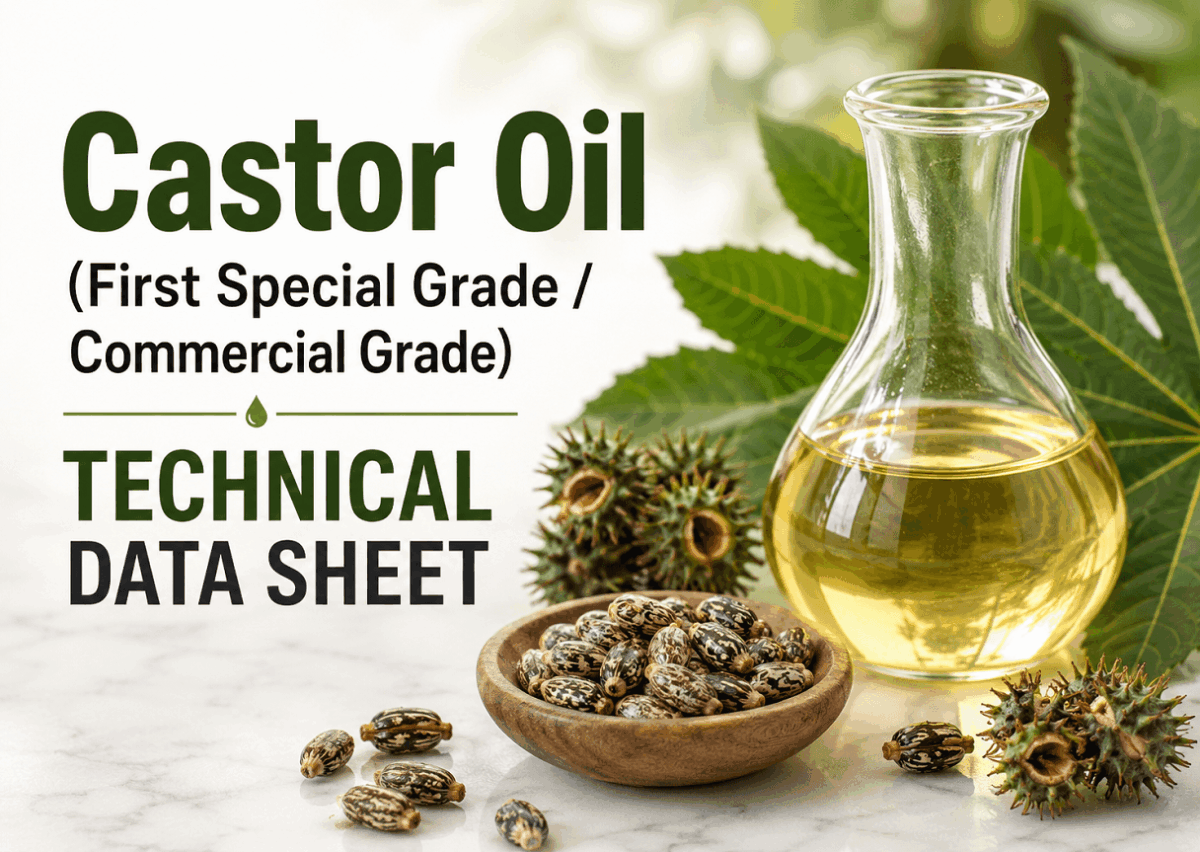
Castor Oil (First Special Grade / Commercial Grade) TECHNICAL DATA SHEET

Manufacturer: Nova Industries

Product: Castor Oil (First Special Grade / Commercial Grade)


1. Product Description

Nova Industries manufactures high-purity Castor Oil derived from premium quality castor seeds using advanced extraction and refining processes. Our oil is clear, viscous, and free from suspended matter, suitable for diverse industrial and chemical applications.

2. Technical Specifications

Parameter Unit Standard Specification (Typical) Test Method
Appearance Pale yellow, clear, viscous liquid Visual
Acid Value mg KOH/g Max 2.00 AOCS Cd 3d-63
Moisture & Volatile % Max 0.25 AOCS Ca 2c-25
Free Fatty Acid (FFA) % Max 1.00
Iodine Value g I2/100g 82 – 90 AOCS Cd 1-25
Saponification Value mg KOH/g 177 – 185 AOCS Cd 3-25
Hydroxyl Value mg KOH/g Min 160 AOCS Cd 13-60
Specific Gravity @ 30°C 0.954 – 0.960
Refractive Index @ 40°C 1.4700 – 1.4810
Color (Gardner) Max 2-3

(Note: These are standard industry ranges. Please update with your specific batch guaranteed analysis.)


3. Applications

  • Lubricants: Base for high-performance industrial greases and fluids.

  • Chemical Manufacturing: Precursor for derivatives like Sebacic Acid and 12-HSA.

  • Coatings: Used in polyurethane coating formulations.

  • Industrial Safety: Raw material for safety product manufacturing.

4. Packaging & Storage

  • Packaging: Available in 200kg HDPE/Steel Drums, IBC Totes (1000kg), or Flexi Tanks (21-22 MT).

  • Storage: Store in a cool, dry place away from direct sunlight and moisture. Keep containers tightly closed when not in use.

  • Shelf Life: 12 months from the date of manufacture (under recommended storage conditions).


Nova Industries

Decoding Quality: The Importance of Technical Analysis in Castor Oil Manufacturing

In the industrial supply chain, “trust” is good, but “verified data” is better. For procurement managers and chemical engineers, Castor Oil is not just a commodity; it is a chemical building block defined by specific parameters. At Nova Industries, we believe that the true value of our product lies in the numbers. Our rigorous technical analysis ensures that every drop of oil leaving our factory meets the precise needs of your formulation.

Why Technical Analysis Matters?

Visual inspection alone cannot determine the quality of Castor Oil. Purity is defined at the molecular level. A slight deviation in moisture or acidity can ruin a batch of high-performance lubricants or degrade the quality of polyurethane coatings. This is why Nova Industries prioritizes deep technical analysis over simple extraction.

Key Parameters We Analyze (And Why You Should Care)

When you look at a Technical Data Sheet (TDS) from Nova Industries, here is the science behind the numbers:

1. Acid Value (AV)

  • What it is: A measure of the free fatty acids present in the oil.

  • Why it matters: A lower Acid Value indicates fresher, higher-quality oil. High acidity can lead to oxidation and reduced shelf life. At Nova, we maintain strict controls to keep AV well within standard industrial limits (typically Max 2.0 for FSG).

2. Moisture & Volatile Matter

  • What it is: The water content remaining in the oil.

  • Why it matters: Moisture is the enemy of chemical reactions. In the production of derivatives or urethanes, excess moisture can cause bubbling or structural weakness. Our vacuum drying processes ensure moisture is kept to an absolute minimum (Max 0.25%).

3. Iodine Value (IV)

  • What it is: A measure of the degree of unsaturation.

  • Why it matters: This determines the drying quality of the oil. It is crucial for clients using castor oil in paints, coatings, and varnishes. Our consistent IV range (82-90) ensures your final product dries and cures exactly as expected.

4. Hydroxyl Value

  • What it is: Unique to Castor Oil, this measures the hydroxyl groups available for reaction.

  • Why it matters: This is the most critical parameter for clients making polyols or grease. A consistent Hydroxyl Value (Min 160) from Nova Industries means consistent reactivity in your manufacturing process.

The Nova Lab Advantage

At Nova Industries, our in-house laboratory doesn’t just check for compliance; it checks for perfection. We use advanced titration methods and spectroscopy to validate every batch before it is pumped into drums or tankers.

Conclusion

Technical analysis is the bridge between raw nature and industrial precision. When you buy from Nova Industries, you aren’t just buying oil; you are buying a guarantee backed by data.

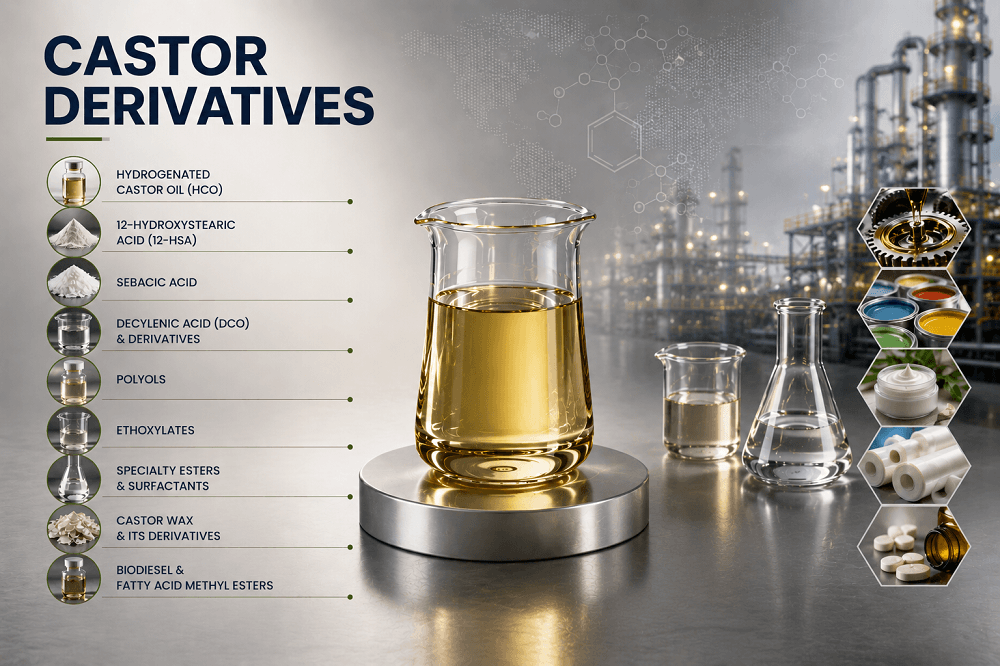
Castor Derivatives: Chemistry, Functional Behavior & Industrial Use

Castor derivatives occupy a unique position in industrial chemistry. Unlike conventional fatty acid derivatives, castor-based materials possess a naturally occurring hydroxyl group that enables chemical versatility and functional tuning. This makes castor derivatives essential in applications where performance consistency and formulation stability are critical.


Understanding Castor Derivatives at a Molecular Level

The defining feature of castor derivatives is the hydroxyl functionality present in ricinoleic acid. This structure allows:

  • Hydrogen bonding
  • Controlled reactivity
  • Improved lubricity
  • Enhanced thermal behavior

When chemically modified, these properties can be amplified or redirected for specific industrial needs.


How Chemical Modification Changes Performance

Each derivative is engineered through a specific transformation:

  • Hydrogenation increases hardness, melting point, and oxidative stability
  • Dehydration enhances drying and film-forming behavior
  • Hydrolysis isolates functional fatty acids
  • Esterification improves solubility and formulation flexibility

These changes are not cosmetic—they directly influence real-world application results.


Functional Role of Major Castor Derivatives

Different derivatives exist because industries demand different behaviors, not because of product variety.

Examples:

  • Hard wax-like derivatives for grease structure
  • Acid derivatives for chemical intermediates
  • Dehydrated derivatives for coating performance
  • Ester derivatives for formulation compatibility

Understanding this functional logic helps buyers select the right derivative, not just a familiar name.


Why Castor Derivatives Outperform Many Alternatives

From an application standpoint, castor derivatives offer:

  • Renewable, plant-based origin
  • Strong performance at extreme temperatures
  • Compatibility with complex chemical systems
  • Predictable behavior in long-term use

This combination explains their continued relevance despite evolving synthetic alternatives.


Application-Driven Selection Matters

One of the most common sourcing mistakes is selecting derivatives based on availability instead of functional requirement. Proper selection depends on:

  • End-use temperature range
  • Mechanical stress exposure
  • Chemical environment
  • Regulatory expectations

Education-driven sourcing reduces formulation failures and long-term costs.


India’s Knowledge Advantage in Castor Derivatives

India’s leadership in castor derivatives is not only agricultural—it is technical. Decades of processing experience, formulation feedback, and export exposure have created a deep knowledge base that supports continuous improvement and innovation.

Manufacturers such as Nova Industries contribute by aligning chemical understanding with controlled manufacturing practices.


Closing Perspective

Castor derivatives are not commodity chemicals—they are engineered functional materials. Their true value emerges when chemistry knowledge, manufacturing discipline, and application understanding work together.

For industries seeking consistency, sustainability, and performance, castor derivatives remain a strategically important material class.


📧 export@novaind.in
🌐 https://novaind.in

Ricinoleic Acid Manufacturer in Gujarat India | Nova Industries

RICINOLEIC ACID: The Ultimate Technical & Commercial Guide

High-Purity Castor Derivative (C18:1, OH) Manufacturer: NOVA INDUSTRIES | Gujarat, India

Product Focus: High-Purity Castor Derivative (C18:1, OH)

Manufacturer: NOVA INDUSTRIES | Gujarat, India


1. Product Overview: The Bio-Based Powerhouse

Ricinoleic Acid (12-hydroxy-9-cis-octadecenoic acid) is the functional backbone of Castor Oil, constituting 85–90% of its fatty acid profile.

Unlike standard fatty acids (like Oleic or Stearic), Ricinoleic Acid is a Tri-Functional Molecule. Its unique C18 chain features:

  1. Carboxylic Group (-COOH): For esterification.

  2. Double Bond (Unsaturation): For polymerization and oxidative reactions.

  3. Hydroxyl Group (-OH): The key differentiator, allowing for chemical modification like urethane formation.

This structure makes it the premier choice for High-Performance Lubricants, Polyamides, Polyurethanes, and Personal Care formulations.


2. Technical Data Sheet (TDS)

Below is the standard specification for our Commercial and Premium Grades.

Product Name RICINOLEIC ACID
CAS Number 141-22-0
INCI Name Ricinoleic Acid
Chemical Formula C₁₈H₃₄O₃
Molecular Weight ~298.46 g/mol
Appearance Pale yellow to amber viscous liquid
Odor Characteristic, Mild fatty odor

Specification / Certificate of Analysis (COA) Parameters

Parameters Test Method Standard Specification
Acid Value AOCS Te 1a-64 175 – 190 mg KOH/g
Saponification Value AOCS Tl 1a-64 180 – 195 mg KOH/g
Iodine Value AOCS Tg 1-64 80 – 90 g I₂/100g
Hydroxyl Value AOCS Cd 13-60 150 – 165 mg KOH/g
Moisture Content Karl Fischer Max 0.25%
Color (Gardner) AOCS Td 1a-64 4 – 6 Max
Specific Gravity @ 25°C 0.940 – 0.950
Refractive Index @ 25°C 1.4700 – 1.4740
Purity (by GC) Gas Chromatography Min 85% – 90%

(Note: Custom specifications for Premium/Pharmaceutical grades available upon request.)


3. Manufacturing Process: From Seed to Molecule

Nova Industries employs a rigorous 6-Step Process to ensure purity and stability.

  1. Extraction: We start with refined Castor Oil from Ricinus communis seeds.

  2. Saponification/Splitting: The oil is treated (via High-Pressure Splitting or Alkaline Saponification) to break the triglyceride bonds, releasing Glycerol and Crude Fatty Acids.

  3. Acidulation: The soap stock is acidified to isolate the free fatty acids.

  4. Washing: Intense washing cycles remove mineral salts and impurities.

  5. Vacuum Distillation (The Critical Step): The crude acid is distilled under high vacuum. This separates Ricinoleic Acid from non-functional fatty acids, ensuring Low Color and High Purity.

  6. Finishing: Final filtration and Nitrogen Blanketing during packing to prevent oxidation.


4. Key Applications by Industry

A. Lubricants & Metalworking Fluids

  • Role: Used as a lubricity additive and corrosion inhibitor.

  • Benefit: The hydroxyl group provides excellent wetting properties on metal surfaces, superior to standard fatty acids. It is a precursor for Estolides (bio-lubricants).

B. Coatings, Inks & Resins

  • Role: Intermediate for Alkyd Resins and Epoxy esters.

  • Benefit: Provides non-yellowing properties, flexibility, and impact resistance in the cured film.

C. Polyurethanes & Polymers

  • Role: Reacts with isocyanates to form Polyurethanes.

  • Benefit: Acts as a natural polyol, improving the hydrolysis resistance and hydrophobicity of the final polymer. Used in bio-based nylons (Polyamide 11).

D. Cosmetics & Personal Care

  • Role: Emulsifier, surfactant, and skin conditioner.

  • Benefit: Found in lipsticks (pigment dispersant), facial cleansers (sodium ricinoleate soaps), and moisturizers.

E. Textile & Leather Chemicals

  • Role: Production of Sulfated Castor Oil (Turkey Red Oil).

  • Benefit: Excellent wetting and dyeing assistant.


5. Handling, Storage & Safety (MSDS Summary)

  • Handling: Product is non-toxic but viscous. Standard PPE (Gloves, Glasses) recommended.

  • Storage Conditions:

    • Keep in tightly closed containers (Drums/IBC).

    • Store in a cool, dry, and well-ventilated area.

    • Temperature: Avoid excessive heat to prevent polymerization or oxidation.

    • Winter Note: Material may become viscous or semi-solid at low temperatures. Gentle warming restores flow.

  • Shelf Life: 12 to 24 months from the date of manufacture (in original sealed packaging).


6. Commercial Logistics

Packaging Type Net Weight Container Load (20ft)
MS / HDPE Drums 190 / 200 Kg ~ 80 Drums (16 MT)
IBC Totes 950 / 1000 Kg ~ 18-20 IBCs
Flexi Tank Bulk ~ 20-21 MT
ISO Tank Bulk ~ 20-23 MT

7. Why Choose Nova Industries?

  • Strategic Location: Based in Gujarat, the global hub of Castor production, ensuring fresh feedstock and lower logistics costs.

  • Quality Assurance: ISO 9001:2015 certified processes with in-house Gas Chromatography (GC) testing.

  • Customization: Ability to tailor Acid Value and Color specs for sensitive applications.

  • Global Compliance: Documents available for REACH, Kosher, and Halal requirements (on request).

Contact Us:

For current pricing, samples, or specific technical consultations, please reach out to our Sales Department.

Dibutyl Sebacate (DBS): Technical Specifications and Industrial Applications

1. Technical Overview

Dibutyl Sebacate (DBS), chemically known as bis(butyl) decanedioate ($C_{18}H_{34}O_4$), is a high-performance, bio-based plasticizer produced through the esterification of Sebacic acid with n-butanol. It is a clear, colorless, and odorless liquid. In industrial R&D, DBS is recognized for its exceptional efficiency in providing low-temperature flexibility and high compatibility with a wide array of polymers, including polyvinyl chloride (PVC), polyvinyl butyral (PVB), and various synthetic rubbers. Due to its low toxicity and superior migration resistance, it is frequently utilized in sensitive applications such as food-grade packaging, medical-grade tubing, and high-clarity films.

2. Chemical Structure & Composition

The molecular structure of DBS consists of a linear 10-carbon sebacate chain with two butyl ester groups at the termini.

  • Molecular Weight: 314.46 g/mol.

  • Composition: High-purity diester content (>99%).

  • Functionality: The linear structure allows for efficient insertion between polymer chains, reducing intermolecular forces and increasing molecular mobility.

The 10-carbon sebacate backbone provides higher thermal stability and lower volatility compared to shorter-chain phthalate or adipate plasticizers.

3. Physical & Chemical Properties

  • Appearance: Colorless, transparent liquid.

  • Viscosity: 7.0 – 11.0 cSt at 25°C.

  • Refractive Index: 1.439 – 1.443 at 20°C.

  • Boiling Point: ~344°C at atmospheric pressure.

  • Flash Point: ~180°C (Closed Cup).

  • Solubility: Insoluble in water; highly soluble in alcohols, ketones, and most organic solvents.

4. Reaction Chemistry

DBS is chemically stable under normal industrial processing conditions:

  1. Plasticization Mechanism: It acts as an external plasticizer, physically blending with the polymer matrix without forming chemical bonds.

  2. Solvating Power: It exhibits high solvating power for PVC at elevated temperatures, facilitating fast fusion during extrusion or calendaring.

  3. Resistance to Hydrolysis: The ester bonds are stable in most neutral environments, though they can be hydrolyzed by strong acids or bases at high temperatures.

5. When to Use vs. When NOT to Use

Use Dibutyl Sebacate when:

  • Manufacturing food-contact materials (films, gaskets, bottle cap liners).

  • Formulating specialized PVC compounds that must remain flexible at sub-zero temperatures (e.g., cold storage curtains).

  • Producing high-clarity PVB interlayers for safety glass.

Do NOT use Dibutyl Sebacate when:

  • The application involves continuous exposure to high temperatures (above 100°C) in an open environment, where its moderate volatility might lead to eventual hardening.

  • A low-cost, general-purpose plasticizer is sufficient for a non-sensitive, indoor application (where phthalates might be more economical).

6. Compatibility Profile

DBS is highly compatible with:

  • Polymers: PVC, PVB, Nitrocellulose, Ethyl Cellulose, and Polystyrene.

  • Synthetic Rubbers: Nitrile rubber (NBR) and Chloroprene rubber (CR).

  • Solvents: Acts as an excellent solvent for various resins and cellulose derivatives.

7. Manufacturing Process (Product Focus)

The production of DBS at Nova Industries involves:

  1. Esterification: High-purity Sebacic acid is reacted with n-butanol in the presence of an acid catalyst.

  2. Neutralization: The excess acid is neutralized with a mild alkali wash.

  3. Stripping: Unreacted butanol is removed under vacuum.

  4. Distillation: The final product is vacuum distilled to ensure a colorless appearance and to remove trace impurities, resulting in a product with a purity level of 99.5% or higher.

8. Technical Specifications Table

Parameter Specification (High Purity)
Appearance Colorless, Transparent Liquid
Purity (by GC) 99.5% Min
Color (APHA) 20 Max
Acid Value (mg KOH/g) 0.05 Max
Moisture Content 0.10% Max
Specific Gravity (at 20°C) 0.935 – 0.940
Refractive Index (at 20°C) 1.439 – 1.443

9. Quality Grade Analysis

Nova Industries focuses on the Acid Value and Color (APHA). A low acid value is critical for preventng the degradation of sensitive polymers and maintaining the electrical insulation properties of the compound. Our ultra-low APHA color ensures that the plasticizer does not impart any yellow tint to clear films or safety glass interlayers.

10. Impact of Impurities

  • Residual Alcohol (Butanol): Can lead to odor issues and lower the flash point, posing a safety risk during high-temperature processing.

  • Moisture: Interferes with the fusion process in PVC and can cause haziness in transparent films.

11. Industry-Wise Application 1: Food & Medical Packaging

DBS is widely used in food-grade PVC films and medical-grade gaskets because of its low toxicity and compliance with FDA regulations. It provides the necessary flexibility without the safety concerns associated with certain phthalates.

12. Industry-Wise Application 2: Safety Glass (PVB Interlayers)

In the manufacture of laminated safety glass, DBS is used as a plasticizer for the PVB interlayer. It ensures the film remains flexible and maintains its energy-absorbing properties over a wide temperature range.

13. Industry-Wise Application 3: Low-Temperature Lubricants

Used as a component in synthetic lubricants and hydraulic fluids that must operate in arctic conditions. Its low pour point and stable viscosity make it an ideal choice for high-altitude or polar environments.

14. Industry-Wise Application 4: Nitrocellulose Coatings

In high-end furniture finishes and nail polishes, DBS acts as a non-yellowing plasticizer that provides a smooth, high-gloss finish with excellent crack resistance.

15. Formulation Guide

  • Dosing: In PVC compounds, typical loading is 10–40 phr (parts per hundred resin), depending on the desired hardness.

  • Incorporation: DBS should be pre-blended with the resin in a high-speed mixer before feeding into the extruder or calendar.

16. Sustainability Data

Dibutyl Sebacate is a bio-based plasticizer. By utilizing Sebacic acid derived from castor oil, it offers a sustainable alternative to petroleum-derived plasticizers, helping manufacturers meet green labeling requirements and reduce their carbon footprint.

17. Packaging & Logistics (Technical)

  • Standard: 190kg/200kg HDPE or Epoxy-lined MS Drums.

  • Bulk: 1000kg IBC Tanks or ISO Tanks.

  • Logistics: Non-hazardous for transport. Protect from moisture and extreme heat.

18. Storage Science

DBS is chemically stable but should be stored in a cool, dry area away from direct sunlight. To prevent oxidation and moisture absorption, drums should be kept tightly sealed. For bulk storage, 316-grade stainless steel tanks are recommended.

19. Troubleshooting Guide

  • Problem: Migration or “bleeding” on the surface. Solution: Check the compatibility with the polymer or ensure the dosage is not exceeding the saturation limit.

  • Problem: Fogging or haziness in clear films. Solution: Check for moisture contamination in the DBS or the resin.

20. Regulatory Compliance

Our DBS is REACH Compliant, TSCA listed, and meets the requirements of the FDA for use in food-contact materials. It is also compliant with RoHS and various international safety standards.

21. Safety (SDS Summary)

  • Handling: Wear protective gloves and eye protection.

  • Toxicity: Low oral and dermal toxicity; however, avoid prolonged exposure.

  • Fire: High flash point; in case of fire, use CO2, foam, or dry chemical extinguishers.

22. Sample Validation Process

Check the Purity (by GC) and Acid Value. For film applications, a laboratory-scale “Clarity and Migration Test” is recommended to ensure performance meets specific application standards.

23. Commercial Efficiency

Using Nova Industries’ high-purity DBS ensures consistent processing and fewer production rejects. The low odor and colorless nature of the product reduce the need for corrective additives, lowering the overall formulation cost.

24. Technical FAQs

  1. Is DBS safe for food-contact applications? Yes, it is widely recognized for its safety and is used in many FDA-compliant applications.

  2. How does it compare to DOP? DBS offers much better low-temperature flexibility and is bio-based, whereas DOP is petroleum-derived and has regulatory restrictions in many regions.

  3. What is the shelf life? 12–24 months when stored in original, unopened packaging.

25. Contact CTA

For Technical Data Sheets (TDS), safety protocols, or to request a sample of our High-Purity DBS, please contact our export department: export@novaind.in


Dioctyl Sebacate (DOS): Technical Specifications and High-Performance Industrial Applications

1. Technical Overview

Dioctyl Sebacate (DOS), also known as Bis(2-ethylhexyl) sebacate ($C_{26}H_{50}O_4$), is a high-performance, bio-based ester produced by the esterification of Sebacic acid with 2-ethylhexanol. It is a clear, colorless liquid recognized for its exceptional low-temperature properties and high thermal stability. In industrial R&D, DOS is a critical additive for formulations that must withstand extreme environments. As a plasticizer, it provides the highest level of cold-flexibility for PVC and synthetic rubbers. As a synthetic lubricant base oil, it offers an outstanding viscosity index and low volatility, making it the industry standard for aerospace, military, and high-end automotive lubricants.

2. Chemical Structure & Composition

The molecular structure of DOS features a long, linear 10-carbon sebacate backbone with two branched 2-ethylhexyl groups.

  • Molecular Weight: 426.67 g/mol.

  • High Purity: Typically >99% diester content.

  • Structural Benefit: The linear sebacate chain provides flexibility, while the branched octyl groups lower the pour point and reduce volatility.

This specific molecular arrangement allows DOS to remain liquid at temperatures as low as -50°C, a property that few other plasticizers or mineral oils can match.

3. Physical & Chemical Properties

  • Appearance: Colorless to pale yellow transparent liquid.

  • Viscosity: 18.0 – 24.0 cSt at 20°C.

  • Flash Point: ~215°C (Open Cup), ensuring safety in high-temperature environments.

  • Pour Point: Below -50°C.

  • Refractive Index: 1.448 – 1.452 at 20°C.

  • Solubility: Insoluble in water; soluble in hydrocarbons, alcohols, and chlorinated solvents.

4. Reaction Chemistry

DOS is chemically inert under standard operating conditions but offers specific processing advantages:

  1. Solvating Efficiency: At processing temperatures, DOS acts as a powerful solvent for PVC, leading to rapid gelation and a more uniform polymer matrix.

  2. Oxidative Stability: The saturated nature of the sebacate chain provides inherent resistance to oxidation compared to unsaturated vegetable oils.

  3. Hydrolytic Stability: While an ester, its long hydrocarbon chains provide a steric shield that improves resistance to hydrolysis compared to shorter-chain esters.

5. When to Use vs. When NOT to Use

Use Dioctyl Sebacate when:

  • Manufacturing wire and cable insulation for arctic or aerospace conditions.

  • Formulating synthetic greases and jet engine lubricants requiring a low pour point.

  • Producing high-durability automotive interior parts that must resist “fogging” and embrittlement.

Do NOT use Dioctyl Sebacate when:

  • The application is strictly cost-driven and low-temperature performance is not required (use general-purpose phthalates or adipates).

  • The application involves contact with highly aggressive alkaline cleaners that could promote ester hydrolysis.

6. Compatibility Profile

DOS is highly compatible with:

  • Polymers: Polyvinyl Chloride (PVC), Polyvinyl Butyral (PVB), and Nitrocellulose.

  • Synthetic Rubbers: Nitrile (NBR), Neoprene (CR), and EPDM.

  • Base Oils: Miscible with Mineral Oils, Polyalphaolefins (PAO), and other synthetic esters.

7. Manufacturing Process (Product Focus)

Nova Industries utilizes a precision esterification process:

  1. Reaction: High-purity Sebacic acid is reacted with 2-ethylhexanol under a vacuum in the presence of an organometallic catalyst.

  2. Neutralization & Washing: Residual acidity is removed through a multi-stage neutralization and deionized water wash.

  3. Vacuum Stripping: Excess alcohol is stripped away to ensure a high flash point and low odor.

  4. Final Purification: The oil is passed through activated carbon and multi-stage fine filtration to achieve ultra-low color and ash levels.

8. Technical Specifications Table

Parameter Specification (High Purity)
Appearance Colorless Transparent Liquid
Purity (by GC) 99.0% Min
Color (APHA) 30 Max
Acid Value (mg KOH/g) 0.05 Max
Moisture Content 0.10% Max
Specific Gravity (at 20°C) 0.912 – 0.918
Flash Point (COC) 210°C Min

9. Quality Grade Analysis

Nova Industries monitors Acid Value and Flash Point as primary markers of quality. An ultra-low acid value is mandatory for lubricant applications to prevent metal corrosion. A consistently high flash point confirms the complete removal of light-end alcohols, ensuring the material does not evaporate during high-temperature service.

10. Impact of Impurities

  • Residual Alcohol: Lowers the flash point and increases the “fogging” effect in automotive interiors.

  • Trace Metals: Can act as pro-oxidants, reducing the shelf life and performance of synthetic greases.

11. Industry-Wise Application 1: Aerospace & Military Lubricants

DOS is a primary base oil for MIL-spec lubricants. Its ability to maintain a lubricating film at extreme altitudes and sub-zero temperatures makes it indispensable for flight control systems and cold-weather military equipment.

12. Industry-Wise Application 2: Wire & Cable Insulation

In the cable industry, DOS is used for high-end insulation that must remain flexible in arctic conditions or in specialized industrial freezers. It ensures that cables do not crack when flexed at low temperatures.

13. Industry-Wise Application 3: Automotive Industry

Used in dashboard materials and upholstery to prevent “windshield fogging.” Its low volatility ensures that the plasticizer stays within the plastic, maintaining the soft-touch feel for the life of the vehicle.

14. Industry-Wise Application 4: Synthetic Rubbers

In the production of gaskets and seals for the oil and gas industry, DOS provides excellent swelling resistance and maintains seal integrity in high-pressure, low-temperature environments.

15. Formulation Guide

  • Dosing: In PVC, typical loading ranges from 15 to 50 phr depending on the target “brittle point.”

  • Blending: For lubricants, DOS can be blended with PAO to improve additive solubility and seal swell characteristics.

16. Sustainability Data

Dioctyl Sebacate is a bio-based product. By utilizing Sebacic acid derived from castor oil, it helps manufacturers reduce their dependence on petroleum-derived plasticizers like DOA (Dioctyl Adipate) while offering superior performance.

17. Packaging & Logistics (Technical)

  • Standard: 190kg HDPE or Epoxy-lined MS Drums.

  • Bulk: 1000kg IBC Tanks or ISO Tanks.

  • Logistics: Non-hazardous for transport. Ensure containers are tightly sealed to prevent moisture absorption.

18. Storage Science

DOS should be stored in a cool, dry area. It is chemically stable but, like all esters, should be protected from long-term exposure to high humidity. Stainless steel tanks are recommended for bulk storage to maintain the ultra-low color specifications.

19. Troubleshooting Guide

  • Problem: Plastic parts becoming brittle over time. Solution: Check the volatility of the DOS lot; residual alcohol may be causing the plasticizer to evaporate.

  • Problem: Poor electrical resistance in cables. Solution: Verify the moisture and acid value; these must be at their absolute minimum for electrical grade applications.

20. Regulatory Compliance

Our DOS is REACH Compliant, TSCA listed, and meets the criteria for various international aerospace and automotive standards.

21. Safety (SDS Summary)

  • Handling: Wear protective gloves and eyewear.

  • Toxicity: Classified as non-toxic; however, standard industrial hygiene practices should be followed.

  • Fire: High flash point; use CO2, dry chemical, or foam. Do not use direct water streams on burning oil.

22. Sample Validation Process

Verify the Flash Point and Acid Value. For lubricant manufacturers, a “Four-Ball Wear Test” in a finished formulation is recommended to confirm the lubricity performance.

23. Commercial Efficiency

Direct sourcing from Nova Industries ensures a consistent, high-purity product that meets both plasticizer and lubricant specifications. The high degree of refinement reduces the risk of additive fallout in complex lubricant formulations.

24. Technical FAQs

  1. What is the difference between DOS and DOA? DOS has a longer carbon chain, providing lower volatility and better high-temperature stability than DOA (Dioctyl Adipate).

  2. Is DOS biodegradable? Yes, it is derived from vegetable-sourced Sebacic acid and exhibits good biodegradability.

  3. Can it be used in food-contact plastics? Yes, depending on local regulations, it is often used in specialized food-packaging films.

25. Contact CTA

For Technical Data Sheets (TDS), customized specifications, or to request a sample of our High-Purity DOS, please contact our technical export team: export@novaind.in


Zinc Undecylenate: Technical Specifications and Pharmaceutical Utility

1. Technical Overview

Zinc Undecylenate, chemically known as Zinc 10-undecenoate ($[CH_2=CH(CH_2)_8COO]_2Zn$), is the zinc salt of Undecylenic acid. It is a fine, white, creamy powder recognized globally for its potent antifungal and antibacterial properties. While Undecylenic acid provides the primary fungistatic action, the zinc salt form is preferred in topical formulations due to its non-irritating nature and ability to reduce skin inflammation. In the pharmaceutical industry, it is a key active ingredient in over-the-counter (OTC) treatments for dermatomycoses, providing a synergistic effect when used in combination with free Undecylenic acid.

2. Chemical Structure & Composition

The molecular structure of Zinc Undecylenate consists of a central zinc ion coordinated with two undecylenate chains, each featuring a reactive terminal double bond.

  • Molecular Weight: 431.94 g/mol.

  • Zinc Content: Typically 14.5% to 15.5%.

  • Purity: Manufactured to meet USP/BP pharmacopeia standards.

The presence of the terminal double bonds maintains the unique chemical signature of castor-derived undecylenates, ensuring high efficacy against fungal pathogens.

3. Physical & Chemical Properties

  • Appearance: Fine, white to off-white, bulky powder.

  • Odor: Faint, characteristic fatty odor (significantly milder than the free acid).

  • Solubility: Practically insoluble in water and alcohol; soluble in chloroform and ether.

  • Melting Point: 115°C to 121°C.

  • Bulk Density: Low, providing excellent “slip” and spreadability in powder formulations.

4. Reaction Chemistry

Zinc Undecylenate functions primarily through its ionic dissociation and surface activity:

  1. Fungistatic Mechanism: Upon contact with skin moisture, it slowly releases undecylenate ions which inhibit the growth and germination of fungal spores by disrupting cell membrane permeability.

  2. Astringent Action: The zinc component provides a mild astringent effect, helping to dry out the affected area and reduce skin irritation (pruritus).

  3. Thermal Stability: It remains stable during the manufacturing of ointments and creams that require heating up to 80°C.

5. When to Use vs. When NOT to Use

Use Zinc Undecylenate when:

  • Formulating antifungal dusting powders (e.g., for Athlete’s Foot).

  • Manufacturing topical ointments, creams, or aerosols for ringworm and diaper rash.

  • Seeking a stable, non-volatile antifungal agent for specialized cosmetic formulations.

Do NOT use Zinc Undecylenate when:

  • The application requires a clear liquid solution (as it is an insoluble powder).

  • Formulating for deep-seated systemic fungal infections (it is strictly for topical use).

  • The patient has a known hypersensitivity to zinc salts.

6. Compatibility Profile

  • With Active Ingredients: Highly synergistic with Undecylenic Acid, Salicylic Acid, and Menthol.

  • With Bases: Compatible with petrolatum, lanolin, talc, and starch-based carriers.

  • Avoid: Strong oxidizing agents which may react with the terminal double bonds.

7. Manufacturing Process (Product Focus)

Nova Industries utilizes a precision precipitation process:

  1. Neutralization: High-purity Undecylenic acid is reacted with a sodium base to form sodium undecylenate.

  2. Precipitation: A solution of a high-purity zinc salt (such as zinc sulfate) is added to the sodium undecylenate solution under controlled pH and temperature.

  3. Filtration & Washing: The resulting precipitate is filtered and washed extensively with deionized water to remove trace inorganic salts.

  4. Micronization: The dried product is micronized to achieve a consistent, fine particle size for optimal formulation performance.

8. Technical Specifications Table

Parameter Specification (USP/BP Grade)
Appearance Fine White Powder
Zinc Content 14.5% – 15.5%
Identification Positive for Zinc & Undecylenate
Loss on Drying 1.2% Max
Alkali & Alkaline Earths 1.0% Max
Free Undecylenic Acid 1.0% Max
Melting Point 115°C – 121°C

9. Quality Grade Analysis

Nova Industries focuses on the Freeness of Undecylenic Acid. While trace amounts are necessary for synergy, excessive free acid can cause a strong odor and skin irritation. Our process ensures the free acid is strictly controlled to meet pharmaceutical standards, providing a “user-friendly” powder with minimal odor.

10. Impact of Impurities

  • High Moisture: Can lead to “clumping” of the powder, making it difficult to achieve a uniform blend in dusting powders.

  • Alkali Salts: Residual salts from the precipitation process can cause skin stinging or grit in smooth ointments.

11. Industry-Wise Application 1: Foot Care (Athlete’s Foot)

Zinc Undecylenate is the standard active ingredient in antifungal foot powders. Its ability to absorb moisture while simultaneously killing fungal spores makes it highly effective for treating Tinea pedis.

12. Industry-Wise Application 2: Pediatric Care (Diaper Rash)

Due to its mild nature, it is used in specialized creams to treat diaper rash complicated by Candida infections. It provides a protective barrier while addressing the underlying fungal cause.

13. Industry-Wise Application 3: General Dermatology

Used in sprays and lotions for the treatment of ringworm (Tinea corporis) and jock itch (Tinea cruris). It is often preferred over synthetic antifungals for its long history of safety.

14. Industry-Wise Application 4: Industrial Preservatives

In some specialized coatings and adhesives, Zinc Undecylenate acts as a non-volatile biocide to prevent the growth of mold and mildew on the surface of the finished product.

15. Formulation Guide

  • Powders: Usually blended at 10% to 20% concentration with talc or kaolin.

  • Ointments: Incorporated into the oil phase. Typical formulations use a combination of 20% Zinc Undecylenate and 2% to 5% Undecylenic Acid for maximum efficacy.

16. Sustainability Data

Zinc Undecylenate is a bio-based derivative. It provides a sustainable, plant-derived alternative to synthetic antifungal agents, aligning with the “Clean Label” trends in pharmaceutical and cosmetic industries.

17. Packaging & Logistics (Technical)

  • Standard: 25kg Corrugated boxes with double PE liners or Fiber Drums.

  • Logistics: Classified as non-hazardous. Should be stored in a cool, dry place to prevent moisture absorption.

18. Storage Science

Must be stored in a well-closed container. It is physically stable but can absorb atmospheric moisture if left exposed. It should be kept away from direct sunlight to prevent any potential UV-induced cross-linking of the double bonds.

19. Troubleshooting Guide

  • Problem: Grittiness in the ointment. Solution: Ensure the powder is properly micronized or pre-disperse it in a small amount of mineral oil before adding to the main batch.

  • Problem: Off-odor in the formulation. Solution: Check the level of free Undecylenic acid; ensure the Zinc Undecylenate lot meets the <1% free acid specification.

20. Regulatory Compliance

Our Zinc Undecylenate is REACH Compliant and manufactured in facilities following GMP-aware protocols. It meets the monograph requirements of the USP (United States Pharmacopeia) and BP (British Pharmacopeia).

21. Safety (SDS Summary)

  • Handling: Use a dust mask and gloves. Avoid inhalation of the fine powder.

  • Toxicity: Very low acute toxicity; considered safe for topical application at recommended levels.

  • Environment: Do not dispose of large quantities into the aquatic environment.

22. Sample Validation Process

Verify the Zinc Content and Loss on Drying. For pharmaceutical use, a “Microbial Limit Test” and assay for free undecylenic acid are essential.

23. Commercial Efficiency

By sourcing micronized Zinc Undecylenate from Nova Industries, manufacturers can reduce their processing time (milling) and achieve a more homogenous mix in their final products, leading to fewer batch failures and higher consumer satisfaction.

24. Technical FAQs

  1. Is Zinc Undecylenate better than the free acid? It is less irritating and more stable in powder forms, but they are often used together for the best results.

  2. Is it 100% bio-based? The undecylenate part is 100% bio-based (from castor oil); the zinc is a mineral component.

  3. Does it have a shelf life? It is stable for 3–5 years if stored correctly in a dry environment.

25. Contact CTA

For Technical Data Sheets (TDS), Pharmacopeia Compliance Certificates, or to request a sample, please contact our export division at: export@novaind.in

Undecylenic Acid: Technical Specifications and Versatile Chemical Applications

1. Technical Overview

Undecylenic Acid, also known as 10-Undecenoic Acid ($C_{11}H_{20}O_2$), is a rare, unsaturated fatty acid produced through the vacuum pyrolysis (thermal cracking) of ricinoleic acid or castor oil methyl esters. It is characterized by a terminal double bond and an eleven-carbon chain. In the chemical industry, Undecylenic acid is a high-value “platform chemical” used as a starting material for a wide array of derivatives. It is globally recognized for its potent antifungal properties in medicine and as a critical precursor for the synthesis of Nylon 11, high-end fragrance esters, and specialized surfactants.

2. Chemical Structure & Composition

The molecular structure of Undecylenic acid is unique due to the position of its unsaturation.

  • Terminal Double Bond: Unlike most natural fatty acids which have internal double bonds, Undecylenic acid has a double bond at the end of the chain ($CH_2=CH-$).

  • Linear Chain: A saturated 11-carbon linear structure.

  • Purity: Typically available in 97% to 99% purity.

The terminal double bond is highly reactive, allowing for precise chemical modifications such as polymerization, thiol-ene reactions, and oxidation.

3. Physical & Chemical Properties

  • Appearance: Colorless to pale yellow liquid or a low-melting crystalline solid.

  • Melting Point: ~24.5°C (often remains a supercooled liquid).

  • Boiling Point: ~275°C at atmospheric pressure.

  • Odor: Characteristic, persistent fatty/perspiration odor.

  • Solubility: Insoluble in water; highly soluble in alcohol, ether, and chloroform.

  • Refractive Index: 1.447 – 1.450 at 25°C.

4. Reaction Chemistry

The dual functionality (carboxyl group + terminal double bond) facilitates diverse reactions:

  1. Antifungal Activity: The undecylenate ion disrupts fungal cell membranes, making it effective against Tinea species.

  2. Hydrobromination: Reaction with hydrogen bromide followed by amination is the path to Nylon 11.

  3. Esterification: Reacts with alcohols to produce Undecylenate esters (e.g., Methyl, Ethyl, or Zinc Undecylenate).

  4. Ozonolysis: Can be cleaved to produce shorter-chain dicarboxylic acids.

5. When to Use vs. When NOT to Use

Use Undecylenic Acid when:

  • Manufacturing antifungal ointments, powders, or medicated soaps.

  • Synthesizing aroma chemicals such as Aldehyde C-11 or various “musk” fragrance notes.

  • Producing bio-based polymers (Nylon 11) requiring high chemical resistance and dimensional stability.

Do NOT use Undecylenic Acid when:

  • A completely odorless product is required (the natural odor is very strong and difficult to mask).

  • The application requires a saturated fatty acid for high oxidative stability at extreme temperatures.

6. Compatibility Profile

Undecylenic acid is compatible with:

  • Bases: Forms soluble sodium or potassium salts and insoluble metallic salts (like Zinc Undecylenate).

  • Solvents: Acts as an excellent solvent for various therapeutic agents.

  • Polymers: Compatible with various thermoplastic resins as a functionalizing additive.

7. Manufacturing Process (Product Focus)

Nova Industries produces high-purity Undecylenic acid via a controlled thermal process:

  1. Pyrolysis: Castor oil methyl ester is subjected to rapid thermal cracking at temperatures between 450°C and 550°C under vacuum.

  2. Fractional Distillation: The cracked mixture (containing Heptaldehyde and Methyl Undecylenate) is separated using high-efficiency distillation columns.

  3. Hydrolysis: The Methyl Undecylenate fraction is hydrolyzed to yield the free acid.

  4. Refining: A final vacuum distillation ensures the removal of heavy ends and color-causing impurities, achieving a purity of 99%+.

8. Technical Specifications Table

Parameter Specification (High Purity)
Appearance Pale Yellow to Colorless Liquid/Solid
Undecylenic Acid Content 98.0% Min
Acid Value (mg KOH/g) 300 – 305
Iodine Value (Wijs) 135 – 140
Melting Point 23°C – 25°C
Moisture Content 0.5% Max
Color (Gardner) 1.0 Max

9. Quality Grade Analysis

Nova Industries monitors the Acid Value and Purity via GC. A high acid value confirms the correct chain length and purity. For fragrance and pharma grades, we ensure that trace isomers and oxidation products are eliminated, as these can negatively impact the scent profile and therapeutic efficacy.

10. Impact of Impurities

  • Saturated Fatty Acids: Lower the iodine value and can reduce the efficiency of subsequent chemical modifications.

  • Peroxides: Indicate oxidation, which darkens the product and intensifies the odor.

11. Industry-Wise Application 1: Pharmaceuticals

Undecylenic acid is a time-tested antifungal agent. It is the active ingredient in many over-the-counter (OTC) treatments for athlete’s foot (Tinea pedis), ringworm, and diaper rash. It is often used in combination with its salt, Zinc Undecylenate.

12. Industry-Wise Application 2: Fragrance & Flavors

Used as a precursor for Aldehyde C-11 Undecylenic, which provides a characteristic “clean-linen” and citrus-floral note in high-end perfumes and soaps. It is also used in the synthesis of specialized flavor compounds.

13. Industry-Wise Application 3: Polymers (Nylon 11)

As the primary monomer source for Nylon 11, it provides a unique polymer that is 100% bio-based. Nylon 11 is used in automotive fuel lines, offshore oil and gas pipes, and sports equipment due to its exceptional impact resistance and low moisture absorption.

14. Industry-Wise Application 4: Metalworking Fluids

Undecylenic acid salts are utilized as specialized surfactants and corrosion inhibitors that offer superior wetting properties compared to standard long-chain fatty acids.

15. Formulation Guide

  • Pharma: In topical formulations, typical concentrations range from 2% to 10%. It should be blended with emollients to minimize potential skin irritation.

  • Esterification: Use an inert gas (nitrogen) during reaction to prevent the terminal double bond from oxidizing or polymerizing.

16. Sustainability Data

Undecylenic Acid is a 100% bio-based product. It is a cornerstone of “Green Chemistry,” providing a sustainable path to high-performance materials (like Nylon 11) that were historically reliant on petroleum.

17. Packaging & Logistics (Technical)

  • Standard: 190kg/200kg HDPE or Epoxy-lined MS Drums.

  • Bulk: 1000kg IBC Tanks.

  • Logistics: Corrosive to some metals; HDPE is the preferred packaging. As it melts at ~24°C, it may arrive as a solid or liquid depending on the climate.

18. Storage Science

Must be stored in a cool, shaded area. It is sensitive to air and light. Drums should be nitrogen-blanketed once opened. Because it can solidify in cool weather, gentle warming (not exceeding 40°C) is required to liquefy the material for pumping.

19. Troubleshooting Guide

  • Problem: Darkening or thickening of the liquid. Solution: This indicates polymerization or oxidation. Ensure storage temperatures are low and containers are air-tight.

  • Problem: Off-odor in fragrance synthesis. Solution: Verify the purity via GC; trace impurities from the cracking process can interfere with delicate scent notes.

20. Regulatory Compliance

Our Undecylenic Acid is REACH Compliant, meets the requirements of the USP/BP (where specified), and is listed on major global chemical inventories.

21. Safety (SDS Summary)

  • Handling: Corrosive to eyes and a skin irritant. Wear protective gloves and goggles.

  • Fire: Flash point >140°C. Use CO2, dry chemical, or foam.

  • Environment: Biodegradable; however, do not dispose of directly into the environment.

22. Sample Validation Process

Verify the Iodine Value and Acid Value. For pharmaceutical grade, an antifungal potency assay or a specific GC purity check for isomers is recommended.

23. Commercial Efficiency

Direct sourcing from Nova Industries ensures a product with consistent terminal unsaturation. This predictability is vital for manufacturers of Nylon 11 and complex esters, where batch-to-batch variation can lead to significant yield losses.

24. Technical FAQs

  1. Is Undecylenic Acid same as Undecanoic Acid? No, Undecylenic acid is unsaturated (contains a double bond), whereas Undecanoic acid is fully saturated.

  2. Why does it have a strong smell? The odor is inherent to its molecular structure and is a characteristic trait of the acid.

  3. Is it 100% bio-based? Yes, it is derived exclusively from castor oil.

25. Contact CTA

For technical data sheets (TDS), safety protocols, or bulk export inquiries, please contact our technical team at: export@novaind.in

Sodium Ricinoleate: Technical Specifications and Versatile Surfactant Applications

1. Technical Overview

Sodium Ricinoleate ($C_{18}H_{33}NaO_3$) is the sodium salt of Ricinoleic acid, derived from high-purity castor oil through a controlled saponification process. It is a powerful, bio-based anionic surfactant known for its unique combination of emulsifying, dispersing, and bactericidal properties. Unlike standard sodium soaps (like sodium stearate), Sodium Ricinoleate contains a secondary hydroxyl group and a double bond, which significantly increases its solubility in water and its ability to act as a specialized wetting agent. In industrial R&D, it is valued for its performance in transparent soaps, textile lubricants, and as a stabilizer in pharmaceutical and dental formulations.

2. Chemical Structure & Composition

The molecular structure of Sodium Ricinoleate is defined by the substitution of the hydrogen in the carboxyl group with a sodium ion.

  • Hydrophilic Head: The ionic carboxylate group ($–COONa$) provides high water solubility.

  • Hydrophobic Tail: An 18-carbon chain featuring a hydroxyl group at C12 and a cis-double bond at C9.

  • Trifunctionality: Retains the chemical reactivity of the parent ricinoleic chain, allowing for further modifications.

The unique geometry caused by the hydroxyl group prevents the molecules from packing tightly, which is why Sodium Ricinoleate soaps remain much more soluble and lower in viscosity than other long-chain fatty acid soaps.

3. Physical & Chemical Properties

  • Appearance: Pale yellow to amber viscous liquid or paste (depending on concentration).

  • Solubility: Highly soluble in water, forming clear or slightly opalescent solutions. Also soluble in alcohol.

  • pH: Typically alkaline (pH 9.5 – 11.5) in aqueous solution.

  • Odor: Faint, characteristic fatty odor.

  • Active Matter: Usually supplied in 30% to 50% aqueous solutions or as a concentrated paste.

4. Reaction Chemistry

Sodium Ricinoleate functions as a multi-purpose chemical agent:

  1. Emulsification: It drastically reduces the interfacial tension between oil and water, creating stable micro-emulsions.

  2. Micelle Formation: At the Critical Micelle Concentration (CMC), it forms spherical aggregates that can encapsulate hydrophobic active ingredients.

  3. Bactericidal Action: Due to the hydroxyl group, it exhibits mild antiseptic properties, particularly effective in inhibiting the growth of certain oral and skin bacteria.

5. When to Use vs. When NOT to Use

Use Sodium Ricinoleate when:

  • Manufacturing transparent “glycerin” soaps where high clarity and solubility are required.

  • Formulating specialized toothpastes or mouthwashes to help dissolve dental plaque and provide mild antiseptic benefits.

  • Seeking a bio-based wetting agent for textile processing or leather fat-liquoring.

Do NOT use Sodium Ricinoleate when:

  • The formulation is highly acidic (pH < 7), as the soap will revert to free Ricinoleic acid and precipitate out of the solution.

  • The application requires a high-foaming detergent (it provides a stable, creamy lather rather than high-volume bubbles).

  • Use in “hard water” without chelating agents, as it will form insoluble calcium/magnesium curds (soap scum).

6. Compatibility Profile

  • With Anionic Surfactants: Highly compatible with SLES and other fatty acid soaps.

  • With Non-ionic Surfactants: Synergistic with ethoxylated castor oils for stable emulsion systems.

  • With Electrolytes: Sensitivity to high salt concentrations can cause “salting out” of the soap.

7. Manufacturing Process (Product Focus)

Nova Industries produces Sodium Ricinoleate via a precision saponification method:

  1. Hydrolysis/Saponification: High-purity Ricinoleic acid or Refined Castor Oil is reacted with a standardized Sodium Hydroxide ($NaOH$) solution.

  2. Temperature Control: The reaction is kept within a specific thermal range to ensure complete conversion without darkening the product.

  3. Refining: The resulting soap is filtered to remove any trace particulates or unsaponifiable matter.

  4. Standardization: The active matter and pH are adjusted to meet the specific requirements of the end-user (liquid or paste form).

8. Technical Specifications Table

Parameter Specification (Aqueous Solution Grade)
Appearance Pale Yellow to Amber Viscous Liquid
Active Matter 35% – 40% (Customizable)
Free Alkali (as $NaOH$) 0.5% Max
pH (1% Solution) 9.5 – 11.0
Total Fatty Matter 30% Min
Color (Gardner) 4.0 Max

9. Quality Grade Analysis

Nova Industries monitors the Free Alkali and Total Fatty Matter (TFM). Excessive free alkali can be irritating in personal care products, while low TFM indicates a diluted product. Our process ensures a high-TFM soap with minimal free alkali, providing a safe and efficient surfactant for sensitive applications.

10. Impact of Impurities

  • Residual Glycerin: If made directly from castor oil, glycerin remains in the product, which is beneficial for moisturizing but may affect the drying speed in industrial coatings.

  • Unreacted Oil: Can cause haziness in transparent soaps and reduce the cleaning efficiency.

11. Industry-Wise Application 1: Personal Care & Hygiene

Widely used in the manufacture of high-quality shaving creams, transparent bar soaps, and medicated shampoos. It provides a smooth, lubricious feel and helps in the stable suspension of fragrances.

12. Industry-Wise Application 2: Oral Care

In the dental industry, Sodium Ricinoleate is used in specialized oral hygiene products. It is effective at detoxifying bacterial byproducts and is often used in formulations targeting gingivitis and periodontal health.

13. Industry-Wise Application 3: Textile & Leather Auxiliaries

Acts as a powerful wetting and leveling agent in the dyeing of cotton and silk. In leather processing, it is used for emulsifying fats to ensure deep and uniform penetration into the hides (fat-liquoring).

14. Industry-Wise Application 4: Industrial Emulsifiers

Used in the production of cutting oils, soluble oils, and pesticide emulsifiable concentrates (EC). It helps maintain the stability of the oil-in-water emulsion under varying temperature conditions.

15. Formulation Guide

  • Clear Soaps: Use at 5% to 15% of the total fatty matter to improve transparency and solubility.

  • Liquid Sprays: For odor control or antiseptic use, a 1% to 2% active concentration is typically sufficient.

16. Sustainability Data

Sodium Ricinoleate is 100% bio-based (excluding the sodium component). It is readily biodegradable, non-toxic to aquatic life at standard dilutions, and provides an eco-friendly alternative to synthetic alkyl sulfates.

17. Packaging & Logistics (Technical)

  • Standard: 50kg or 200kg HDPE Drums.

  • Bulk: 1000kg IBC Tanks.

  • Logistics: Non-hazardous for transport. Protect from extreme cold, as the product may thicken or partially solidify (reversible upon warming).

18. Storage Science

Should be stored in a cool, dry area. Because it is an alkaline soap, it should be kept in plastic or epoxy-lined containers to prevent corrosion of metallic drums. Keep containers tightly sealed to prevent the absorption of atmospheric $CO_2$, which could lower the pH and destabilize the soap.

19. Troubleshooting Guide

  • Problem: Product has turned cloudy. Solution: Check the pH; if it has dropped below 9.0, add a small amount of dilute $NaOH$ to restore clarity.

  • Problem: Thickening or gelling in the drum. Solution: This is natural for high-concentration soaps in cold weather; gently warm the drum to 30-40°C.

20. Regulatory Compliance

Our Sodium Ricinoleate is REACH Compliant and manufactured under strict quality control. It is listed on major global chemical inventories (TSCA, DSL, AICS).

21. Safety (SDS Summary)

  • Handling: Wear protective gloves and eyewear; the alkaline nature can cause skin and eye irritation.

  • First Aid: Flush with water for 15 minutes if contact occurs.

  • Environment: Biodegradable; do not discharge concentrated soap into small water bodies.

22. Sample Validation Process

Test for Active Matter and pH. For personal care applications, a “Foam Stability Test” and a “Clarity Test” in your specific formulation are recommended.

23. Commercial Efficiency

By sourcing standardized Sodium Ricinoleate from Nova Industries, manufacturers can bypass the complex saponification step in their own plants. This ensures a consistent, high-purity surfactant that simplifies the production of high-end soaps and emulsions.

24. Technical FAQs

  1. Is Sodium Ricinoleate the same as Castor Soap? Yes, it is the primary component of soap made exclusively from castor oil.

  2. Can it be used in organic products? Yes, it is derived from natural vegetable oil and is a traditional soap-making ingredient.

  3. Is it safe for oral use? Yes, it has a long history of use in toothpaste and mouthwashes at low concentrations.

25. Contact CTA

For Technical Data Sheets (TDS), customized active matter concentrations, or to request a sample, please contact our export department: export@novaind.in


Zinc Ricinoleate: Technical Specifications and Odor Neutralization Science

1. Technical Overview

Zinc Ricinoleate ($C_{36}H_{66}O_6Zn$) is the zinc salt of Ricinoleic acid, derived from high-purity castor oil. It is a highly effective, bio-based odor neutralizer that functions through chemical absorption rather than masking. Unlike traditional deodorants that use fragrances or anti-bacterial agents (like triclosan) to cover or kill bacteria, Zinc Ricinoleate chemically traps and “locks” malodorous molecules. In industrial and cosmetic R&D, it is the gold standard for high-performance, “clean label” deodorants, detergents, and industrial air fresheners due to its non-toxic nature and specific affinity for sulfur and nitrogen-based odors.

2. Chemical Structure & Composition

The molecular architecture of Zinc Ricinoleate consists of a central zinc ion coordinated with two ricinoleate chains.

  • Secondary Hydroxyl Groups: The presence of the -OH group on the 12th carbon atom of each chain is critical for the salt’s solubility and surface activity.

  • Zinc Coordination: The zinc atom acts as the active site for the complexation of odor-causing molecules.

  • Purity: Typically available as a high-purity solid or as part of a pre-activated aqueous solution.

The long hydrocarbon chains provide a hydrophobic character, while the zinc and hydroxyl groups provide the polar functionality required for its unique odor-trapping mechanism.

3. Physical & Chemical Properties

  • Appearance: White to off-white waxy solid (flakes or pellets).

  • Melting Point: ~70°C to 80°C.

  • Solubility: Insoluble in water in its pure state; soluble in organic solvents and oils when heated. (Note: Water-soluble versions are created by complexing with chelating agents).

  • Odor: Very faint, characteristic fatty odor.

  • Zinc Content: ~10% to 11%.

4. Reaction Chemistry (Odor Absorption)

The efficacy of Zinc Ricinoleate is based on its ability to form stable complexes:

  1. Chemical Absorption: It reacts with low-molecular-weight molecules such as hydrogen sulfide, ammonia, mercaptans, and dimethylamine.

  2. Chelation Effect: The zinc atom forms a coordination bond with the nitrogen or sulfur atoms in the malodor molecule, effectively “caging” the smell so it cannot be perceived by human olfactory receptors.

  3. Stability: The resulting complex is chemically stable and non-volatile, ensuring that the odor is permanently removed rather than temporarily masked.

5. When to Use vs. When NOT to Use

Use Zinc Ricinoleate when:

  • Formulating “Aluminum-free” or “Natural” stick/roll-on deodorants.

  • Manufacturing pet care products (shampoos, spray-on neutralizers) to eliminate “wet dog” or urine odors.

  • Developing industrial cleaners for wastewater treatment or kitchen exhaust systems.

Do NOT use Zinc Ricinoleate when:

  • The odor is caused by high-molecular-weight molecules that do not contain sulfur or nitrogen (it is less effective against pure paraffin or some floral scents).

  • The application requires a water-clear solution at room temperature without the use of solubilizers or pre-activated liquid grades.

6. Compatibility Profile

  • With Fragrances: Excellent; it does not neutralize the “pleasant” fragrance molecules in perfumes, allowing the scent to remain pure while the bad odors are removed.

  • With Surfactants: Highly compatible with non-ionic and anionic surfactants used in laundry and household cleaners.

  • Avoid: Highly acidic environments (pH < 5) which can cause the zinc salt to dissociate.

7. Manufacturing Process (Product Focus)

Nova Industries produces Zinc Ricinoleate via a controlled fusion/precipitation method:

  1. Preparation: High-purity Ricinoleic acid is heated to its liquid state.

  2. Reaction: The acid is reacted with high-purity Zinc Oxide or Zinc Carbonate under controlled thermal conditions.

  3. Refining: The salt is purified to remove unreacted fatty acids and inorganic residues.

  4. Solidification: The molten salt is cooled and flaked or pelletized to ensure easy handling and rapid dissolution during formulation.

8. Technical Specifications Table

Parameter Specification (Waxy Flakes)
Appearance White to Light Yellow Flakes
Zinc Content 10% – 11%
Acid Value (mg KOH/g) 10 Max
Melting Point 70°C – 80°C
Free Fatty Acid 5.0% Max
Moisture Content 1.0% Max

9. Quality Grade Analysis

Nova Industries monitors the Free Zinc Oxide and Acid Value. Residual zinc oxide can cause “grittiness” in cosmetic sticks, while a high acid value indicates incomplete reaction, which can affect the odor-neutralizing efficiency. Our process ensures a high conversion rate, providing a smooth, high-performance waxy solid.

10. Impact of Impurities

  • Residual Moisture: Can lead to “clumping” of flakes and potential microbial growth in diluted formulations.

  • Inorganic Salts: Can interfere with the transparency of clear deodorant sticks.

11. Industry-Wise Application 1: Personal Care & Cosmetics

Zinc Ricinoleate is the primary active ingredient in natural deodorants. It is particularly effective against the fatty acid breakdown products found in human sweat. It does not inhibit natural perspiration (non-antiperspirant), making it the preferred choice for health-conscious consumer brands.

12. Industry-Wise Application 2: Household & Pet Care

Used in carpet cleaners, cat litter additives, and kitchen surface sprays. It effectively neutralizes odors from tobacco, cooking (onions/garlic), and pet accidents by chemically bonding with the odor molecules.

13. Industry-Wise Application 3: Industrial & Waste Management

In wastewater treatment plants and landfills, Zinc Ricinoleate-based sprays are used to control hydrogen sulfide ($H_2S$) and ammonia levels, improving the air quality for workers and surrounding communities.

14. Industry-Wise Application 4: Textile & Laundry

Incorporated into specialized laundry detergents and fabric refreshers. It helps remove deep-seated odors from athletic wear (synthetic fibers) that are often resistant to standard washing.

15. Formulation Guide

  • Stick Deodorants: Melt into the oil phase (stearyl alcohol/cyclomethicone) at ~80°C. Typical usage levels are 1.0% to 3.0%.

  • Water-Based Sprays: Requires a solubilizer (like Zinc Ricinoleate complexed with gluconates or specialized surfactants) to remain stable in water.

16. Sustainability Data

Zinc Ricinoleate is a bio-based product derived from renewable castor seeds. It is readily biodegradable and non-toxic, providing an eco-friendly alternative to synthetic antimicrobial agents and masking chemicals.

17. Packaging & Logistics (Technical)

  • Standard: 25kg Paper bags with PE liners or Fiber Drums.

  • Logistics: Non-hazardous for transport. Store in a cool, dry place to prevent the waxy flakes from softening or sticking together.

18. Storage Science

Must be stored below 35°C to maintain the “free-flowing” nature of the flakes. It is chemically stable but should be kept in sealed containers to prevent the absorption of ambient odors, which would reduce its “trapping” capacity before it reaches the final formulation.

19. Troubleshooting Guide

  • Problem: Flakes won’t dissolve in the oil. Solution: Increase the temperature to 85°C and ensure high-shear mixing; Zinc Ricinoleate has a high lattice energy and requires sufficient heat to break the bonds.

  • Problem: Product is effective at first but loses power. Solution: Check the pH; if the formulation becomes too acidic, the zinc complex may break down.

20. Regulatory Compliance

Our Zinc Ricinoleate is REACH Compliant, meets the requirements for ECOCERT/COSMOS-compliant formulations, and is listed on major global chemical inventories.

21. Safety (SDS Summary)

  • Handling: Non-irritating to skin, but wear goggles to prevent eye contact with dust.

  • Toxicity: Low acute toxicity; considered safe for topical applications.

  • Environment: Biodegradable; does not bioaccumulate.

22. Sample Validation Process

Test for Zinc Content and Melting Point. An “Odor Sniff Test” using a standard ammonia or mercaptan solution is the most practical way to verify the neutralizing power of a specific batch.

23. Commercial Efficiency

By using Nova Industries’ high-purity Zinc Ricinoleate, formulators can achieve superior odor control with lower dosage levels. The consistency of our waxy flakes ensures that manufacturing cycles remain stable, reducing the risk of batch-to-batch variation in stick hardness or spray clarity.

24. Technical FAQs

  1. Does it kill bacteria? No, it is not a biocide. It neutralizes the odors produced by bacteria, which preserves the skin’s natural microbiome.

  2. Is it 100% natural? The ricinoleate part is 100% bio-based; the zinc is a naturally occurring mineral.

  3. Will it neutralize my perfume? No, it is highly selective for small, malodorous molecules (S and N based) and generally does not interfere with complex fragrance oils.

25. Contact CTA

For Technical Data Sheets (TDS), safety protocols, or to request a sample, please contact our export department: export@novaind.in

Would you like me to move on to Sodium Ricinoleate or Castor Oil Fatty Acid next?