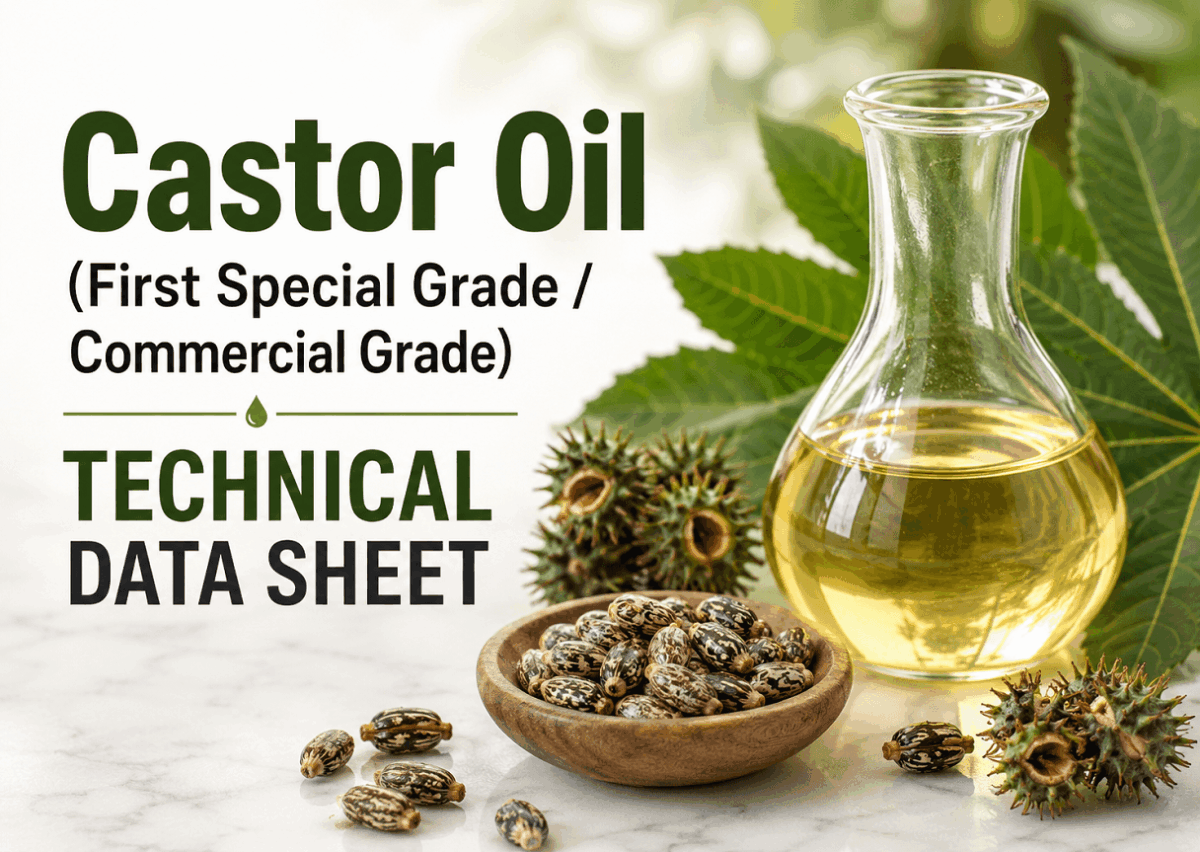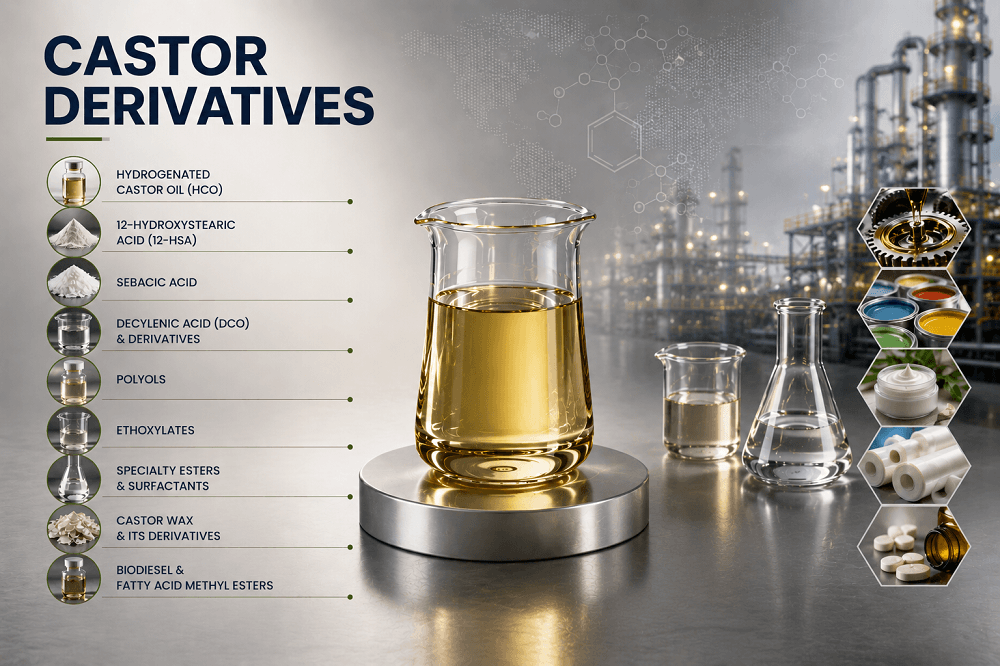

The EV manufacturing industry is currently grappling with complex supply chain issues regarding specialty materials. Castor-based chemistry, long used in heavy industry, has emerged as a preferred bio-based input due to the increasingly specific requirements of material science in EV production.
The Chemical Advantage: Ricinoleic Acid
The utility of castor oil stems from ricinoleic acid, which comprises 85% to 90% of its fatty acid content. The presence of a hydroxyl group grants the oil unique industrial properties:
- Thermal Stability: Viscosity remains consistent across wide temperature ranges.
- Superior Lubricity: Provides strong film-forming capabilities for metal-on-metal contact.
- Versatility: Compatible with various polymers and resistant to oxidation.
- Sustainability: Offers high biodegradability and low toxicity.
Key Application Areas:
1. Drivetrain Lubrication
EV drivetrains operate at higher rotational speeds than internal combustion engines. Castor oil’s high viscosity index and low pour point make it ideal for protecting reduction gears and motor bearings in diverse climates. Derivatives like Dehydrated Castor Oil (DCO) are essential in formulating specialty gear oils that meet tight performance tolerances.
2. Lightweighting and Structural Components
To combat range anxiety, engineers use castor oil as a polyol in bio-based polyurethane production for lightweighting.
- Interior: Seat cushioning and door panel inserts.
- Structure: Acoustic damping, vibration isolation, and floor pan composites.
- Battery Safety: Cell-level protective enclosures and battery pack housings.
3. Battery Thermal Management
Castor oil and Hydrogenated Castor Oil (HCO) are used in thermal interface materials and dielectric cooling fluids. These materials help maintain lithium-ion cells within optimal temperature windows to prevent degradation or catastrophic failure. Additionally, blown castor oil provides high-temperature insulating coatings for battery modules.
4. Coatings, Sealants, and Adhesives
EVs require extensive sealing to protect high-voltage electrical connectors and motor housings from moisture and corrosion. 12-Hydroxy Stearic Acid (12-HSA), derived from castor oil, is a foundational raw material for the alkyd resins, epoxy modifiers, and grease formulations used throughout the chassis and drivetrain.
5. Nylon 11: The Essential Bio-Polymer
Nylon 11 is a 100% bio-based polyamide derived from castor-based undecylenic acid. It is prized for its flexibility at low temperatures and resistance to thermal cycling. In EVs, it is utilized for:
- High-voltage cable sheathing and wire harnesses.
- Fluid transfer tubing for cooling and braking systems.
- Powder coatings for structural parts and motor housings.
Conclusion
The integration of castor oil into the electric vehicle supply chain represents a significant shift from viewing bio-based materials as mere “green alternatives” to recognizing them as high-performance necessities. Its unique chemical structure, dominated by ricinoleic acid, provides a combination of thermal stability, lubricity, and chemical resistance that traditional mineral oils struggle to match under the high rotational speeds and rigorous thermal demands of EV drivetrains and battery systems.
Beyond its mechanical utility, the role of castor oil in lightweighting through polyurethane foams and the production of fully bio-based polymers like Nylon 11 directly addresses the dual industry pressures of extending vehicle range and reducing lifecycle carbon emissions. As EV manufacturers continue to scrutinize material origins and environmental compliance, castor-based chemistry stands as a mature, technically superior solution that bridges the gap between industrial performance and sustainable manufacturing.