
End-to-End Process Control from Seed to Shipment

The Green Revolution: Why Castor Oil & Its Derivatives are Indispensable for Every Industry

Introduction:

In a global landscape increasingly demanding sustainable, high-performance, and versatile raw materials, one natural resource stands head and shoulders above many others: the humble castor bean. From this extraordinary seed comes Castor Oil and an astonishing array of its derivatives, offering an unparalleled spectrum of applications across virtually every industrial sector. Far from being a niche ingredient, castor-based chemicals represent a green revolution, providing bio-based solutions that enhance product performance, reduce environmental impact, and drive innovation.

Why should every industry, from pharmaceuticals to automotive, re-evaluate its reliance on traditional materials and embrace the power of castor? Let’s explore the key benefits that make these natural wonders truly indispensable.

1. Unmatched Versatility: A Chemical Chameleon

The sheer adaptability of castor oil and its derivatives is breathtaking. The unique presence of a hydroxyl group on the ricinoleic acid molecule (the primary fatty acid in castor oil) allows for an incredible range of chemical transformations. This single feature enables the creation of:

  • Base Oils: From pharmaceutical-grade purity (USP/BP) to industrial workhorses (FSG, PP) and natural cosmetic emollients (Cold Pressed Virgin).
  • Waxes & Flakes: Hydrogenated Castor Oil (HCO/Castor Wax) provides hardness, stability, and high melting points for cosmetics, candles, and lubricants. 12-Hydroxy Stearic Acid (12-HSA) is a vital gelling agent for greases and a building block for polymers.
  • Specialty Esters & Surfactants: Ethoxylated Castor Oil (Cremophor/PEG) acts as a universal emulsifier and solubilizer, while Sulphated Castor Oil (Turkey Red Oil) is a historic and powerful wetting agent. Octyl/Butyl Ricinoleates are skin-loving emollients.
  • Reactive Intermediates: Dehydrated Castor Oil (DCO) and DCO Fatty Acid bring fast-drying properties to paints and coatings. Sebacic Acid and Undecylenic Acid are crucial monomers for specialty nylons, plasticizers, and antimicrobials.
  • Advanced Polymers & Additives: Poly Ricinoleic Acid functions as a robust emulsifier and texturizer, and Glycerides of Ricinoleic Acid (Monoglycerides) are indispensable food and cosmetic emulsifiers.

This vast chemical toolbox means a castor-based solution exists for almost any formulation challenge.

2. The Sustainable Advantage: Naturally Renewable & Biodegradable

In an era of increasing environmental consciousness, the bio-based origin of castor oil provides a significant competitive edge. Castor plants are hardy and can grow in arid regions unsuitable for food crops, minimizing competition for arable land. Products derived from castor are:

  • Renewable: Sourced from a continuously replenishing plant.
  • Biodegradable: Many derivatives naturally break down in the environment, reducing persistent pollution.
  • Non-toxic: Generally considered safe, making them ideal for applications that come into contact with humans or the environment.

Choosing castor means reducing reliance on petrochemicals, enhancing a company’s green credentials, and contributing to a circular economy.

3. Superior Performance: Beyond Basic Functionality

Castor derivatives aren’t just “green alternatives”; they often outperform their synthetic counterparts. Their unique chemical structures impart superior functional properties:

  • Enhanced Lubricity: Critical for high-performance greases and lubricants (e.g., lithium greases from 12-HSA, synthetic esters from Methyl Ricinoleate).
  • Exceptional Emulsification & Dispersion: Stabilizing complex formulations in cosmetics, food, and industrial processes (e.g., Ethoxylated Castor Oil, Poly Ricinoleic Acid).
  • Unique Film-Forming & Drying: Providing durable, flexible, and non-yellowing films for paints, coatings, and inks (e.g., DCO, DCO Fatty Acid).
  • Specialized Texturization: Imparting desired textures in food (e.g., chocolate with Poly Ricinoleic Acid) and luxurious feel in cosmetics (e.g., Octyl Ricinoleate).
  • Odor Neutralization: Directly absorbing malodors without masking them, perfect for modern deodorants (Zinc Ricinoleate).
  • Antimicrobial Properties: Offering natural protection in personal care and pharmaceuticals (Undecylenic Acid).
  • Improved Polymer Properties: Enhancing flexibility, low-temperature performance, and impact resistance in specialty nylons and polyurethanes (e.g., Sebacic Acid, Methyl 12-HSA).

4. Driving Innovation & Future-Proofing Industries

As regulatory pressures for greener chemistry intensify and consumer demand for natural, safe ingredients grows, industries that embrace castor oil and its derivatives are positioning themselves for future success. These materials enable innovation in:

  • Electric Vehicles (EVs): High-performance lubricants and battery components (via lithium greases and other derivatives).
  • Sustainable Packaging: Bio-plastics and coatings with improved properties.
  • Clean Label Products: Natural and effective ingredients for food, cosmetics, and pharmaceuticals.
  • Advanced Materials: Creating flexible nylons and specialty resins with unique performance characteristics.

Conclusion:

The message is clear: castor oil and its remarkable family of derivatives are no longer just alternative ingredients; they are foundational to a more sustainable, high-performing, and innovative industrial future. By leveraging the inherent strengths of this versatile bio-based resource, industries can not only optimize their products and processes but also contribute meaningfully to a greener planet. It’s time for every industry to discover the indispensable power of castor oil derivatives and join the green revolution.

  • Castor Oil Benefits
  • Castor Oil Derivatives
  • Industrial Castor Oil Uses
  • Sustainable Chemicals
  • Bio-based Solutions
  • Green Chemistry
  • Renewable Resources
  • Versatile Raw Materials
  • High-Performance Chemicals
  • Castor Oil Applications
  • Natural Ingredients for Industry
  • Castor Oil for Manufacturing
  • Eco-friendly Industrial Chemicals
  • Future-Proofing Industry
  • Why use castor oil in manufacturing
  • Benefits of castor oil derivatives for various industries
  • Sustainable alternatives to petrochemicals
  • How castor oil enhances product performance
  • Industrial applications of castor oil and its derivatives
  • The role of castor oil in green chemistry
  • Castor oil derivatives for cosmetics and pharmaceuticals
  • Using castor oil in lubricants and coatings
  • Environmental benefits of castor oil-based products
  • Castor oil as a versatile chemical intermediate
  • Innovation with castor oil in modern industry
  • Castor oil for electric vehicles and new technologies
  • Improving sustainability with castor oil derivatives
  • Castor oil for personal care and food industry
  • The future of industrial chemicals with castor oil#CastorOil #CastorDerivatives #BioBased #GreenChemistry #SustainableSolutions #RenewableResources #IndustrialChemicals #NaturalIngredients #EcoFriendly #ChemicalInnovation #SustainableManufacturing #FutureOfIndustry #MadeInIndia (if applicable)#VersatileChemicals #HighPerformance #Biodegradable #NonToxic #EnhancedLubricity #Emulsifiers #FilmForming #OdorNeutralizer #Antimicrobial #Texturizing #CleanLabel #CircularEconomy

    #Cosmetics #PersonalCare #Pharmaceuticals #PaintsAndCoatings #Lubricants #Greases #AutomotiveIndustry #EVBatteries #Adhesives #Sealants #Textiles #FoodIndustry #Confectionery #Polymers #Plastics #Agrochemicals #MetalworkingFluids #PackagingSolutions #BuildingMaterials

    #Innovation #Sustainability #ChemicalTrends #RethinkChemicals #GreenSolutions #FutureProofYourBusiness #SustainableDevelopment #ResponsibleSourcing #SupplyChain #ManufacturingExcellence #Industry40 #BioEconomy

    #HydrogenatedCastorOil #HCO #CastorWax #12HSA #DehydratedCastorOil #DCO #SebacicAcid #UndecylenicAcid #EthoxylatedCastorOil #PEGCastorOil #TurkeyRedOil #TRO #BlownCastorOil #ZincRicinoleate #OctylRicinoleate #MethylRicinoleate #PolyRicinoleicAcid #GlyceridesOfRicinoleicAcid #DCOFattyAcid
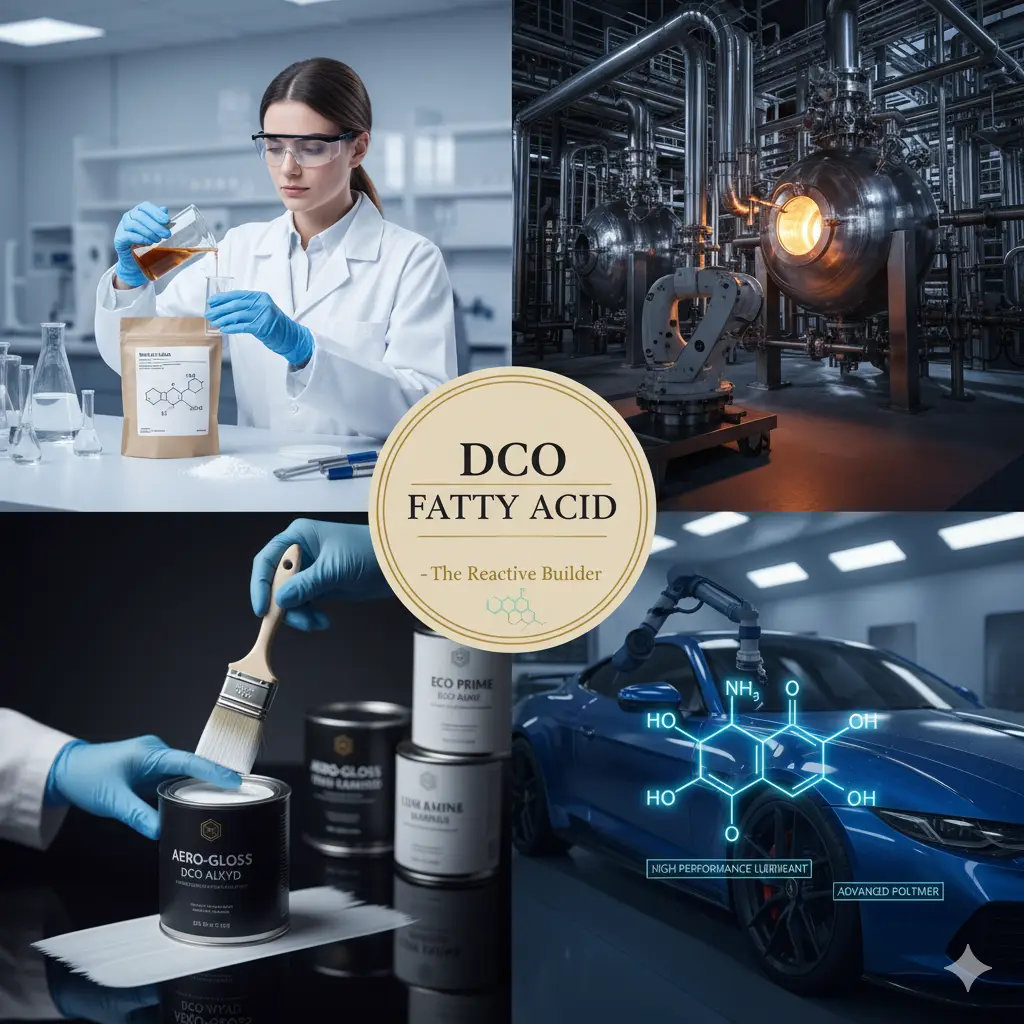

The Reactive Builder: Unlocking the Advanced Chemistry of DCO Fatty Acid

The Reactive Builder: Unlocking the Advanced Chemistry of DCO Fatty Acid


Introduction:

While Dehydrated Castor Oil (DCO) is known for its drying properties, its constituent DCO Fatty Acid (often referred to as DCOFA) offers an even more refined and reactive chemical building block. This specialty fatty acid, characterized by its conjugated double bonds and carboxylic acid group, is a powerful intermediate for synthesizing a new generation of high-performance alkyd resins, polyamides, and other specialty chemicals. It brings the desirable properties of DCO into a form optimized for precise chemical synthesis. What makes DCO Fatty Acid such a vital component for advanced polymeric and coating innovations? Let’s delve into its sophisticated chemistry.

What is DCO Fatty Acid?

DCO Fatty Acid (Dehydrated Castor Oil Fatty Acid) is derived from the hydrolysis of Dehydrated Castor Oil (DCO). DCO itself is produced by removing water from ricinoleic acid within castor oil, creating conjugated double bonds. When DCO is split into its fatty acid components, DCO Fatty Acid is obtained. This acid retains the crucial conjugated double bond system (typically 9,11-octadecadienoic acid and 9,12-octadecadienoic acid isomers), along with a free carboxylic acid group. These two reactive functionalities make DCOFA exceptionally versatile for polymerization, esterification, and other chemical transformations, allowing for the creation of unique polymers and resins with enhanced properties. It is typically a pale yellow to amber liquid.

Key Characteristics and Functional Advantages:

  • Conjugated Double Bonds: This is its defining feature. The conjugated system (alternating single and double bonds) makes DCOFA highly reactive, enabling it to participate readily in polymerization reactions (e.g., Diels-Alder reactions, free radical polymerization) and cross-linking, leading to the formation of tough, durable films.
  • Carboxylic Acid Reactivity: The free carboxylic acid group allows for esterification with various alcohols (e.g., glycerol, pentaerythritol) to form specialty esters, alkyd resins, and polyesters.
  • Drying Properties: Like DCO oil, DCOFA-derived polymers exhibit excellent drying properties, forming hard, glossy, and flexible films upon exposure to air and heat.
  • Good Color Retention & Non-Yellowing: Products made with DCOFA often demonstrate superior color stability and resistance to yellowing compared to traditional drying oil fatty acids.
  • Bio-based and Sustainable: Derived from renewable castor oil, DCOFA provides an environmentally friendly alternative to petrochemical-based fatty acids for coatings and polymers.
  • Enhanced Water & Chemical Resistance: Polymers and resins derived from DCOFA typically exhibit good resistance to water and various chemicals.
  • Versatile Chemical Intermediate: Its dual reactive sites make it a powerful building block for a vast range of specialty chemicals.

Diverse Applications of DCO Fatty Acid:

The unique properties of DCO Fatty Acid make it indispensable as a chemical intermediate in several high-performance industries:

  • Alkyd Resins & Polyesters: It is a key raw material in the manufacture of high-quality short-oil and medium-oil alkyd resins, which are widely used in fast-drying paints, enamels, and varnishes for industrial, automotive, and decorative coatings. It also contributes to specialty polyester synthesis.
  • Polyamides: Can be incorporated into specialty polyamide formulations, imparting flexibility and other desired properties.
  • Lubricants: Used in the synthesis of specialty esters for high-performance lubricants.
  • Coatings & Inks: Directly used or as a component in binders for printing inks and protective coatings, improving drying speed, gloss, hardness, and adhesion.
  • Adhesives: Can be employed in certain adhesive formulations to enhance film formation and flexibility.
  • Chemical Synthesis: Serves as a reactive intermediate for producing various specialty chemicals where conjugated unsaturation and a carboxylic acid group are required.

Why Choose Our DCO Fatty Acid?

We supply high-purity DCO Fatty Acid, precisely manufactured from renewable castor oil to ensure optimal reactivity and consistent performance in your advanced chemical syntheses. Our commitment to quality provides a reliable source of this essential conjugated fatty acid, empowering your innovations with superior materials and sustainable advantages.

Conclusion:

DCO Fatty Acid is a sophisticated derivative that harnesses the unique conjugated double bond system from dehydrated castor oil, offering a highly reactive and versatile chemical intermediate. As a cornerstone for the synthesis of advanced alkyd resins, specialty polymers, and high-performance coatings, DCOFA enables the creation of materials with exceptional drying properties, durability, and color retention. For formulators pushing the boundaries of chemical innovation, DCO Fatty Acid is an indispensable bio-based builder.


  • DCO Fatty Acid
  • Dehydrated Castor Oil Fatty Acid
  • Conjugated Fatty Acid
  • Castor Oil Derivative
  • DCOFA supplier


  • Alkyd resin raw material
  • Polyester intermediate
  • Polymer building block
  • Drying oil fatty acid
  • Non-yellowing fatty acid
  • Conjugated unsaturation
  • Bio-based fatty acid
  • Coating resin component
  • Paint binder fatty acid
  • Ink resin precursor
  • Specialty fatty acid
  • Ricinoleic acid derivative (after dehydration)


  • Uses of DCO Fatty Acid in alkyd resin synthesis
  • Benefits of conjugated fatty acids in coatings
  • High purity DCO Fatty Acid for fast-drying paints
  • DCOFA as a bio-based polymer intermediate
  • Applications of dehydrated castor oil fatty acid in inks
  • Suppliers of high quality DCO Fatty Acid
  • Chemical reactivity of DCO fatty acid for polymers
  • DCOFA for enhanced film hardness and gloss

The Power Catalyst: Unveiling the Critical Role of Lithium Hydroxide Monohydrate

The Power Catalyst: Unveiling the Critical Role of Lithium Hydroxide Monohydrate


Introduction:

In the world of high-performance materials and cutting-edge energy solutions, some chemicals are foundational. Lithium Hydroxide Monohydrate is precisely one such compound, a white crystalline powder that serves as a vital precursor and catalyst in industries ranging from battery technology to advanced lubricants and ceramics. Known for its strong alkalinity and specific chemical reactivity, this lithium salt is indispensable for creating products that meet the demands of modern innovation. What makes Lithium Hydroxide Monohydrate such a powerful and critical chemical in today’s technological landscape? Let’s explore its essential applications.

What is Lithium Hydroxide Monohydrate?

Lithium Hydroxide Monohydrate (LiOH·H₂O) is a strong inorganic base, a white crystalline solid that is highly soluble in water. It is derived from lithium carbonate or directly from lithium-bearing minerals. The “monohydrate” indicates that one molecule of water is chemically bonded within its crystal structure. Its primary significance lies in its ability to provide a source of lithium ions and its strong alkaline properties. It is a key ingredient in numerous chemical reactions and material syntheses, driving efficiency and performance in diverse industrial processes.

Key Characteristics and Industrial Advantages:

  • Strong Base/Alkalinity: As a strong alkali, it is highly reactive and effective in pH adjustment, saponification, and as a catalyst in various chemical syntheses.
  • Source of Lithium Ions: It is a crucial precursor for the production of other lithium compounds, most notably lithium salts used in batteries.
  • High Thermal Stability (once calcined): While the monohydrate can lose water at elevated temperatures, the anhydrous form (LiOH) is thermally stable and critical for high-temperature applications.
  • Low Molecular Weight: Lithium’s low atomic weight contributes to high energy density in battery applications.
  • Good Solubility in Water: Allows for easy dissolution and handling in aqueous systems.
  • Versatile Reactivity: Participates in a wide range of inorganic and organic reactions.

Diverse Applications of Lithium Hydroxide Monohydrate:

The unique properties of Lithium Hydroxide Monohydrate make it indispensable in several high-growth and critical industries:

  • Battery Technology (Lithium-ion Batteries): This is its most significant and rapidly growing application. It is a key precursor for synthesizing lithium nickel cobalt manganese oxide (NCM) and lithium nickel cobalt aluminum oxide (NCA) cathodes, which are vital components in electric vehicle (EV) batteries, portable electronics, and energy storage systems.
  • Lubricants and Greases: It is the primary raw material for manufacturing lithium greases (e.g., lithium stearate grease, lithium 12-hydroxystearate grease). Lithium greases are multi-purpose, high-performance lubricants used extensively in automotive, industrial, and aerospace sectors due to their excellent temperature range, water resistance, and shear stability.
  • Ceramics and Glass: Used as a fluxing agent to lower melting points, improve strength, and reduce thermal expansion in glass, ceramics, and enamels.
  • Air Purification Systems: In its anhydrous form, lithium hydroxide is used in closed-loop breathing systems (e.g., submarines, spacecraft, rebreathers) to absorb carbon dioxide.
  • Chemical Synthesis: Serves as a strong base and catalyst in various organic and inorganic chemical reactions.
  • Specialty Cements and Concrete: Can be used as an additive to modify setting times and other properties.

Why Choose Our Lithium Hydroxide Monohydrate?

We supply high-purity Lithium Hydroxide Monohydrate, rigorously sourced and processed to meet the exacting demands of battery manufacturers, lubricant producers, and other industrial clients. Our commitment to quality ensures a consistent and reliable supply of this critical chemical, empowering your innovations with superior performance and reliability.

Conclusion:

Lithium Hydroxide Monohydrate is a chemical powerhouse, quietly enabling breakthroughs in some of the most critical technologies of our time. From powering electric vehicles and electronic devices to ensuring the smooth operation of industrial machinery, its versatility and reactive properties make it an indispensable ingredient. As the world accelerates towards sustainable energy and advanced materials, Lithium Hydroxide Monohydrate will continue to play a pivotal role in shaping our future.


Relevant Keywords for Lithium Hydroxide Monohydrate:


Primary Keywords:

  • Lithium Hydroxide Monohydrate
  • LiOH Monohydrate
  • Lithium Battery Precursor
  • Lithium Grease Raw Material
  • Lithium Hydroxide supplier

Secondary Keywords:

  • Lithium-ion battery cathode
  • EV battery material
  • NCM cathode precursor
  • NCA cathode precursor
  • Strong inorganic base
  • Alkali chemical
  • Carbon dioxide absorbent
  • Ceramic fluxing agent
  • Glass additive
  • Chemical intermediate lithium
  • High purity LiOH
  • Battery grade lithium hydroxide

Long-Tail Keywords/Phrases:

  • Uses of Lithium Hydroxide Monohydrate in EV batteries
  • Benefits of LiOH monohydrate for lithium grease manufacturing
  • High purity lithium hydroxide for cathode materials
  • Role of lithium hydroxide in carbon dioxide absorption
  • Suppliers of battery-grade lithium hydroxide monohydrate
  • Lithium hydroxide for industrial ceramics
  • Chemical properties and applications of LiOH·H₂O
  • Lithium hydroxide monohydrate in energy storage systems

The Emulsifying Maestro: Unveiling the Power of Glycerides of Ricinoleic Acid (Monoglycerides)

Introduction:

In the complex dance of creating stable and harmonious formulations, emulsifiers play a leading role. Among the most effective and versatile are Glycerides of Ricinoleic Acid, particularly Monoglycerides. These unique partial esters of glycerin and ricinoleic acid (derived from castor oil) are indispensable for their ability to blend oil and water seamlessly, providing essential stability, texture, and functionality across food, cosmetic, and industrial applications. What makes these bio-based monoglycerides such an emulsifying maestro, and why are they a preferred choice for achieving perfect consistency? Let’s explore their intricate world.

What are Glycerides of Ricinoleic Acid (Monoglycerides)?

Glycerides of Ricinoleic Acid (typically referring to Monoglycerides of Ricinoleic Acid, or GMR) are produced by the esterification of glycerol with ricinoleic acid, the primary fatty acid from castor oil. A monoglyceride means that one molecule of ricinoleic acid is esterified to one molecule of glycerol, leaving two free hydroxyl groups on the glycerol backbone. This specific structure, with both oil-soluble (fatty acid chain) and water-soluble (hydroxyl groups) portions, makes them excellent amphiphilic molecules—perfect for acting as emulsifiers. They are typically viscous liquids to soft, waxy solids, often pale yellow, with properties that make them highly valuable in stabilization, emulsification, and texturization.

Key Characteristics and Functional Advantages:

  • Exceptional Emulsifying Properties: Their primary role is to create and stabilize emulsions, allowing oil and water to mix, preventing phase separation. They are particularly effective for water-in-oil (W/O) and oil-in-water (O/W) emulsions depending on the specific esterification and other components.
  • Surface Activity: As highly surface-active agents, they reduce interfacial tension between immiscible liquids, facilitating stable blends.
  • Texturizing Agent: They contribute to the desired texture and mouthfeel in food products and the sensory experience in cosmetics, improving creaminess, spreadability, and body.
  • Moisture Retention: In some applications, they can help retain moisture, contributing to hydration.
  • Film-Forming Capabilities: Can contribute to the formation of protective or functional films.
  • Bio-based and Biodegradable: Derived from renewable castor oil and glycerol, they offer a sustainable and environmentally friendly ingredient solution.
  • Food Grade Compatibility (where applicable): Specific grades are approved for use in food, acting as safe and effective food additives.
  • Mild and Non-Irritating: Generally well-tolerated in personal care applications.

Diverse Applications of Glycerides of Ricinoleic Acid (Monoglycerides):

The versatility and effectiveness of these monoglycerides make them indispensable across a broad range of industries:

  • Food Industry:
    • Bakery: Improves dough strength, crumb softness, and extends shelf life in bread and pastries.
    • Confectionery: Used in chocolates and candies for textural modification, anti-blooming, and improved flow.
    • Dairy & Fats: Stabilizes emulsions in ice cream, whipped toppings, margarine, and shortenings, preventing crystallization and enhancing texture.
    • Beverages: Acts as an emulsifier in non-alcoholic beverages.
  • Cosmetics and Personal Care:
    • Creams & Lotions: Excellent emulsifiers and co-emulsifiers for stable and luxurious skin care formulations.
    • Hair Care: Conditioners and styling products for smooth feel and improved manageability.
    • Makeup: In foundations and mascaras for texture and stability.
  • Pharmaceuticals: Used as an emulsifying agent or solubilizer in topical and some oral drug formulations.
  • Industrial Applications: Employed as emulsifiers, dispersants, and lubricants in various industrial processes, including textiles, plastics, and metalworking fluids.

Why Choose Our Glycerides of Ricinoleic Acid (Monoglycerides)?

We supply high-quality Glycerides of Ricinoleic Acid (Monoglycerides), meticulously manufactured from renewable castor oil to ensure optimal emulsifying and texturizing performance. Our commitment to quality provides a consistent and reliable source of this essential bio-based ingredient, empowering your formulations with superior stability, texture, and functionality.

Conclusion:

Glycerides of Ricinoleic Acid (Monoglycerides) are true emulsifying maestros, leveraging the unique structure of castor oil to bridge the gap between immiscible ingredients. From creating the perfect texture in food to stabilizing luxurious cosmetics, their versatile surface-active properties make them indispensable. For formulators seeking natural-origin, high-performance emulsifiers, these monoglycerides offer an elegant and effective solution for achieving unparalleled product quality.


Relevant Keywords for Glycerides of Ricinoleic Acid (Monoglycerides):


Primary Keywords:

  • Glycerides of Ricinoleic Acid
  • Monoglycerides of Ricinoleic Acid
  • GMR Emulsifier
  • Castor Oil Emulsifier
  • Ricinoleate Monoglyceride supplier

Secondary Keywords:

  • Partial glycerol ester
  • Food emulsifier
  • Cosmetic emulsifier
  • Texturizing agent
  • Emulsion stabilizer
  • Bio-based emulsifier
  • Non-ionic emulsifier
  • Water-in-oil emulsifier (or O/W, depending on specific grade)
  • Shortening emulsifier
  • Bakery ingredient
  • Dairy stabilizer
  • Personal care emulsifier
  • Castor derivative

Long-Tail Keywords/Phrases:

  • Uses of Monoglycerides of Ricinoleic Acid in food products
  • Benefits of GMR for emulsion stability in cosmetics
  • High quality Glycerides of Ricinoleic Acid for bakery
  • Ricinoleate monoglycerides as a natural food additive
  • How GMR improves texture in ice cream
  • Suppliers of bio-based ricinoleic acid monoglycerides
  • Glycerides of ricinoleic acid for pharmaceutical emulsions
  • Monoglycerides from castor oil for personal care

The Polymeric Powerhouse: Exploring the Versatility of Poly Ricinoleic Acid

Introduction:

Beyond simple esters and derivatives, the unique structure of ricinoleic acid—with its hydroxyl group and carboxylic acid group—allows for polymerization, creating Poly Ricinoleic Acid (PRA). This specialty polymer is a remarkable example of nature’s design enabling advanced functionality, particularly as an effective emulsifier, dispersant, and film-former. PRA’s polymeric backbone provides enhanced stability and a broad range of capabilities, making it indispensable in diverse applications from food and cosmetics to industrial formulations. What makes Poly Ricinoleic Acid such a unique and powerful polymeric additive? Let’s delve into its sophisticated world.

What is Poly Ricinoleic Acid?

Poly Ricinoleic Acid (PRA) is a polyester formed through the controlled self-polymerization of ricinoleic acid, the primary fatty acid of castor oil. This polymerization occurs by the reaction of the hydroxyl group of one ricinoleic acid molecule with the carboxylic acid group of another, forming an ester linkage and creating a long chain of repeating ricinoleic acid units. The process yields a viscous liquid to semi-solid polymer, characterized by its multiple ester bonds and remaining free hydroxyl and carboxylic acid groups, which contribute to its surface-active properties. It is a bio-based polymer known for its excellent emulsifying, dispersing, and stabilizing capabilities.

Key Characteristics and Functional Advantages:

  • Polymeric Structure: Unlike monomeric ricinoleic acid or its simple esters, PRA’s polymeric chain provides enhanced stability, higher molecular weight, and different rheological properties.
  • Exceptional Emulsifier & Dispersing Agent: Its amphiphilic nature (both oil-loving and water-loving segments) makes it a highly effective non-ionic emulsifier, particularly for water-in-oil (W/O) emulsions, and a powerful dispersant for pigments and solids.
  • Film-Forming Properties: PRA can form flexible, protective films, which is advantageous in coatings, adhesives, and some cosmetic applications.
  • Viscosity Modification: It can act as a rheology modifier, influencing the consistency and flow of formulations.
  • Good Compatibility: Compatible with a wide range of oils, waxes, and resins, enhancing formulation flexibility.
  • Moisturizing and Conditioning: In personal care, it contributes to skin conditioning and can improve the feel of formulations.
  • Bio-based and Biodegradable: Derived entirely from renewable castor oil, PRA offers a highly sustainable and environmentally friendly polymeric solution.
  • Low Toxicity: Generally considered to have low toxicity, suitable for applications that include food and personal care.

Diverse Applications of Poly Ricinoleic Acid:

The unique properties of Poly Ricinoleic Acid make it invaluable across a variety of industries:

  • Food Industry: Widely used as a polyglycerol polyricinoleate (PGPR) in chocolate and confectionery to reduce viscosity, improve flow properties, and prevent “fat bloom.” It also serves as an emulsifier in low-fat spreads and dressings.
  • Cosmetics and Personal Care: An excellent W/O emulsifier for rich creams, lotions, and sunscreens, providing a luxurious feel and enhancing stability. It can also be found in color cosmetics for pigment dispersion.
  • Paints, Coatings, and Inks: Functions as a pigment dispersant, wetting agent, and rheology modifier, improving color development, stability, and application properties.
  • Adhesives and Sealants: Enhances flexibility, adhesion, and acts as a dispersing agent in certain formulations.
  • Lubricants and Functional Fluids: Can be a component in specialty lubricants where its polymeric nature and inherent lubricity are beneficial.
  • Plasticizers: Acts as a bio-based plasticizer in some polymer systems, contributing to flexibility.

Why Choose Our Poly Ricinoleic Acid?

We supply high-quality Poly Ricinoleic Acid, meticulously polymerized from renewable ricinoleic acid to ensure optimal emulsifying, dispersing, and film-forming performance. Our commitment to quality provides a consistent and reliable source of this advanced bio-based polymer, empowering your formulations with superior functionality and sustainable advantages.

Conclusion:

Poly Ricinoleic Acid is a testament to the advanced chemical possibilities derived from nature. By harnessing the unique structure of ricinoleic acid, PRA offers a powerful, bio-based polymeric solution for complex formulation challenges. As an exceptional emulsifier, dispersant, and film-former, it is an indispensable ingredient for industries striving for both high performance and environmental responsibility. Embrace the polymeric potential of Poly Ricinoleic Acid in your next innovation.


Relevant Keywords for Poly Ricinoleic Acid:


Primary Keywords:

  • Poly Ricinoleic Acid
  • PRA Polymer
  • Castor Oil Polymer
  • Polymeric Emulsifier
  • Poly Ricinoleic Acid supplier

Secondary Keywords:

  • PGPR alternative (or PGPR if you supply that specifically)
  • Water-in-oil emulsifier
  • Pigment dispersant
  • Bio-based polymer
  • Natural polymer
  • Food grade emulsifier (if applicable)
  • Cosmetic polymer
  • Rheology modifier
  • Film-forming polymer
  • Castor derivative polymer
  • Sustainable polymer
  • Polyester ricinoleic acid

Long-Tail Keywords/Phrases:

  • Uses of Poly Ricinoleic Acid in chocolate confectionery
  • Benefits of PRA as a W/O emulsifier in cosmetics
  • High quality Poly Ricinoleic Acid for pigment dispersion
  • Poly Ricinoleic Acid as a sustainable polymer
  • Applications of PRA in paints and coatings
  • Suppliers of bio-based Poly Ricinoleic Acid
  • Polymerization of ricinoleic acid and its uses
  • PRA for enhanced emulsion stability

The Foundation Ester: Unlocking Versatility with Methyl Ricinoleate (MR)

The Foundation Ester: Unlocking Versatility with Methyl Ricinoleate (MR)


Introduction:

At the heart of castor oil’s chemical versatility lies ricinoleic acid, and when this unique fatty acid is esterified with methanol, it yields Methyl Ricinoleate (MR). This advanced derivative is a highly valuable chemical intermediate, renowned for its excellent solvency, lubricity, and the reactive hydroxyl group and double bond characteristic of ricinoleic acid, but in a more manageable and refined form. Methyl Ricinoleate serves as a crucial building block for a vast array of downstream products, from sophisticated lubricants to specialized polymers and functional fluids. What makes MR such a foundational and indispensable component for advanced chemical synthesis? Let’s explore its wide-ranging potential.

What is Methyl Ricinoleate (MR)?

Methyl Ricinoleate (MR) is the methyl ester of ricinoleic acid, the primary fatty acid component of castor oil. It is produced through the esterification of ricinoleic acid with methanol. This process results in a clear to pale yellow liquid with a mild, characteristic odor. Crucially, Methyl Ricinoleate retains both the reactive hydroxyl group at the 12th carbon position and the double bond (unsaturation) within its fatty acid chain. These two functional groups make MR an exceptionally versatile chemical intermediate, enabling it to undergo a wide variety of chemical reactions, making it a “platform molecule” for many advanced derivatives.

Key Characteristics and Functional Advantages:

  • Bifunctional Reactivity: Like ricinoleic acid, MR possesses both a hydroxyl group (-OH) and an unsaturated double bond (C=C). This dual functionality allows for diverse chemical modifications, including epoxidation, hydrogenation, sulphation, and reactions involving the hydroxyl group, leading to a vast array of secondary derivatives.
  • Excellent Solvency and Lubricity: Methyl Ricinoleate exhibits good solvency for many organic materials and polymers. It also offers inherent lubricity, making it valuable in various functional fluids and lubricant formulations.
  • Low Viscosity (compared to Castor Oil): Being an ester, MR has a lower viscosity than raw castor oil, which can be advantageous in formulations requiring easier handling, better flow, or lighter feel.
  • Good Plasticizer Properties: It can act as a plasticizer for certain polymers, enhancing flexibility and processing.
  • Biodegradable and Bio-based: Derived from renewable castor oil, MR is an environmentally friendly choice, aligning with green chemistry principles.
  • Improved Compatibility: The ester form can offer improved compatibility with certain non-polar systems compared to the free acid.
  • Stable in Formulations: Provides good oxidative stability in many applications, especially when fully hydrogenated.

Diverse Applications of Methyl Ricinoleate (MR):

The versatility of Methyl Ricinoleate makes it a critical intermediate and component across numerous high-tech and industrial sectors:

  • Chemical Intermediates & Synthesis: Its primary role is as a versatile building block for synthesizing a wide range of castor derivatives, including sebacic acid, undecylenic acid, and various specialty esters, amides, and polyols.
  • Lubricants and Functional Fluids: Used in the formulation of high-performance biodegradable lubricants, metalworking fluids, and hydraulic fluids, where its inherent lubricity and stability are valued. It can also be a component in coolants.
  • Polymers and Resins: Employed as a plasticizer for PVC and other polymers, and as a starting material for specialty polyols and urethanes. It can also be incorporated into alkyd resins.
  • Coatings and Inks: Used as a leveling agent, plasticizer, or solvent in certain paint, coating, and ink formulations.
  • Cosmetics and Personal Care: Can function as an emollient or solvent in some personal care formulations, especially those requiring a lighter feel than castor oil.
  • Textile Auxiliaries: Utilized as a lubricant or softening agent in some textile processing applications.

Why Choose Our Methyl Ricinoleate (MR)?

We supply high-purity Methyl Ricinoleate, meticulously produced from renewable castor oil to ensure optimal reactivity and consistent performance. Our commitment to quality provides a reliable source of this essential chemical intermediate, empowering your advanced syntheses and formulations with unparalleled versatility and sustainable benefits.

Conclusion:

Methyl Ricinoleate (MR) is a cornerstone of the advanced castor chemical industry. By distilling the unique characteristics of ricinoleic acid into a refined ester, MR becomes an extraordinarily versatile foundation for innovation. Its dual functionality, combined with excellent solvency and lubricity, makes it an indispensable ingredient for chemists and formulators seeking to create the next generation of high-performance, bio-based solutions.


Relevant Keywords for Methyl Ricinoleate (MR):


Primary Keywords:

  • Methyl Ricinoleate
  • MR Ester
  • Castor Oil Intermediate
  • Ricinoleic Acid Methyl Ester
  • Methyl Ricinoleate supplier

Secondary Keywords:

  • Fatty acid ester
  • Bio-based chemical intermediate
  • Lubricant base stock
  • Plasticizer MR
  • Chemical building block
  • Hydroxyl group reactivity
  • Unsaturated ester
  • Green chemistry ingredient
  • Castor chemical derivative
  • Metalworking fluid component
  • Polyester monomer
  • Polyurethane polyol precursor

Long-Tail Keywords/Phrases:

  • Uses of Methyl Ricinoleate in synthetic lubricants
  • Benefits of MR as a chemical intermediate
  • High purity Methyl Ricinoleate for advanced synthesis
  • Methyl ricinoleate as a bio-based plasticizer
  • Applications of MR in functional fluids
  • Suppliers of versatile Methyl Ricinoleate
  • Methyl ricinoleate’s role in green chemistry
  • Formulating with methyl ricinoleate for enhanced solvency

The Polymer Partner: Unleashing the Potential of Methyl 12-Hydroxy Stearate (Methyl 12-HSA)

The Polymer Partner: Unleashing the Potential of Methyl 12-Hydroxy Stearate (Methyl 12-HSA)


Introduction:

Building upon the versatile foundation of 12-Hydroxy Stearic Acid (12-HSA), its methyl ester, Methyl 12-Hydroxy Stearate (Methyl 12-HSA), offers a distinct set of advantages, particularly as a key intermediate in the synthesis of high-performance polymers and specialty lubricants. This advanced derivative retains the crucial hydroxyl group while boasting improved volatility and compatibility due to its ester form. It’s a bio-based workhorse that enables the creation of materials with enhanced flexibility, stability, and processing characteristics. What makes Methyl 12-HSA such a valuable building block for advanced applications? Let’s explore its refined capabilities.

What is Methyl 12-Hydroxy Stearate (Methyl 12-HSA)?

Methyl 12-Hydroxy Stearate (Methyl 12-HSA) is the methyl ester of 12-Hydroxy Stearic Acid, which itself is derived from hydrogenated castor oil. It is synthesized by esterifying 12-HSA with methanol. This process converts the carboxylic acid group of 12-HSA into a methyl ester group, while importantly retaining the hydroxyl group at the 12th carbon position. The presence of both the ester group and the hydroxyl group makes Methyl 12-HSA highly reactive and versatile. It is typically a white to off-white, waxy solid or flake with a low melting point, often appearing as a powder or flakes for ease of handling.

Key Characteristics and Functional Advantages:

  • Bifunctional Reactivity: It possesses both an ester group and a free hydroxyl group, allowing it to participate in various chemical reactions, including transesterification, oxidation, and polymerization. This makes it a crucial monomer and intermediate.
  • Monomer for Specialty Polymers: Methyl 12-HSA is a key precursor for the production of specialty polyamides (nylons) and polyesters. Its long chain and hydroxyl group contribute to polymers with enhanced flexibility, lower melting points, improved impact resistance, and better processing characteristics.
  • Lubricant and Emollient Properties: It can also function as a non-greasy emollient in personal care products and as a component in specialty lubricants, offering good film strength and lubricity.
  • Good Compatibility: The ester form often provides improved compatibility with various polymers, resins, and solvents compared to the free acid.
  • Bio-based Origin: Derived from renewable castor oil, aligning with sustainable and green chemistry initiatives.
  • Controlled Melting Point: Its relatively low and sharp melting point (compared to HCO or 12-HSA) can be advantageous in certain processing applications.
  • Plasticizing Effect: Can act as an internal plasticizer in some polymer systems, contributing to material flexibility.

Diverse Applications of Methyl 12-Hydroxy Stearate (Methyl 12-HSA):

The unique chemistry of Methyl 12-HSA makes it a vital building block in several high-tech and performance-driven industries:

  • Polymers and Resins:
    • Nylons: A critical monomer for producing specialty polyamides like Nylon 11 or Nylon 12, which are known for their flexibility, low density, and high performance in applications such as automotive parts, coatings, and textiles.
    • Polyesters: Used in the synthesis of specialty polyesters with improved properties.
    • Polyurethanes: Can serve as a polyol in certain polyurethane formulations.
  • High-Performance Lubricants: Employed as a component in synthetic esters for advanced lubricants and greases, enhancing viscosity, lubricity, and stability.
  • Personal Care and Cosmetics: Functions as an emollient, thickener, or stabilizer in creams, lotions, and stick formulations, offering a pleasant feel and aiding in texture.
  • Adhesives and Sealants: Can contribute to flexibility and adhesion properties in certain systems.
  • Waxes and Polishes: Used as a modifying agent to improve hardness or gloss.

Why Choose Our Methyl 12-Hydroxy Stearate (Methyl 12-HSA)?

We supply high-purity Methyl 12-Hydroxy Stearate, precisely manufactured from renewable castor oil to ensure optimal performance in your advanced applications. Our commitment to quality provides a consistent and reliable source of this essential monomer and intermediate, empowering your innovations with superior materials and sustainable advantages.

Conclusion:

Methyl 12-Hydroxy Stearate (Methyl 12-HSA) is a sophisticated derivative that unlocks advanced performance from a natural resource. As a key monomer for specialty polymers like flexible nylons and an integral component in high-performance lubricants, its unique bifunctional structure enables breakthroughs in material science. For formulators pushing the boundaries of what’s possible, Methyl 12-HSA is an indispensable advanced derivative.


Relevant Keywords for Methyl 12-Hydroxy Stearate (Methyl 12-HSA):


Primary Keywords:

  • Methyl 12-Hydroxy Stearate
  • Methyl 12-HSA
  • 12-HSA Methyl Ester
  • Castor Oil Advanced Derivative
  • Methyl 12-HSA supplier

Secondary Keywords:

  • Specialty polyamide monomer
  • Nylon 11 precursor
  • Synthetic lubricant intermediate
  • Bio-based polymer building block
  • Hydroxylated fatty acid ester
  • Cosmetic emollient methyl 12-HSA
  • Plasticizer additive
  • Waxy ester
  • Advanced chemical intermediate
  • Renewable polymer ingredient

Long-Tail Keywords/Phrases:

  • Uses of Methyl 12-Hydroxy Stearate in specialty nylons
  • Benefits of Methyl 12-HSA for flexible polymers
  • High purity Methyl 12-HSA for lubricants
  • Methyl 12-hydroxy stearate as a bio-based monomer
  • Applications of Methyl 12-HSA in engineering plastics
  • Suppliers of advanced castor oil derivatives
  • Methyl 12-HSA for polyurethane synthesis
  • Formulating with methyl 12-hydroxystearate in cosmetics

The Skin-Loving Ester: Unveiling the Benefits of Octyl/Butyl Ricinoleate

Introduction:

In the realm of high-performance emollients and lubricants, Octyl Ricinoleate and Butyl Ricinoleate stand out as versatile and skin-friendly esters derived from renewable castor oil. These specialty chemicals are prized for their exceptional spreadability, non-greasy feel, and ability to impart luxurious textures and superior lubrication in a wide array of cosmetic, personal care, and industrial formulations. Unlike heavier oils, these esters offer a unique balance of conditioning and light feel. What makes octyl and butyl ricinoleate such sought-after ingredients for enhancing sensory experiences and functional performance? Let’s explore their unique attributes.

What are Octyl Ricinoleate and Butyl Ricinoleate?

Octyl Ricinoleate and Butyl Ricinoleate are fatty acid esters formed by reacting ricinoleic acid (the primary fatty acid in castor oil) with octyl alcohol (for Octyl Ricinoleate) or butyl alcohol (for Butyl Ricinoleate). This esterification process transforms the thick, somewhat sticky nature of raw castor oil into lighter, more elegant oils that retain many of the beneficial properties of ricinoleic acid but with improved feel, spreadability, and compatibility. They are typically clear, pale yellow liquids with a mild odor, making them ideal for formulations where color and scent are critical.

Key Characteristics and Functional Advantages:

  • Exceptional Emollient Properties: They provide superior skin conditioning and moisturization, leaving the skin feeling soft and smooth without a heavy, greasy residue.
  • Excellent Spreadability: Their low viscosity and elegant slip make them ideal for products that require easy application and rapid absorption, enhancing the sensory profile of creams, lotions, and makeup.
  • Non-Greasy Feel: Unlike many other oils, octyl and butyl ricinoleate offer a non-tacky, light, and silky feel on the skin, significantly improving the aesthetic appeal of personal care products.
  • Good Solvency: They can help dissolve and disperse other oil-soluble ingredients, such as fragrances, active ingredients, and pigments, ensuring uniform formulations.
  • Improved Pigment Wetting/Dispersion: Particularly beneficial in color cosmetics for achieving even pigment distribution and smooth application.
  • Lubricity and Film Formation: They provide good lubricating properties and can form a protective, breathable film on skin and hair.
  • Bio-based Origin: Derived from renewable castor oil, offering a sustainable and eco-friendly ingredient choice.
  • Good Compatibility: Compatible with a wide range of cosmetic and industrial ingredients.

Diverse Applications of Octyl/Butyl Ricinoleate:

The unique blend of emollience, spreadability, and light feel makes these ricinoleate esters invaluable across multiple industries:

  • Cosmetics and Personal Care:
    • Skin Care: Creams, lotions, serums, body oils for deep moisturization with a non-greasy finish.
    • Hair Care: Conditioners, hair masks, styling products for shine, softness, and detangling.
    • Color Cosmetics: Lipsticks, foundations, mascaras as emollients, pigment dispersants, and to improve spreadability.
    • Sunscreens: Enhances spreadability and solubilizes UV filters.
  • Industrial Lubricants and Metalworking Fluids: Used in specialty lubricants where biodegradable, skin-friendly, and high-performance esters are required.
  • Textile Auxiliaries: Can be used as softeners and lubricants in textile processing.
  • Household Products: In polishes and cleaners where a non-greasy shine and conditioning are desired.

Why Choose Our Octyl/Butyl Ricinoleate?

We supply high-purity Octyl Ricinoleate and Butyl Ricinoleate, meticulously manufactured from renewable castor oil to deliver superior performance. Our commitment to quality ensures a consistent and reliable source of these versatile esters, empowering your formulations with enhanced sensory appeal, effective conditioning, and sustainable advantages.

Conclusion:

Octyl and Butyl Ricinoleate exemplify the sophisticated versatility of castor oil derivatives. By transforming the parent oil into elegant, skin-loving esters, they unlock new possibilities for formulators seeking to create products that are not only highly effective but also provide a delightful user experience. For superior emollients and lubricants with a sustainable edge, these ricinoleate esters are the intelligent choice.


Relevant Keywords for Octyl/Butyl Ricinoleate:


Primary Keywords:

  • Octyl Ricinoleate
  • Butyl Ricinoleate
  • Ricinoleate Ester
  • Castor Oil Emollient
  • Octyl/Butyl Ricinoleate supplier

Secondary Keywords:

  • Skin conditioning agent
  • Non-greasy emollient
  • Cosmetic ester
  • Lubricant ester
  • Pigment dispersant
  • Hair care emollient
  • Makeup ingredient
  • Bio-based lubricant
  • Spreadable emollient
  • Light feel oil
  • Castor oil derivative
  • Fatty acid ester

Long-Tail Keywords/Phrases:

  • Benefits of Octyl Ricinoleate in skin care creams
  • How Butyl Ricinoleate improves cosmetic spreadability
  • High quality Octyl Ricinoleate for hair conditioners
  • Octyl ricinoleate as a non-greasy emollient
  • Uses of ricinoleate esters in color cosmetics
  • Suppliers of bio-based Octyl Butyl Ricinoleate
  • Comparing Octyl Ricinoleate with other cosmetic emollients
  • Formulating with ricinoleate esters for light skin feel

The Natural Odor Neutralizer: Unmasking the Power of Zinc Ricinoleate

Introduction:

In a world increasingly seeking effective yet gentle solutions, Zinc Ricinoleate stands out as a remarkable specialty ingredient. Derived from the fatty acid of castor oil, this zinc salt is not an antiperspirant or an antimicrobial agent that kills bacteria; instead, it works by a unique mechanism: it chemically traps and absorbs odor molecules, rendering them imperceptible. This makes it an ideal choice for a new generation of deodorants, air fresheners, and functional textiles. What is the science behind Zinc Ricinoleate’s exceptional odor-neutralizing power, and why is it a preferred bio-based alternative for managing unwanted smells? Let’s uncover its subtle yet powerful capabilities.

What is Zinc Ricinoleate?

Zinc Ricinoleate is the zinc salt of ricinoleic acid, which is the primary fatty acid found in castor oil. It is typically supplied as a fine white powder. Its unique ability to neutralize odors stems from its chemical structure: the zinc ion forms a complex with odor-causing molecules (which are often nitrogen- or sulfur-containing compounds), effectively “locking them up” and preventing them from evaporating into the air and reaching our olfactory receptors. This mechanism differs from traditional deodorants that often mask odors with fragrance or inhibit bacterial growth. Zinc Ricinoleate directly targets and neutralizes the odor molecules themselves.

Key Characteristics and Functional Advantages:

  • Effective Odor Absorption/Neutralization: Its primary and most significant property is its ability to chemically bind and trap a broad spectrum of odor-causing molecules, making them undetectable. It doesn’t just mask odors; it neutralizes them.
  • Non-Antiperspirant & Non-Bactericidal: It works without interfering with the natural perspiration process or altering the skin’s microbiome, making it a gentle alternative for sensitive individuals.
  • Bio-based and Sustainable: Derived from renewable castor oil, it offers an eco-friendly and natural-origin ingredient for various formulations.
  • Low Irritation Potential: It is generally well-tolerated and considered non-irritating, suitable for direct skin contact in personal care products.
  • Versatile in Formulations: Can be incorporated into a wide array of product types, including emulsions, anhydrous sticks, sprays, and powders.
  • Synergistic with Other Actives: Can be combined with other antimicrobial or fragrance ingredients to create comprehensive odor control systems.

Diverse Applications of Zinc Ricinoleate:

The unique odor-neutralizing properties of Zinc Ricinoleate make it invaluable in several key industries:

  • Deodorants and Antiperspirants (as an odor neutralizer): A crucial ingredient in stick, roll-on, cream, and spray deodorants, offering effective and long-lasting odor control without harsh chemicals. It’s especially popular in natural and “aluminum-free” formulations.
  • Foot Care Products: Incorporated into foot sprays, powders, and creams to combat foot odor.
  • Air Fresheners and Room Sprays: Used in formulations designed to absorb and neutralize ambient odors rather than just masking them.
  • Textile Treatments: Can be applied to fabrics (e.g., activewear, socks, shoe linings) to impart permanent odor-neutralizing properties, enhancing freshness.
  • Pet Care Products: Used in pet odor eliminators and litter box treatments.
  • Automotive and Home Care: Found in products designed to eliminate odors in cars, carpets, or upholstery.

Why Choose Our Zinc Ricinoleate?

We supply high-purity Zinc Ricinoleate, meticulously manufactured from renewable castor oil to ensure optimal odor-neutralizing performance. Our commitment to quality provides a consistent and reliable source of this innovative ingredient, empowering your products with effective, gentle, and sustainable odor control.

Conclusion:

Zinc Ricinoleate is a testament to sophisticated natural chemistry, offering a powerful, bio-based solution for odor management. Its unique ability to chemically trap and neutralize malodors without interfering with natural bodily functions makes it an indispensable ingredient for modern personal care, home care, and textile applications. For formulators seeking efficacy, mildness, and sustainability, Zinc Ricinoleate is the intelligent choice for fresh and clean solutions.


Relevant Keywords for Zinc Ricinoleate:


Primary Keywords:

  • Zinc Ricinoleate
  • Odor Neutralizer
  • Natural Deodorant Ingredient
  • Castor Oil Derivative
  • Zinc Ricinoleate supplier

Secondary Keywords:

  • Odor absorber
  • Antiodor agent
  • Aluminum-free deodorant
  • Bio-based odor control
  • Foot odor eliminator
  • Textile odor treatment
  • Personal care active
  • Ricinoleic acid salt
  • Non-irritating deodorant
  • Chemical odor trapping
  • Sustainable odor solution
  • Raw material for deodorants

Long-Tail Keywords/Phrases:

  • How Zinc Ricinoleate neutralizes body odor
  • Benefits of zinc ricinoleate in natural deodorants
  • Where to buy high purity zinc ricinoleate
  • Zinc ricinoleate vs aluminum in deodorants
  • Formulating with zinc ricinoleate for odor control
  • Mechanism of action of zinc ricinoleate
  • Castor oil derived odor absorbing ingredient
  • Zinc ricinoleate for activewear textiles

The Natural Hard Wax: Discovering the Versatility of Castor Wax (Hydrogenated Castor Oil) Flakes

Introduction:

When the fluidity of natural castor oil undergoes a remarkable transformation, it becomes Castor Wax, also known as Hydrogenated Castor Oil (HCO). This hard, brittle vegetable wax, often supplied in convenient flake form, is a powerhouse ingredient, prized for its high melting point, structural integrity, and emollient properties. As a bio-based alternative to synthetic waxes, castor wax is a fundamental component in everything from cosmetics and candles to polishes and industrial greases. What makes this natural wax so indispensable, and where does its unique solidity and stability truly excel? Let’s explore the multifaceted applications of Castor Wax flakes.

What is Castor Wax / Castor Wax Flakes (Hydrogenated Castor Oil)?

Castor Wax is derived from natural castor oil through a process called hydrogenation, where hydrogen atoms are added to the unsaturated fatty acid chains. This saturation transforms the liquid oil into a hard, waxy solid. It is then typically processed into flakes to facilitate ease of handling, melting, and incorporation into various formulations. Chemically identical to Hydrogenated Castor Oil (HCO), Castor Wax emphasizes its wax-like physical characteristics and its use as a sustainable, plant-derived hard wax. It is characterized by its high melting point, excellent thermal stability, and low solubility, making it a robust ingredient for enhancing texture and stability.

Key Characteristics and Functional Advantages:

  • High Melting Point: With a typical melting point around 85-88°C, Castor Wax provides superior heat resistance and structural integrity to formulations that need to withstand elevated temperatures.
  • Exceptional Hardness: Its solid, brittle nature makes it an excellent hardening agent, offering body and structure to soft materials.
  • Thermal and Oxidative Stability: Hydrogenation significantly improves its resistance to oxidation and degradation, contributing to a longer shelf life and stable performance of end products.
  • Emollient Properties: Despite its hardness, it retains some of the emollient benefits of castor oil, providing a smooth feel in cosmetic applications.
  • Odorless and White/Off-white: In its refined form, Castor Wax flakes are typically white to off-white and virtually odorless, making them highly desirable in sensitive formulations like cosmetics and pharmaceuticals.
  • Non-toxic and Biodegradable: As a plant-derived wax, it is an environmentally friendly and sustainable alternative to petroleum-based waxes.
  • Low Solubility: Insoluble in water and sparingly soluble in many organic solvents, making it effective for barrier formulations and stable emulsions.

Diverse Applications of Castor Wax / Castor Wax Flakes:

The unique attributes of Castor Wax make it invaluable across a broad spectrum of industries:

  • Cosmetics and Personal Care: A key ingredient in solid stick formulations like lipsticks, lip balms, deodorants, and solid perfumes, providing structure, hardness, and a smooth application. It also functions as a viscosity modifier and emollient in creams and lotions.
  • Candle Manufacturing: Enhances hardness, opacity, and burn time in candles, often used in blends to improve performance.
  • Polishes and Waxes: Provides gloss, hardness, and protective properties in shoe polishes, automotive waxes, and furniture polishes.
  • Industrial Greases and Lubricants: Acts as a gelling agent and thickener, imparting high-temperature stability and superior lubrication performance to specialty greases.
  • Paints, Coatings, and Inks: Used as an anti-settling agent, rheology modifier, and to improve pigment dispersion, contributing to the stability and performance of formulations.
  • Food Packaging (where certified): Can be used as a release agent or in coatings for certain food contact applications.

Why Choose Our Castor Wax / Castor Wax Flakes?

We offer high-quality Castor Wax in convenient flake form, meticulously processed to ensure consistent purity, optimal melting point, and superior functional performance. Our commitment to quality provides a reliable supply of this essential natural wax, empowering your products with enhanced texture, stability, and a sustainable edge.

Conclusion:

Castor Wax, a stellar example of the transformative power of hydrogenation, delivers a hard, stable, and versatile natural wax from renewable castor oil. Whether lending structure to your favorite lipstick, extending the life of a candle, or stabilizing an industrial grease, Castor Wax flakes are an indispensable, bio-based solution for formulators seeking uncompromising quality and performance. Embrace the natural strength of Castor Wax in your next innovation.


Relevant Keywords for Castor Wax / Castor Wax Flakes:


Primary Keywords:

  • Castor Wax
  • Castor Wax Flakes
  • Hydrogenated Castor Oil (HCO)
  • Natural Hard Wax
  • Castor Wax supplier

Secondary Keywords:

  • Vegetable wax
  • Bio-based wax
  • Cosmetic wax
  • Candle wax ingredient
  • Lipstick wax
  • Deodorant stick wax
  • Thickening agent wax
  • Emollient wax
  • High melting point wax
  • Polish ingredient
  • Grease thickener
  • Paints & coatings additive
  • Flaked wax

Long-Tail Keywords/Phrases:

  • Uses of Castor Wax in cosmetic formulations
  • Benefits of hydrogenated castor oil for candles
  • High quality castor wax flakes for personal care
  • Castor wax as a natural alternative to synthetic waxes
  • Properties of castor wax for industrial lubricants
  • Where to buy natural castor wax flakes
  • Castor wax for enhancing product stability
  • Eco-friendly wax for lip balms