
End-to-End Process Control from Seed to Shipment

Dehydrated Castor Oil Fatty Acid: Properties, Manufacturing Process, and Industrial Applications Product Definition & Industrial Relevance

Dehydrated Castor Oil Fatty Acid (DCOFA) is a modified fatty acid obtained from dehydrated castor oil derived from Ricinus communis. The dehydration step creates conjugated unsaturation, giving DCOFA enhanced reactivity and film-forming behavior. Dehydrated Castor Oil Fatty Acid is increasingly recognized for its versatile applications. Industrially, DCOFA is used as a reactive intermediate in coating, ink, resin, and adhesive systems where controlled drying, hardness development, and compatibility are important.


Product Overview

DCOFA originates from castor oil via dehydration followed by fatty acid splitting and purification. The resulting fatty acid exhibits drying characteristics distinct from native castor oil fatty acids.

The unique properties of Dehydrated Castor Oil Fatty Acid make it a preferred choice in various formulation processes.

Common industrial forms and grades:

  • Liquid DCO fatty acid

  • Grades aligned to coating and resin applications (specification dependent)

At a high level, DCOFA differs from standard castor oil fatty acids by offering higher drying potential and reactivity, making it suitable for surface-coating and polymer systems rather than lubrication-focused uses.

Using Dehydrated Castor Oil Fatty Acid allows manufacturers to achieve superior drying times and improved film properties.


Manufacturing Process (High Level)

The production of Dehydrated Castor Oil Fatty Acid follows a controlled, non-proprietary pathway.

1. Raw Material Sourcing
Refined castor oil from castor seeds is used as the primary feedstock.

2. Dehydration
Castor oil is dehydrated to introduce conjugated double bonds responsible for drying behavior.

3. Fatty Acid Splitting
The dehydrated oil is split to obtain free fatty acids.

4. Purification & Finishing
Refining and filtration remove impurities and stabilize the product.

5. Quality Control Stages

  • Incoming raw material inspection

  • In-process monitoring

  • Final batch testing prior to dispatch

Specific temperatures, catalysts, or proprietary conditions are not disclosed.


Key Properties & Technical Characteristics

Understanding the characteristics of Dehydrated Castor Oil Fatty Acid is crucial for optimizing its performance in applications.

The performance of DCOFA in formulations depends on its chemical structure and stability. Each property affects application behavior.

  • Appearance & Physical State – Clear to amber liquid; clarity reflects effective purification.

  • Odour – Mild characteristic odour; relevant for coatings and inks.

  • Viscosity – Influences flow, application, and film thickness.

  • Specific Gravity – Indicates batch-to-batch compositional consistency.

  • Acid Value – Confirms free fatty acid content and purity.

  • Iodine Value – Elevated due to conjugated unsaturation; linked to drying performance.

  • Saponification Value – Used to assess fatty acid composition.

  • Moisture Content – Low moisture supports storage stability.

  • Unsaponifiable Matter – Controlled to maintain formulation consistency.

  • Drying / Oxidative Reactivity – Enables film formation and hardness development.

  • Typical Impurities Monitored – Residual gums, particulates, trace contaminants.

Typical Technical Parameters

Parameter Typical Indication
Appearance Clear to amber liquid
Key Chemical Values Typical range — confirm with Certificate of Analysis (COA)
Drying Characteristics Application-dependent

Exact numerical values depend on grade and must be confirmed with the COA.


Applications & End-Use Industries

Pharmaceuticals

Use case: Limited, formulation-specific intermediate.
Why it works: Chemical stability when properly refined.
Examples: Specialty excipient systems (application dependent).

Cosmetics & Personal Care

Use case: Restricted, formulation-dependent use.
Why it works: Film-forming behavior in niche applications.
Examples: Specialized cosmetic formulations.

Lubricants & Greases

Use case: Modifier in specialty systems.
Why it works: Reactive structure and compatibility with additives.
Examples: Industrial lubricant blends.

Polymers & Resins

Use case: Reactive fatty acid component.
Why it works: Conjugated unsaturation supports polymerization.
Examples: Alkyd resins, modified resin systems.

In the field of resins, Dehydrated Castor Oil Fatty Acid serves as a critical component enhancing the overall formulation.

Paints, Coatings & Adhesives

Use case: Drying and film-forming fatty acid.
Why it works: Improves drying speed and film hardness.
Examples: Industrial paints, varnishes, printing inks, adhesives.

Utilizing Dehydrated Castor Oil Fatty Acid in paints leads to noticeable improvements in drying speed and final product hardness.

Specialty & Other Industrial Uses

Use case: Intermediate for further chemical modification.
Why it works: Predictable chemical reactivity.
Examples: Modified oils and specialty coatings.


Quality control for Dehydrated Castor Oil Fatty Acid must include comprehensive testing to ensure optimal performance.

Quality Standards & Compliance Practices

DCOFA is supplied based on testing discipline and batch verification, not unverifiable certification claims.

Common practices include:

  • Acid value testing

  • Moisture analysis

  • Appearance and odour checks

  • Batch traceability

    The importance of Dehydrated Castor Oil Fatty Acid in various industries continues to grow, reflecting its adaptability.

  • Availability of COA, TDS, and MSDS

  • Quality systems aligned with generic ISO-style frameworks


Packaging, Storage & Export Handling

Common packaging formats:

  • HDPE drums

  • IBC containers

  • Bulk supply (application dependent)

Storage guidelines:

  • Store in a cool, dry, sealed environment

  • Protect from heat, air exposure, and moisture

  • Shelf life depends on storage conditions

Export documentation typically includes:

  • Commercial Invoice

  • Packing List

  • Certificate of Analysis (COA)

  • MSDS

  • Bill of Lading

HS Code: Provided on request
MOQ & Lead Time: Subject to grade, packaging, and incoterms; confirm at enquiry


Why Buyers Source Dehydrated Castor Oil Fatty Acid from India

For many manufacturers, sourcing Dehydrated Castor Oil Fatty Acid from India ensures consistent quality and supply.

India is a major origin for castor oil and its derivatives. Gujarat serves as a key processing and export hub due to integrated agricultural sourcing, established chemical infrastructure, and strong port connectivity, supporting traceable and consistent global supply.


Frequently Asked Questions (FAQs)

1. What is DCO fatty acid mainly used for?
Primarily in coatings, inks, and resin systems.

2. How does it differ from regular castor fatty acids?
It has conjugated unsaturation that enables drying and film formation.

3. Is it water-soluble?
No, it is insoluble in water.

4. How should it be stored?
In sealed containers, away from heat and moisture.

5. What affects shelf life?
Storage conditions and exposure to air.

6. Are batches tested before dispatch?
Yes, routine QC checks are performed.

7. Are different grades available?
Grades may vary depending on application needs.

8. Is export documentation provided?
COA, MSDS, and standard export documents are available.


Technical Enquiries

For technical datasheets, samples, or commercial enquiries, buyers may contact Nova Industries at export@novaind.in.

Commercial Grade Castor Oil (C.C.O): Properties, Manufacturing Process, and Industrial Applications

Image

Image

Image

Product Definition & Industrial Relevance

Commercial Grade Castor Oil (C.C.O) is a mechanically extracted and refined vegetable oil obtained from the seeds of Ricinus communis. It is supplied for general industrial applications where functional performance is required without the tighter aesthetic or purity controls associated with higher refined grades.
Industrially, C.C.O serves as a cost-efficient base oil and intermediate, supporting large-volume applications across multiple sectors.


Product Overview

Commercial Grade Castor Oil is produced from castor seeds through mechanical pressing followed by basic refining to remove moisture, solids, and selected impurities.

Common industrial forms and grades:

  • Commercial Grade Castor Oil (C.C.O)

  • Variants aligned to application-specific requirements (specification dependent)

At a high level, C.C.O retains the natural chemical structure of castor oil, including its hydroxyl functionality. Compared with refined grades such as Pale Pressed or First Pressed Degummed, C.C.O offers broader tolerance in appearance and odour, making it suitable for non-aesthetic-sensitive and high-consumption industrial uses.


Manufacturing Process (High Level)

The production of Commercial Grade Castor Oil follows a straightforward, industrially established pathway.

1. Raw Material Sourcing
Castor seeds are sourced from agricultural regions with established cultivation and handling practices.

2. Mechanical Oil Extraction
Oil is obtained by pressing the seeds, separating oil from solid meal.

3. Basic Refining
Refining steps reduce excess moisture, suspended solids, and selected impurities to meet commercial specifications.

4. Filtration & Conditioning
The oil is filtered and conditioned for storage or shipment.

5. Quality Control Stages

  • Incoming raw material inspection

  • In-process monitoring

  • Final batch testing prior to dispatch

Specific operating conditions or proprietary steps are not disclosed.


Key Properties & Technical Characteristics

The performance of C.C.O depends on its inherent chemistry and consistency. Each property affects handling and end-use suitability.

  • Appearance & Physical State – Yellow to amber viscous liquid; appearance tolerance is wider than refined grades.

  • Odour – Natural characteristic odour; acceptable for industrial applications.

  • Viscosity – Naturally high, contributing to lubricity and film formation.

  • Specific Gravity – Indicates compositional consistency between batches.

  • Acid Value – Reflects free fatty acid content within commercial limits.

  • Hydroxyl Value – Represents reactive hydroxyl groups essential for chemical modification.

  • Iodine Value – Indicates degree of unsaturation and oxidation behavior.

  • Saponification Value – Used to assess fatty acid chain composition.

  • Moisture Content – Controlled to maintain storage stability.

  • Unsaponifiable Matter – Monitored to ensure process suitability.

  • Oxidation Stability – Relevant for storage and downstream use.

  • Typical Impurities Monitored – Residual solids, gums, and trace contaminants.

Typical Technical Parameters

Parameter Typical Indication
Appearance Yellow to amber viscous liquid
Key Chemical Values Typical range — confirm with Certificate of Analysis (COA)
Purity Indicators Batch-specific, COA verified

Exact numerical values depend on specification and must be confirmed with the COA.


Applications & End-Use Industries

Pharmaceuticals

Use case: Limited, non-critical formulation applications.
Why it works: Functional castor oil chemistry at commercial specification.
Examples: Processing aids and intermediate systems (application dependent).

Cosmetics & Personal Care

Use case: Restricted or non-aesthetic-sensitive formulations.
Why it works: Lubricity and dispersing properties.
Examples: Soaps and basic personal care products.

Lubricants & Greases

Use case: Base oil or blending component.
Why it works: High viscosity and natural lubricity.
Examples: Industrial lubricants, grease manufacturing.

Polymers & Resins

Use case: Renewable intermediate.
Why it works: Hydroxyl functionality supports chemical modification.
Examples: Polyurethanes, modified resins.

Paints, Coatings & Adhesives

Use case: Functional oil component.
Why it works: Film-forming ability and compatibility with resin systems.
Examples: Industrial coatings, inks, adhesive blends.

Specialty & Other Industrial Uses

Use case: Feedstock for downstream castor derivatives.
Why it works: Predictable chemical structure and availability.
Examples: Hydrogenated castor oil, fatty acids, esters.


Quality Standards & Compliance Practices

Commercial Grade Castor Oil is supplied based on routine testing and batch verification, without unverifiable certification claims.

Common practices include:

  • Acid value testing

  • Moisture analysis

  • Appearance and odour checks

  • Batch traceability

  • Availability of COA, TDS, and MSDS

  • Quality systems aligned with generic ISO-style frameworks


Packaging, Storage & Export Handling

Common packaging options:

  • HDPE drums

  • IBC containers

  • Bulk supply (application dependent)

Storage guidelines:

  • Store in a cool, dry, sealed environment

  • Protect from heat, air exposure, and moisture

  • Shelf life depends on storage conditions

Export documentation typically includes:

  • Commercial Invoice

  • Packing List

  • Certificate of Analysis (COA)

  • MSDS

  • Bill of Lading

HS Code: Provided on request
MOQ & Lead Time: Subject to grade, packaging, and incoterms; confirm at enquiry


Why Buyers Source Commercial Grade Castor Oil from India

India is a primary global origin for castor seeds and castor oil. Gujarat functions as a major processing and export hub due to integrated agricultural sourcing, established oil processing infrastructure, and strong port connectivity, supporting traceable and consistent international supply.


Frequently Asked Questions (FAQs)

1. What is Commercial Grade Castor Oil mainly used for?
For large-volume industrial applications requiring functional castor oil chemistry.

2. How does C.C.O differ from refined grades?
It has wider tolerance in appearance and odour.

3. Is C.C.O water-soluble?
No, it is insoluble in water.

4. How should it be stored?
In sealed containers, away from heat and moisture.

5. What affects shelf life?
Storage conditions and air exposure.

6. Are batches tested before dispatch?
Yes, routine QC checks are performed.

7. Can specifications vary by application?
Yes, commercial specifications may differ by use.

8. Is export documentation provided?
COA, MSDS, and standard export documents are available.


Technical Enquiries

For technical datasheets, samples, or commercial enquiries, buyers may contact Nova Industries at export@novaind.in.

First Pressed Degummed Castor Oil (F.P.D): Properties, Manufacturing Process, and Industrial Applications

Image

Image


Image

First Pressed Degummed Castor Oil (F.P.D): Properties, Manufacturing Process, and Industrial Applications

Product Definition & Industrial Relevance

First Pressed Degummed Castor Oil (F.P.D) is a refined castor oil obtained from Ricinus communis seeds through mechanical pressing followed by degumming to remove natural phospholipids, gums, and trace impurities.
Industrially, F.P.D is used where improved clarity, stability, and process consistency are required, while retaining the native chemical functionality of castor oil for downstream formulations and chemical transformations.

P


Product Overview

F.P.D castor oil is produced by mechanically extracting oil from castor seeds and subsequently degumming the crude oil to reduce non-glyceride components that can interfere with processing and storage.

P

Common industrial forms and grades:

  • First Pressed Degummed Castor Oil (F.P.D)
  • Application-specific variants (specification dependent)

At a high level, degumming improves appearance, storage behavior, and compatibility compared with non-degummed pressed oils. Relative to commercial grades, F.P.D offers lower gum content and better filtration stability, which is beneficial for formulation and further chemical processing.

P


Manufacturing Process (High Level)

The production of First Pressed Degummed Castor Oil follows a controlled, non-proprietary pathway.

1. Raw Material Sourcing
Castor seeds are sourced from established agricultural regions with monitored quality parameters.

2. Mechanical Pressing
Oil is extracted by pressing, separating oil from solid meal without solvent extraction.

3. Degumming
Natural gums and phospholipids are removed to enhance clarity and stability.

4. Refining & Polishing
Additional refining and filtration steps reduce moisture and residual impurities.

5. Quality Control Stages

  • Incoming seed and oil inspection
  • In-process monitoring
  • Final batch testing prior to packaging

Specific temperatures, reagents, or proprietary conditions are not disclosed.


Key Properties & Technical Characteristics

P

F.P.D castor oil performance depends on controlled removal of gums while preserving intrinsic chemistry. Each property influences processing and end use.

  • Appearance & Physical State – Clear to light yellow viscous liquid; reduced haze indicates effective degumming.
  • Odour – Mild characteristic odour; suitable for formulation-sensitive applications.
  • Viscosity – Naturally high; contributes to lubricity and film formation.
  • Specific Gravity – Reflects batch consistency and compositional control.
  • Acid Value – Indicates free fatty acid content after refining.
  • Hydroxyl Value – Represents reactive hydroxyl groups essential for chemical modification.
  • Iodine Value – Reflects degree of unsaturation and oxidation behavior.
  • Saponification Value – Used to assess fatty acid composition.
  • Moisture Content – Lower moisture supports storage stability.
  • Gum / Phospholipid Residues – Monitored to ensure degumming effectiveness.
  • Oxidation Stability – Relevant for storage and downstream processing.
  • Typical Impurities Monitored – Residual gums, particulates, trace contaminants.

Typical Technical Parameters

Parameter Typical Indication
Appearance Clear to light yellow liquid
Key Chemical Values Typical range — confirm with Certificate of Analysis (COA)
Purity Indicators Batch-specific, COA verified

Exact numerical values depend on specification and must be confirmed with the COA.


Applications & End-Use Industries

F.P.D castor oil’s role in pharmaceuticals is significant, making First Pressed Degummed Castor Oil (F.P.D) a popular choice.

P

Pharmaceuticals

Use case: Functional excipient and processing base.
Why it works: Improved clarity and reduced non-glyceride content.
Examples: Capsule components, topical bases, excipient systems.

P

Cosmetics & Personal Care

Use case: Emollient and dispersing medium.
Why it works: Cleaner profile and mild odour support formulation aesthetics.
Examples: Creams, lotions, soaps, hair care products.

Lubricants & Greases

Use case: Base oil and blending component.
Why it works: High viscosity and consistent composition.
Examples: Industrial lubricants, specialty grease blends.

P

Polymers & Resins

Use case: Renewable intermediate.
Why it works: Preserved hydroxyl functionality enables chemical modification.
Examples: Polyurethanes, bio-based resins.

Paints, Coatings & Adhesives

Use case: Film-forming and modifying agent.
Why it works: Reduced gum content improves compatibility with resin systems.
Examples: Industrial coatings, inks, adhesive formulations.

P

Specialty & Other Industrial Uses

Use case: Feedstock for downstream castor derivatives.
Why it works: Consistent chemistry and process stability.
Examples: Hydrogenated castor oil, esters, specialty intermediates.

P


Quality Standards & Compliance Practices

F.P.D castor oil is supplied based on testing discipline and batch verification, not unverifiable certification claims.

Common practices include:

P

  • Acid value testing
  • Moisture analysis
  • Appearance and odour checks
  • Gum/phospholipid monitoring
  • Batch traceability records
  • Availability of COA, TDS, and MSDS
  • Quality systems aligned with generic ISO-style frameworks

Packaging, Storage & Export Handling

P

Common packaging options:

  • HDPE drums
  • IBC containers
  • Bulk supply (application dependent)

Storage guidelines:

  • Store in a cool, dry, sealed environment
  • Protect from heat, air exposure, and moisture
  • Shelf life depends on storage conditions

Export documentation typically includes:

  • Commercial Invoice
  • Packing List
  • Certificate of Analysis (COA)
  • MSDS
  • Bill of Lading

HS Code: Provided on request
MOQ & Lead Time: Subject to grade, packaging, and incoterms; confirm at enquiry


Why Buyers Source F.P.D Castor Oil from India

India is a primary origin for castor seeds and castor oil. Gujarat serves as a major processing and export hub due to integrated agricultural sourcing, established refining infrastructure, and strong port connectivity, supporting traceable and consistent global supply.

P


Frequently Asked Questions (FAQs)

1. How does F.P.D differ from non-degummed castor oil?
Degumming removes gums and phospholipids, improving clarity and stability.

2. Is F.P.D suitable for cosmetic and pharma use?
It is commonly selected where improved purity and appearance are required.

3. Is it water-soluble?
No, it is insoluble in water.

4. How should it be stored?
In sealed containers, away from heat and moisture.

5. What affects shelf life?
Storage conditions and exposure to air.

6. Are batches tested before dispatch?
Yes, routine QC checks are performed.

7. Can specifications vary by application?
Yes, grades may be aligned to application needs.

8. Is export documentation provided?
COA, MSDS, and standard export documents are available.


Technical Enquiries

For technical datasheets, samples, or commercial enquiries, buyers may contact Nova Industries at export@novaind.in.

Castor Oil & Derivatives Manufacturer in India | Nova Industries

Nova Industries – Castor Oil & Castor Oil Derivatives Manufacturer from India

Nova Industries is a trusted Indian manufacturer and global exporter of castor oil and castor oil–based derivatives, supplying high-performance, renewable, bio-based industrial raw materials to customers worldwide. Operating from Gujarat, India, the company serves international buyers across lubricants, greases, polymers, coatings, paints, inks, resins, pharmaceuticals, cosmetics, agrochemicals, and specialty chemical industries, delivering consistent quality and dependable supply.

Castor oil is derived from Ricinus communis seeds and is chemically unique among vegetable oils due to its naturally high ricinoleic acid content (approximately 90%), which provides hydroxyl functionality combined with unsaturation. This rare molecular structure offers excellent lubricity, strong polarity, viscosity stability, thermal resistance, and controlled chemical reactivity, making castor oil a preferred industrial feedstock rather than a commodity oil. These intrinsic properties allow castor oil to serve as a reliable base for advanced chemical processing, functional fluids, and performance-driven formulations where consistency and specification control are critical.

Nova Industries manufactures and supplies a complete, integrated portfolio covering all major castor oil grades and downstream derivatives. This includes First Special Grade (FSG) Castor Oil for pharmaceutical, cosmetic, and high-purity industrial applications; Pale Pressed Grade (PPG) Castor Oil for color-sensitive cosmetics, inks, and coatings; First Pressed Degummed (FPD) Castor Oil for fatty acid splitting, esterification, and chemical processing; Commercial Grade Castor Oil (CCO) for paints, surface coatings, rubber, textiles, and general industrial use; and Castor Oil – PP for industrial lubricants and derivative manufacturing.

The portfolio further extends to Hydrogenated Castor Oil (Castor Wax) used in lubricating greases, cosmetics, polishes, and hot-melt systems; 12-Hydroxy Stearic Acid (12-HSA) widely applied as a grease thickener and in polymers, coatings, rubber processing, and personal care products; Dehydrated Castor Oil (DCO) for alkyd resins, paints, varnishes, and printing inks; and Dehydrated Castor Oil Fatty Acid for resin synthesis and specialty chemical intermediates. Nova Industries also supplies advanced castor-based fatty acids and esters, including Ricinoleic Acid for lubricants, polymers, and surfactants; Methyl 12-Hydroxy Stearate for specialty lubricants and wax systems; Methyl Ricinoleate as a bio-based lubricant and plasticizer; and Blown Castor Oil for adhesives, inks, and coating formulations.

In addition to industrial chemicals, Nova Industries supports sustainable and circular bio-economy practices through agricultural by-products, including Castor Oil Cake, Castor De-Oiled Cake, and High-Protein Castor Meal, which are widely used as organic fertilizers, composting materials, and nitrogen-rich agricultural inputs.

India’s position as the world’s largest producer of castor oil, combined with Gujarat’s strong agricultural base, advanced processing infrastructure, and efficient export logistics, enables Nova Industries to offer long-term supply stability, batch consistency, and export-ready documentation for global markets. With in-house manufacturing, strict quality control, and the capability to meet customized specifications, Nova Industries functions as a single-source partner for international buyers seeking reliable, renewable, and performance-driven castor oil solutions.

This integrated portfolio positions Nova Industries as a dependable supplier for global industries requiring consistent castor oil and castor-derived materials engineered for industrial performance, sustainability, and long-term reliability.

Oil and seeds on wooden surface Castor oil with seeds and fruits

Pale Pressed Grade Castor Oil: Properties, Manufacturing Process, and Industrial Applications Product Definition & Industrial Relevance

Image

Image

Pale Pressed Grade (PPG) Castor Oil is a refined, mechanically extracted castor oil obtained from the seeds of Ricinus communis. It is characterized by lighter color, controlled odour, and consistent purity, making it suitable for industrial applications that require improved aesthetics and formulation compatibility without extensive chemical modification.
Globally, PPG castor oil is used as a functional base oil and intermediate across multiple industrial sectors.


Product Overview

PPG castor oil is produced from castor seeds through mechanical pressing followed by refining, resulting in a lighter-colored oil compared to standard commercial grades.

Common industrial grades/forms:

  • Pale Pressed Grade (PPG)

  • Variants aligned to application-specific specifications (grade dependent)

At a high level, PPG focuses on appearance control and impurity reduction while retaining the inherent chemical functionality of castor oil. Compared with Commercial Grade Castor Oil (CCO), PPG offers improved clarity and lower impurity levels, supporting more demanding industrial formulations.


Manufacturing Process (High Level)

The production of Pale Pressed Grade Castor Oil follows a controlled, non-proprietary pathway.

1. Raw Material Sourcing
Castor seeds are sourced from established agricultural regions with monitored quality parameters.

2. Mechanical Pressing
Oil is extracted through pressing to separate oil from solid meal without solvent use.

3. Refining & Polishing
Refining steps reduce free fatty acids, gums, moisture, and color bodies to achieve a pale appearance.

4. Filtration & Conditioning
Final filtration ensures clarity and stability prior to packaging.

5. Quality Control Stages

  • Incoming seed and oil checks

  • In-process monitoring

  • Final batch testing before dispatch

Specific temperatures, chemicals, or proprietary methods are not disclosed.


Key Properties & Technical Characteristics

The suitability of PPG castor oil depends on its physical and chemical consistency. Each property influences formulation behavior.

  • Appearance & Physical State – Clear, pale yellow viscous liquid; lighter color supports aesthetic-sensitive applications.

  • Odour – Mild characteristic odour; important for formulations with sensory constraints.

  • Viscosity – Naturally high; contributes to lubricity and film formation.

  • Specific Gravity – Indicates batch consistency and composition control.

  • Acid Value – Lower levels reflect effective refining and stability.

  • Hydroxyl Value – Represents reactive hydroxyl groups essential for chemical modification.

  • Iodine Value – Reflects unsaturation level and oxidation behavior.

  • Saponification Value – Helps assess fatty acid composition.

  • Moisture Content – Low moisture improves storage stability.

  • Unsaponifiable Matter – Controlled to ensure purity.

  • Oxidation Stability – Relevant for storage and processing performance.

  • Typical Impurities Monitored – Residual gums, particulates, trace contaminants.

Typical Technical Parameters

Parameter Typical Indication
Appearance Clear, pale yellow liquid
Key Chemical Values Typical range — confirm with Certificate of Analysis (COA)
Purity Indicators Batch-specific, COA verified

Exact numerical values depend on grade and must be confirmed with the COA.


Applications & End-Use Industries

Pharmaceuticals

Use case: Functional excipient and processing aid.
Why it works: Improved purity and compatibility.
Examples: Capsule shells, topical bases, excipient systems.

Cosmetics & Personal Care

Use case: Emollient and dispersing agent.
Why it works: Lighter color and mild odour support formulation aesthetics.
Examples: Creams, lotions, soaps, hair oils.

Lubricants & Greases

Use case: Base oil or formulation component.
Why it works: High lubricity and viscosity.
Examples: Industrial lubricants, specialty greases.

Polymers & Resins

Use case: Renewable intermediate.
Why it works: Hydroxyl functionality enables chemical modification.
Examples: Polyurethanes, bio-based resins.

Paints, Coatings & Adhesives

Use case: Film-forming and modifying agent.
Why it works: Compatibility with resin systems and flexibility improvement.
Examples: Industrial coatings, inks, adhesive blends.

Specialty & Other Industrial Uses

Use case: Feedstock for downstream castor derivatives.
Why it works: Consistent chemistry and availability.
Examples: Hydrogenated castor oil, esters, specialty intermediates.


Quality Standards & Compliance Practices

PPG castor oil is supplied based on testing discipline and batch verification, not unverified certification claims.

Common practices include:

  • Acid value testing

  • Moisture analysis

  • Appearance and odour checks

  • Batch traceability

  • Availability of COA, TDS, and MSDS

  • Quality systems aligned with generic ISO-style frameworks


Packaging, Storage & Export Handling

Common packaging options:

  • HDPE drums

  • IBC containers

  • Bulk supply (application dependent)

Storage guidelines:

  • Store in a cool, dry, sealed environment

  • Protect from heat, air exposure, and moisture

  • Shelf life depends on storage conditions

Export documentation typically includes:

  • Commercial Invoice

  • Packing List

  • Certificate of Analysis (COA)

  • MSDS

  • Bill of Lading

HS Code: Provided on request
MOQ & Lead Time: Subject to grade, packaging, and incoterms; confirm at enquiry


Why Buyers Source Pale Pressed Castor Oil from India

India is a primary origin for castor seeds and castor oil. Gujarat functions as a key processing and export hub due to integrated agricultural sourcing, established refining infrastructure, and port connectivity, supporting traceable and consistent global supply.


Frequently Asked Questions (FAQs)

1. How does PPG differ from commercial grade castor oil?
PPG has lighter color and improved impurity control.

2. Is PPG suitable for cosmetic formulations?
Yes, where refined appearance and mild odour are required.

3. Is it water-soluble?
No, it is insoluble in water.

4. How should it be stored?
In sealed containers, away from heat and moisture.

5. What affects shelf life?
Storage conditions and exposure to air.

6. Are batches tested before dispatch?
Yes, routine QC checks are performed.

7. Are different specifications available?
Specifications may vary by application.

8. Is export documentation provided?
COA, MSDS, and standard export documents are available.


Technical Enquiries

For technical datasheets, samples, or commercial enquiries, buyers may contact Nova Industries at export@novaind.in.
Ricinoleic Acid: Properties, Manufacturing Process, and Industrial Applications Product Definition & Industrial Relevance

Ricinoleic Acid is a hydroxylated fatty acid derived from castor oil obtained from Ricinus communis seeds. It is distinguished by the presence of a hydroxyl group and a double bond within the fatty acid chain, which imparts high reactivity, polarity, and functional versatility.
Industrially, ricinoleic acid is used as a chemical intermediate and performance component in applications requiring controlled reactivity, compatibility, and derivatization potential.


Product Overview

Ricinoleic acid originates exclusively from castor oil, where it constitutes the major fatty acid component. Through controlled hydrolysis and separation, it is isolated and supplied for industrial use.

Common industrial forms and grades:

  • Liquid grade ricinoleic acid

  • Grades tailored for downstream chemical synthesis (application dependent)

At a high level, ricinoleic acid is produced by splitting refined castor oil into fatty acids and glycerol, followed by purification. Compared with other fatty acids, ricinoleic acid offers unique chemical functionality due to its hydroxyl group, making it a preferred feedstock for specialty chemicals and derivatives.


Manufacturing Process (High Level)

The industrial production of ricinoleic acid follows a structured, high-level pathway.

1. Raw Material Sourcing
Refined castor oil derived from castor seeds serves as the primary feedstock.

2. Oil Splitting / Hydrolysis
The triglycerides are split to release free fatty acids, including ricinoleic acid.

3. Separation & Purification
Ricinoleic acid is separated and refined to achieve the desired purity and consistency.

4. Finishing & Packaging
Final filtration and conditioning prepare the product for storage or further chemical processing.

5. Quality Control Stages

  • Incoming raw material checks

  • In-process monitoring

  • Final batch testing before dispatch

No proprietary conditions, catalysts, or confidential processing parameters are disclosed.


Key Properties & Technical Characteristics

Ricinoleic acid’s performance in formulations depends on its chemical structure and purity. Each parameter influences downstream processing and application behavior.

  • Appearance & Physical State – Clear to pale yellow liquid; clarity indicates effective purification.

  • Odour – Mild characteristic odour; relevant for sensitive industrial applications.

  • Viscosity – Affects handling, pumping, and reaction kinetics.

  • Specific Gravity – Indicates batch-to-batch consistency.

  • Acid Value – Confirms free fatty acid content and purity.

  • Hydroxyl Value – Represents reactive hydroxyl functionality critical for chemical synthesis.

  • Iodine Value – Reflects degree of unsaturation and reactivity.

  • Moisture Content – Low moisture supports stability and controlled reactions.

  • Unsaponifiable Matter – Monitored to maintain purity.

  • Oxidation Stability – Important for storage and transport.

  • Typical Impurities Monitored – Residual glycerides, particulates, trace contaminants.

Typical Technical Parameters

Parameter Typical Indication
Appearance Clear to pale yellow liquid
Key Chemical Values Typical range — confirm with Certificate of Analysis (COA)
Purity Indicators Batch-specific, COA verified

Exact numerical values vary by grade and must be confirmed with the COA.


Applications & End-Use Industries

Pharmaceuticals

Use case: Intermediate and functional excipient component.
Why it works: Chemical compatibility and controlled reactivity.
Examples: Drug delivery intermediates, topical formulation bases.

Cosmetics & Personal Care

Use case: Emollient and dispersing agent.
Why it works: High polarity and hydroxyl functionality.
Examples: Creams, lotions, soaps, specialty personal care formulations.

Lubricants & Greases

Use case: Base component or additive precursor.
Why it works: Natural lubricity and chemical stability.
Examples: Industrial lubricants, specialty grease formulations.

Polymers & Resins

Use case: Reactive chemical intermediate.
Why it works: Hydroxyl group enables polymer modification and synthesis.
Examples: Polyamides, polyurethanes, specialty resins.

Paints, Coatings & Adhesives

Use case: Modifier and intermediate.
Why it works: Improves flexibility and compatibility within resin systems.
Examples: Industrial coatings, adhesive formulations.

Specialty & Other Industrial Uses

Use case: Feedstock for downstream castor derivatives.
Why it works: Predictable chemical structure and reactivity.
Examples: Esters, surfactants, performance additives.


Quality Standards & Compliance Practices

Ricinoleic acid is supplied based on testing discipline and batch verification, not unverifiable certification claims.

Common practices include:

  • Acid value testing

  • Moisture analysis

  • Appearance and odour checks

  • Batch traceability records

  • Availability of COA, TDS, and MSDS

  • Quality systems aligned with generic ISO-style frameworks


Packaging, Storage & Export Handling

Common packaging options:

  • HDPE drums

  • IBC containers

  • Bulk supply (application dependent)

Storage guidelines:

  • Store in a cool, dry, sealed environment

  • Protect from heat, air exposure, and moisture

  • Shelf life depends on storage conditions

Export documentation typically includes:

  • Commercial Invoice

  • Packing List

  • Certificate of Analysis (COA)

  • MSDS

  • Bill of Lading

HS Code: Provided on request
MOQ & Lead Time: Subject to grade, packaging, and incoterms; confirm at enquiry


Why Buyers Source Ricinoleic Acid from India

India is the primary global origin for castor oil and ricinoleic acid due to established castor cultivation, integrated processing infrastructure, and export-oriented supply chains. Gujarat serves as a key manufacturing and logistics hub, supporting traceable and consistent global supply.


Frequently Asked Questions (FAQs)

1. What is ricinoleic acid mainly used for?
As an intermediate for chemicals, lubricants, polymers, and specialty formulations.

2. Is ricinoleic acid water-soluble?
No, it is insoluble in water.

3. How should ricinoleic acid be stored?
In sealed containers, away from heat and moisture.

4. What affects shelf life?
Storage conditions and exposure to air.

5. Are batches tested before dispatch?
Yes, routine QC checks are performed.

6. Can different grades be supplied?
Grades may vary based on application requirements.

7. Is export documentation provided?
COA, MSDS, and standard export documents are available.

8. Can it be used to manufacture other derivatives?
Yes, it is a key feedstock for multiple castor-based derivatives.


Technical Enquiries

For technical datasheets, samples, or commercial enquiries, buyers may contact Nova Industries at export@novaind.in.

Dehydrated Castor Oil (DCO): Properties, Manufacturing Process, and Industrial Applications Product Definition & Industrial Relevance


Dehydrated Castor Oil (DCO) is a modified vegetable oil produced by controlled dehydration of refined castor oil derived from Ricinus communis. The dehydration process increases the level of conjugated unsaturation, making DCO a reactive, film-forming oil used widely in industrial coatings, inks, and resin systems where drying behavior and compatibility are important.
Globally, DCO serves as a functional intermediate rather than a finished consumer product.


Product Overview

DCO originates from castor oil obtained from castor seeds (Ricinus communis). Through dehydration, the natural hydroxyl functionality is transformed to create conjugated double bonds, which enhance drying and polymerization behavior.

Common industrial forms and grades:

  • Standard Dehydrated Castor Oil
  • Variants tailored for coating and resin systems (grade dependent)

At a high level, DCO is produced via dehydration followed by refining and filtration. Compared with non-modified castor oil, DCO offers improved drying characteristics and film hardness, making it suitable for surface-coating applications.


Manufacturing Process (High Level)

The industrial production of Dehydrated Castor Oil follows a controlled, high-level pathway.

1. Raw Material Sourcing
Refined castor oil sourced from castor seeds is used as the base feedstock.

2. Dehydration Reaction
The oil undergoes controlled dehydration to create conjugated unsaturation responsible for drying behavior.

3. Refining & Finishing
Post-reaction refining removes residual impurities and stabilizes the oil.

4. Filtration & Packaging
The finished oil is filtered and prepared for packaging or downstream processing.

5. Quality Control Stages

  • Incoming raw material inspection
  • In-process monitoring
  • Final batch testing before dispatch

No proprietary temperatures, catalysts, or confidential processing details are disclosed.


Key Properties & Technical Characteristics

DCO’s performance depends on its chemical structure and stability. Each property affects formulation and end-use behavior.

  • Appearance & Physical State – Clear to amber liquid; visual clarity indicates effective refining.
  • Odour – Mild characteristic odour; relevant for coatings and inks.
  • Viscosity – Influences flow, application, and film thickness.
  • Specific Gravity – Reflects composition consistency between batches.
  • Acid Value – Indicates free fatty acid content and oil quality.
  • Iodine Value – Higher than native castor oil due to conjugated unsaturation.
  • Saponification Value – Used to assess fatty acid composition.
  • Moisture Content – Low moisture supports storage stability.
  • Unsaponifiable Matter – Controlled to ensure formulation consistency.
  • Drying Behavior – Enables film formation through oxidation/polymerization.
  • Typical Impurities Monitored – Residual gums, particulates, trace contaminants.

Typical Technical Parameters

Parameter Typical Indication
Appearance Clear to amber liquid
Key Chemical Values Typical range — confirm with Certificate of Analysis (COA)
Drying Characteristics Application-dependent

Exact numerical values vary by grade and must be confirmed with the COA.


Applications & End-Use Industries

Pharmaceuticals

Use case: Limited, formulation-specific intermediate.
Why it works: Chemical stability when properly refined.
Examples: Specialty excipient systems (application dependent).

Cosmetics & Personal Care

Use case: Restricted, formulation-dependent use.
Why it works: Film-forming nature in niche applications.
Examples: Specialized cosmetic formulations.

Lubricants & Greases

Use case: Modifier in specialty lubricant systems.
Why it works: Reactive structure and compatibility with additives.
Examples: Industrial lubricant blends.

Polymers & Resins

Use case: Reactive oil component.
Why it works: Conjugated unsaturation supports polymerization.
Examples: Alkyd resins, modified resin systems.

Paints, Coatings & Adhesives

Use case: Film-forming and drying oil.
Why it works: Enhanced drying and hardness development.
Examples: Industrial paints, varnishes, printing inks.

Specialty & Other Industrial Uses

Use case: Intermediate for further chemical modification.
Why it works: Predictable chemical reactivity.
Examples: Modified oils and specialty coatings.


Quality Standards & Compliance Practices

DCO is supplied based on testing discipline and batch verification, not unverifiable certification claims.

Common practices include:

  • Acid value testing
  • Moisture analysis
  • Appearance and odour checks
  • Batch traceability
  • Availability of COA, TDS, and MSDS
  • Quality systems aligned with generic ISO-style frameworks

Packaging, Storage & Export Handling

Common packaging formats:

  • HDPE drums
  • IBC containers
  • Bulk supply (application dependent)

Storage guidelines:

  • Store in a cool, dry, sealed environment
  • Protect from heat, air exposure, and moisture
  • Shelf life depends on storage conditions

Export documentation typically includes:

  • Commercial Invoice
  • Packing List
  • Certificate of Analysis (COA)
  • MSDS
  • Bill of Lading

HS Code: Provided on request
MOQ & Lead Time: Subject to grade, packaging, and incoterms; confirm at enquiry


Why Buyers Source Dehydrated Castor Oil from India

India is a major origin for castor oil and its derivatives due to established agricultural supply chains and processing infrastructure. Gujarat functions as a key manufacturing and export hub, supporting traceability, consistent quality, and global shipment capability.


Frequently Asked Questions (FAQs)

1. What is DCO mainly used for?
Primarily in coatings, inks, and resin systems.

2. How does DCO differ from regular castor oil?
It has conjugated unsaturation that enables drying and film formation.

3. Is DCO water-soluble?
No, it is insoluble in water.

4. How should DCO be stored?
In sealed containers, away from heat and moisture.

5. What affects shelf life?
Storage conditions and exposure to air.

6. Are batches tested before dispatch?
Yes, routine QC checks are performed.

7. Are different grades available?
Grades may vary depending on application needs.

8. Is export documentation provided?
COA, MSDS, and standard export documents are available.


Technical Enquiries

For technical datasheets, samples, or commercial enquiries, buyers may contact Nova Industries at export@novaind.in.

12-Hydroxy Stearic Acid – Flakes: Properties, Manufacturing Process, and Industrial Applications Product Definition & Industrial Relevance

12-Hydroxy Stearic Acid (12-HSA) – Flakes is a solid fatty acid derived from hydrogenated castor oil and valued industrially for its hydroxyl functionality, high melting behavior, and strong structuring ability.
It is widely used as a thickening, gelling, and performance-enhancing component in formulations where thermal stability, mechanical strength, and controlled rheology are required across global industrial applications.


Product Overview

12-HSA originates from castor oil obtained from Ricinus communis seeds. Through controlled conversion, it is supplied as solid flakes that are easy to handle, dose, and blend in industrial processes.

Common industrial forms:

  • Flakes

  • Granules / pastilles (depending on processing and handling requirements)

At a high level, 12-HSA is produced from hydrogenated castor oil via selective splitting and purification. Compared with other fatty acids, it offers superior thickening efficiency and structural reinforcement due to the presence of the hydroxyl group on the fatty acid chain.


Manufacturing Process (High Level)

The production of 12-Hydroxy Stearic Acid follows a standardized, high-level industrial pathway.

1. Raw Material Sourcing
Hydrogenated castor oil derived from castor seeds serves as the primary feedstock.

2. Chemical Conversion
The hydrogenated oil undergoes controlled splitting to obtain 12-hydroxy stearic acid.

3. Purification & Refining
Multiple refining steps remove residual impurities and ensure uniformity.

4. Solidification & Flaking
The purified product is solidified and converted into flakes for industrial handling.

5. Quality Control Stages

  • Incoming raw material inspection

  • In-process monitoring

  • Final batch testing before packaging

No proprietary reaction conditions or confidential processing details are disclosed.


Key Properties & Technical Characteristics

The performance of 12-HSA in formulations depends on its physical solidity and chemical consistency. Each property influences end-use behavior.

  • Appearance & Physical State – White to off-white solid flakes; uniformity indicates consistent processing.

  • Odour – Neutral to faint characteristic odour; important for sensitive formulations.

  • Melting Point – Relatively high; contributes to heat resistance and structural stability.

  • Acid Value – Reflects purity and free fatty acid content.

  • Hydroxyl Value – Indicates reactive hydroxyl functionality critical for thickening and polymer interactions.

  • Iodine Value – Very low; confirms saturation and oxidative stability.

  • Moisture Content – Low moisture supports storage stability and processing reliability.

  • Unsaponifiable Matter – Controlled to maintain formulation consistency.

  • Oxidation Stability – Supports long shelf life under recommended storage conditions.

  • Typical Impurities Monitored – Residual oils, particulates, and trace contaminants.

Typical Technical Parameters

Parameter Typical Indication
Appearance White to off-white flakes
Melting Characteristics Typical range — confirm with Certificate of Analysis (COA)
Key Chemical Values Typical range — confirm with COA

Exact numerical values vary by grade and must be confirmed with the COA.


Applications & End-Use Industries

Pharmaceuticals

Use case: Structuring and controlled-release component.
Why it works: Chemical inertness and predictable melting behavior.
Examples: Ointment bases, topical systems, excipient matrices.

Cosmetics & Personal Care

Use case: Thickener and texture stabilizer.
Why it works: Strong gelling efficiency and consistency control.
Examples: Creams, lotions, lipsticks, deodorant sticks.

Lubricants & Greases

Use case: Grease thickener.
Why it works: Forms stable soap structures with lubricating oils.
Examples: Industrial greases, specialty lubricants.

Polymers & Resins

Use case: Functional additive and intermediate.
Why it works: Hydroxyl functionality enables interaction with polymer systems.
Examples: Polyurethane formulations, specialty resins.

Paints, Coatings & Adhesives

Use case: Rheology modifier.
Why it works: Improves body, structure, and heat resistance.
Examples: Industrial coatings, adhesive systems.

Specialty & Other Industrial Uses

Use case: Intermediate for downstream specialty chemicals.
Why it works: Stable and well-defined chemical structure.
Examples: Specialty esters and performance additives.


Quality Standards & Compliance Practices

12-Hydroxy Stearic Acid is supplied based on testing discipline and batch verification, not unverified certification claims.

Common practices include:

  • Acid value testing

  • Moisture analysis

  • Appearance and odour checks

  • Batch traceability systems

  • Availability of COA, TDS, and MSDS

  • Quality management aligned with generic ISO-style frameworks


Packaging, Storage & Export Handling

Common packaging options:

  • HDPE bags with inner liner

  • Fiber drums

  • Bulk packaging (application dependent)

Storage guidelines:

  • Store in a cool, dry, and sealed environment

  • Protect from moisture and contamination

  • Shelf life depends on storage conditions

Export documentation typically includes:

  • Commercial Invoice

  • Packing List

  • Certificate of Analysis (COA)

  • MSDS

  • Bill of Lading

HS Code: Provided on request
MOQ & Lead Time: Subject to grade, packaging, and incoterms; confirm at enquiry


Why Buyers Source 12-Hydroxy Stearic Acid from India

India is a primary origin for castor oil and castor-based derivatives. Gujarat acts as a major processing and export hub due to integrated agricultural sourcing, established chemical processing infrastructure, and strong port connectivity, supporting traceable and consistent global supply.


Frequently Asked Questions (FAQs)

1. What is 12-HSA mainly used for?
As a thickener, gelling agent, and functional intermediate.

2. Is 12-HSA water-soluble?
No, it is insoluble in water.

3. What form is commonly supplied?
Solid flakes are the standard industrial form.

4. How should it be stored?
In sealed packaging, away from heat and moisture.

5. What affects shelf life?
Storage conditions and handling practices.

6. Are batches tested before dispatch?
Yes, routine QC checks are performed.

7. Can different grades be supplied?
Grades may vary based on application requirements.

8. Is documentation supplied with exports?
COA, MSDS, and standard export documents are available.


Technical Enquiries

For technical datasheets, samples, or commercial enquiries, buyers may contact Nova Industries at export@novaind.in.

Hydrogenated Castor Oil – Flakes: Properties, Manufacturing Process, and Industrial Applications Product Definition & Industrial Relevance

Hydrogenated Castor Oil (HCO) – Flakes is a solid, wax-like castor oil derivative produced by hydrogenating refined castor oil. This process converts unsaturated bonds into saturated ones, resulting in a chemically stable, high-melting, and insoluble material widely used in industrial formulations where structure, consistency, and thermal stability are required.
Globally, HCO flakes are valued as a functional structuring agent and intermediate rather than a consumer ingredient.


Product Overview

Hydrogenated Castor Oil is derived from castor oil extracted from Ricinus communis seeds. After hydrogenation, the oil transitions from a viscous liquid into a hard, brittle solid, commonly supplied in flake form for ease of handling and dosing.

Common industrial forms:

  • Flakes

  • Pastilles / pellets (depending on supplier capability)

At a high level, HCO is produced through controlled hydrogenation followed by purification and solidification. Compared with non-hydrogenated castor oil and other castor derivatives, Hydrogenated Castor Oil offers higher oxidative stability and structural rigidity, making it suitable for applications requiring heat resistance and non-reactivity.


Manufacturing Process (High Level)

The manufacturing of Hydrogenated Castor Oil – Flakes follows a standardized, non-proprietary process framework.

1. Raw Material Sourcing
Refined castor oil derived from castor seeds is used as the primary feedstock.

2. Hydrogenation Reaction
Unsaturated bonds in the oil are saturated through hydrogenation, improving thermal and oxidative stability.

3. Refining & Purification
Post-reaction processing removes residual impurities and ensures uniformity.

4. Solidification & Flaking
The hydrogenated oil is cooled, solidified, and converted into flakes for industrial handling.

5. Quality Control Stages

  • Incoming raw material checks

  • In-process monitoring

  • Final batch testing prior to packing

No proprietary temperatures, catalysts, or confidential processing details are disclosed.


Key Properties & Technical Characteristics

Hydrogenated Castor Oil’s performance is defined by its physical solidity and chemical stability. Each parameter impacts formulation behavior.

  • Appearance & Physical State – White to off-white solid flakes; uniform appearance reflects controlled processing.

  • Odour – Neutral to faint characteristic odour, important for sensitive formulations.

  • Melting Point – High melting range provides structural strength at elevated temperatures.

  • Viscosity (Molten State) – Relevant for processing and blending during formulation.

  • Acid Value – Indicates free fatty acid content and refining quality.

  • Iodine Value – Very low; confirms saturation and oxidative stability.

  • Hydroxyl Value – Reflects remaining hydroxyl functionality important for downstream reactions.

  • Moisture Content – Low moisture enhances storage stability.

  • Unsaponifiable Matter – Controlled to maintain purity.

  • Oxidation Stability – Superior compared to non-hydrogenated oils.

  • Typical Impurities Monitored – Residual oils, particulates, and trace contaminants.

Typical Technical Parameters

Parameter Typical Indication
Appearance White to off-white flakes
Melting Characteristics Typical range — confirm with COA
Key Chemical Values Typical range — confirm with COA

Exact numeric values vary by grade and must be confirmed with the Certificate of Analysis (COA).


Applications & End-Use Industries

Pharmaceuticals

Use case: Structuring and controlled-release aid.
Why it works: Chemical inertness and thermal stability.
Examples: Ointment bases, controlled-release matrices, excipient systems.

Cosmetics & Personal Care

Use case: Consistency and texture modifier.
Why it works: Solid wax-like structure and low reactivity.
Examples: Lipsticks, creams, balms, deodorant sticks.

Lubricants & Greases

Use case: Thickening and structuring agent.
Why it works: High melting point and resistance to oxidation.
Examples: Industrial greases, specialty lubricants.

Polymers & Resins

Use case: Renewable intermediate and modifier.
Why it works: Hydroxyl functionality and compatibility with polymer systems.
Examples: Polyurethane systems, specialty resins.

Paints, Coatings & Adhesives

Use case: Rheology and film property modifier.
Why it works: Improves hardness and thermal resistance.
Examples: Industrial coatings, hot-melt adhesives.

Specialty & Other Industrial Uses

Use case: Intermediate for downstream castor derivatives.
Why it works: Stable, predictable chemical structure.
Examples: 12-Hydroxy Stearic Acid (12HSA), specialty esters.


Quality Standards & Compliance Practices

Hydrogenated Castor Oil is supplied based on process control and testing discipline, not unverifiable certification claims.

Common practices include:

  • Acid value analysis

  • Moisture determination

  • Appearance and odour checks

  • Batch traceability records

  • Availability of COA, TDS, and MSDS

  • Quality systems aligned with generic ISO-style frameworks


Packaging, Storage & Export Handling

Common packaging formats:

  • HDPE bags with inner liner

  • Fiber drums

  • Bulk packaging (subject to application)

Storage guidelines:

  • Store in a cool, dry, and sealed environment

  • Protect from moisture and contamination

  • Shelf life depends on storage conditions

Export documentation typically includes:

  • Commercial Invoice

  • Packing List

  • Certificate of Analysis (COA)

  • MSDS

  • Bill of Lading

HS Code: Provided on request
MOQ & Lead Time: Subject to packaging, grade, and incoterms; confirm at enquiry


Why Buyers Source Hydrogenated Castor Oil from India

India is a major origin for castor oil and its derivatives due to established agricultural sourcing, integrated processing infrastructure, and export-oriented supply chains. Gujarat serves as a key manufacturing and logistics hub, supporting traceability, consistent quality, and global shipment capability.


Frequently Asked Questions (FAQs)

1. What is Hydrogenated Castor Oil mainly used for?
As a structuring agent and intermediate in multiple industrial formulations.

2. Is Hydrogenated Castor Oil soluble in water?
No, it is insoluble in water.

3. What form is commonly supplied?
Flakes are the most common industrial form.

4. How should it be stored?
In sealed packaging, away from heat and moisture.

5. What is the typical shelf life?
Depends on storage conditions and handling.

6. Is batch testing performed?
Yes, batches are verified through routine QC checks.

7. Are different grades available?
Grades may vary based on application requirements.

8. Is documentation provided with shipments?
COA, MSDS, and export documents are available.

9. Can it be used as a raw material for other derivatives?
Yes, it is a key intermediate for downstream castor derivatives.


Technical Enquiries

For technical datasheets, samples, or commercial enquiries, buyers may contact Nova Industries at export@novaind.in.

Castor Oil: Industrial Properties, Manufacturing Process, and Global Applications Product Definition & Industrial Relevance

Castor oil is a non-edible, plant-derived triglyceride oil obtained from the seeds of Ricinus communis. It is industrially valued for its unique hydroxyl functional group, which differentiates it from most vegetable oils and enables a wide range of chemical modifications and downstream derivatives.
Across global industries, castor oil functions as a reactive base material, performance additive, and intermediate for specialty chemicals where stability, lubricity, and compatibility are critical.


Product Overview

Castor oil is produced exclusively from castor seeds (Ricinus communis), a crop predominantly cultivated in India. The oil consists mainly of ricinoleic acid triglycerides, giving it distinctive polarity and chemical reactivity.

Common industrial grades and forms include:

  • First Special Grade (FSG)

  • Pale Pressed Grade (PP / PPG)

  • First Pressed Degummed (FPD)

  • Commercial Grade (CCO)

At a high level, castor oil is extracted, refined, and filtered to meet different industrial purity and performance requirements. Compared with other vegetable oils, castor oil offers higher functionality and derivative potential due to its hydroxylated fatty acid structure, making it suitable for chemical transformation rather than only nutritional use.


Manufacturing Process (High Level)

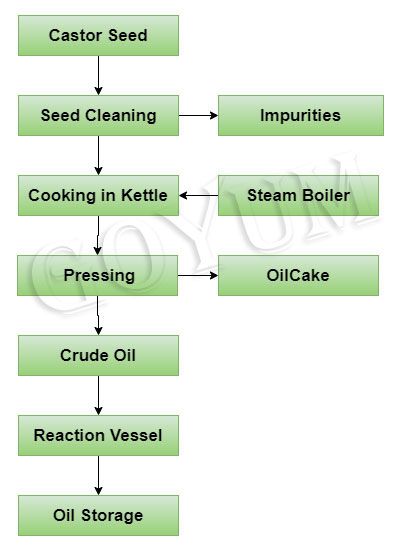
The industrial production of castor oil follows a controlled, multi-stage process designed to ensure consistency and traceability.

1. Raw Material Sourcing
Castor seeds are sourced from established agricultural regions where seed quality, oil content, and storage conditions are monitored.

2. Oil Extraction
Seeds are mechanically pressed to obtain crude castor oil while separating solid by-products.

3. Refining & Degumming
Refining removes gums, free fatty acids, moisture, and impurities to achieve the required clarity, color, and stability for industrial use.

4. Finishing & Filtration
Final filtration and polishing steps prepare the oil for packaging or further chemical processing.

5. Quality Control Stages

  • Incoming raw material inspection

  • In-process monitoring

  • Final batch testing before dispatch

Proprietary conditions, temperatures, or catalysts are not disclosed, while quality outcomes are verified through routine testing.


Key Properties & Technical Characteristics

Castor oil’s performance in formulations depends on a combination of physical and chemical parameters. Each property influences how the oil behaves during processing and end use.

  • Appearance & Physical State – Typically a clear to pale yellow viscous liquid; visual clarity indicates refining effectiveness.

  • Odour – Mild characteristic odour; important for pharmaceutical and cosmetic suitability.

  • Viscosity – Naturally high viscosity contributes to lubricity and film-forming behavior.

  • Specific Gravity – Reflects molecular composition and consistency between batches.

  • Acid Value – Indicates free fatty acid content; lower values suggest better stability.

  • Hydroxyl Value – Represents reactive hydroxyl groups, critical for polymer and resin chemistry.

  • Iodine Value – Measures unsaturation; relevant to oxidation behavior.

  • Saponification Value – Helps formulators assess fatty acid chain length and soap formation.

  • Moisture Content – Excess moisture can affect storage stability and downstream reactions.

  • Unsaponifiable Matter – Monitored to ensure purity.

  • Oxidation Stability – Important for storage and high-temperature applications.

  • Typical Impurities Monitored – Gums, residual solids, and trace metals.

Typical Technical Parameters

Parameter Typical Indication
Appearance Clear, viscous liquid
Key Values Typical range — confirm with Certificate of Analysis (COA)
Purity Indicators Batch-specific, COA verified

Exact numerical values depend on grade and must be confirmed with the COA.


Applications & End-Use Industries

Pharmaceuticals

Use case: Functional excipient and processing aid.
Why it works: Chemical stability and compatibility with active ingredients.
Examples: Capsule shells, ointment bases, drug delivery intermediates.

Cosmetics & Personal Care

Use case: Emollient and dispersing agent.
Why it works: High polarity and moisture-retention characteristics.
Examples: Creams, lotions, soaps, hair oils, lip products.

Lubricants & Greases

Use case: Base oil or additive component.
Why it works: Natural lubricity and high viscosity index.
Examples: Industrial lubricants, greases, metalworking fluids.

Polymers & Resins

Use case: Renewable chemical intermediate.
Why it works: Reactive hydroxyl functionality enables chemical modification.
Examples: Polyurethanes, bio-based resins, elastomers.

Paints, Coatings & Adhesives

Use case: Film-forming and modifying agent.
Why it works: Compatibility with resins and improved flexibility.
Examples: Industrial coatings, inks, adhesive systems.

Specialty & Other Industrial Uses

Use case: Feedstock for downstream castor derivatives.
Why it works: Consistent chemical structure and availability.
Examples: Hydrogenated castor oil, 12-hydroxy stearic acid, esters.


Quality Standards & Compliance Practices

Industrial castor oil is supplied based on testing discipline rather than certification claims. Common practices include:

  • Acid value testing

  • Moisture analysis

  • Appearance and odour checks

  • Batch traceability records

  • Availability of COA, TDS, and MSDS

  • Structured quality systems aligned with generic ISO-style processes


Packaging, Storage & Export Handling

Packaging options commonly include:

  • HDPE drums

  • IBC containers

  • Bulk tankers (where applicable)

Storage guidelines:

  • Store in a cool, dry, and sealed environment

  • Shelf life depends on storage conditions and handling

Export documentation typically includes:

  • Commercial Invoice

  • Packing List

  • Certificate of Analysis (COA)

  • MSDS

  • Bill of Lading

HS Code: Provided on request
MOQ & Lead Time: Subject to grade, packaging, and incoterms; confirm at enquiry


Why Buyers Source Castor Oil from India

India is one of the world’s primary origins for castor seeds and castor oil. Gujarat functions as a major processing and export hub due to established agricultural supply chains, processing infrastructure, port connectivity, and export-oriented compliance systems. These factors support traceability and consistent global supply.


Frequently Asked Questions (FAQs)

1. What are the main industrial uses of castor oil?
Lubricants, polymers, pharmaceuticals, cosmetics, and specialty chemicals.

2. What is the typical shelf life?
Depends on grade and storage conditions.

3. How should castor oil be stored?
In sealed containers, away from heat and moisture.

4. What packaging options are available?
Drums, IBCs, and bulk supply.

5. Is documentation provided with shipments?
COA, MSDS, and standard export documents are available.

6. How do buyers select the right grade?
Based on application requirements and testing parameters.

7. What QC checks are done on incoming batches?
Appearance, moisture, and acid value checks.

8. Are custom specifications possible?
Custom testing or processing may be discussed at enquiry stage.


Technical Enquiries

For technical datasheets, samples, or commercial enquiries, buyers may contact Nova Industries at export@novaind.in.