
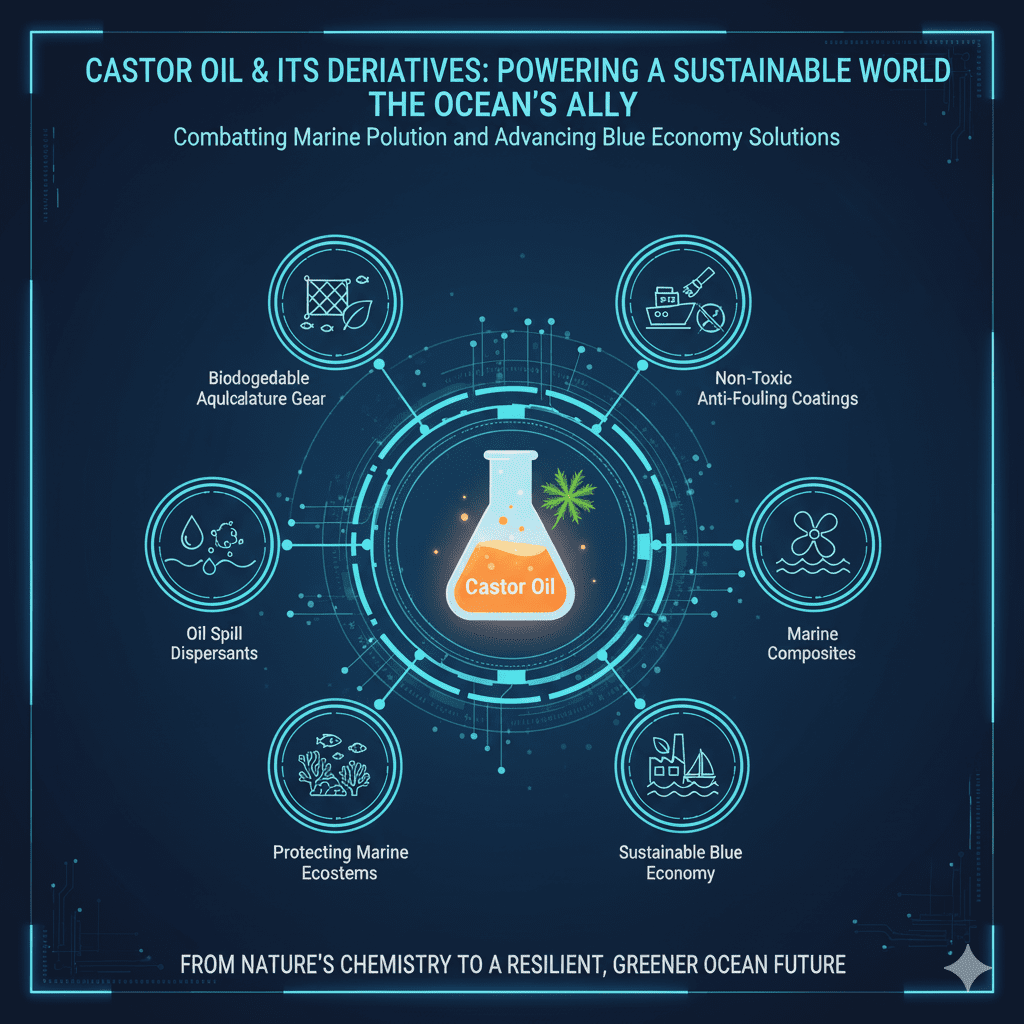
Summary: This article will dive deep into the innovative and crucial role of castor oil derivatives in combatting marine pollution and fostering sustainable practices within the “Blue Economy.” With oceans facing unprecedented threats from plastic waste, chemical runoff, and over-exploitation, there is an urgent need for bio-based solutions. Castor-derived biodegradable plastics are being developed for aquaculture equipment (e.g., fishing gear, oyster racks) to minimize ghost fishing and microplastic release. Furthermore, sustainable, non-toxic anti-fouling coatings for marine vessels and structures, as well as components for environmentally friendly oil spill dispersants, are leveraging castor’s unique chemistry. The article will highlight how these advanced bio-based materials offer viable alternatives to petroleum-derived products, directly reducing ocean pollution, protecting marine ecosystems, and supporting industries like sustainable fishing, shipping, and coastal tourism, positioning castor oil as a powerful ally for ocean health.
Key Points:
- The global crisis of marine plastic pollution, ghost fishing, and chemical contamination.
- Castor-based biodegradable polymers for aquaculture netting, ropes, and other equipment to reduce persistent marine debris.
- Development of non-toxic, bio-based anti-fouling coatings for ship hulls, preventing bio-growth without releasing harmful heavy metals into the ocean.
- Use in environmentally friendly dispersants and absorbents for oil spill response, minimizing ecological damage.
- Potential in marine composites for lightweight and durable vessel components with a lower carbon footprint.
- Advantages: biodegradability, non-toxicity to marine life, renewability, and effective performance in harsh marine environments.
- Contribution to protecting marine biodiversity, supporting sustainable ocean industries, and cleaning up existing pollution.
- Driving innovation for a healthier, more resilient ocean and a truly sustainable Blue Economy.