
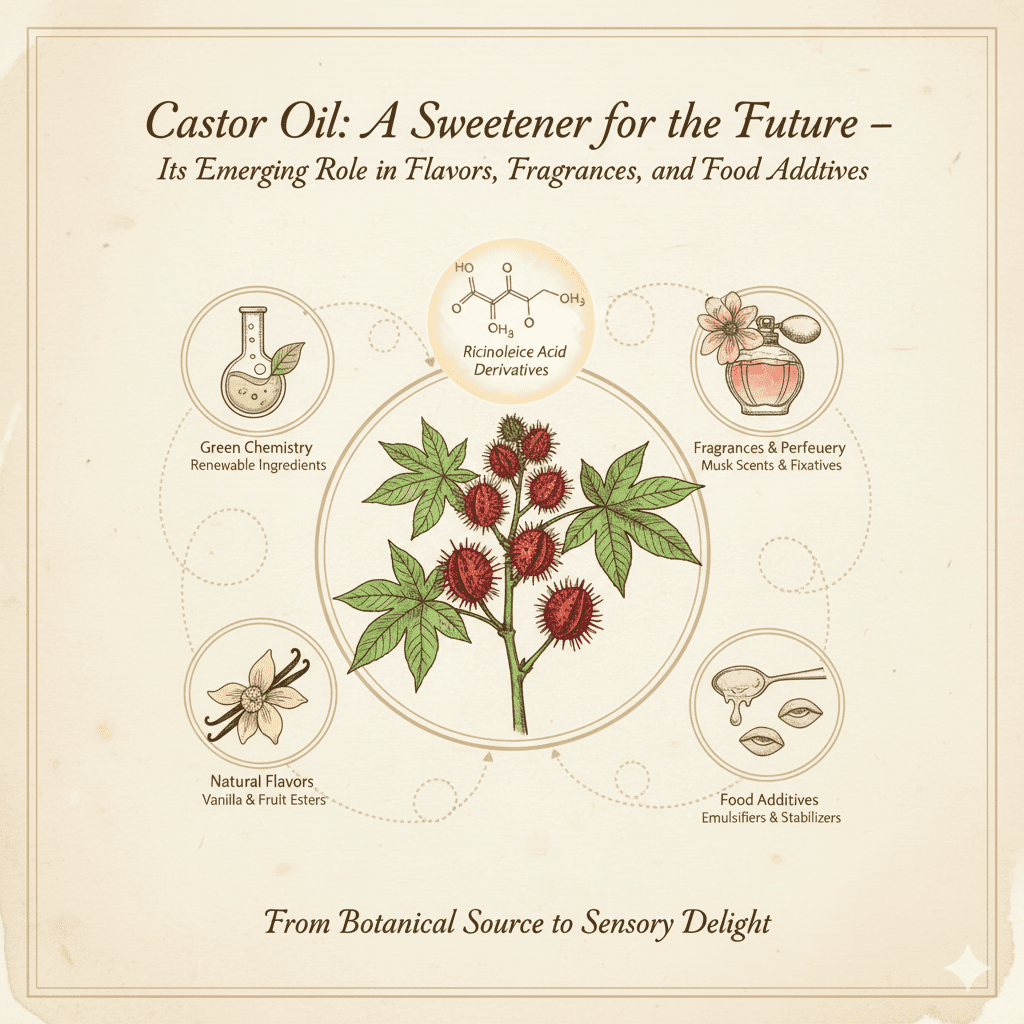
Summary: This article will uncover a fascinating and increasingly relevant application area for castor oil derivatives: their use in the creation of sustainable flavors, fragrances, and specialized food-grade additives. Beyond its well-known industrial uses, castor oil’s unique chemical structure, particularly ricinoleic acid, can be selectively modified to produce a variety of high-value compounds used in the sensory industries. This includes components for natural vanilla flavorings, musk-like scents for perfumes, and even emulsifiers or stabilizers for food and beverage products. The article will highlight how these bio-based ingredients offer a renewable, often more natural, and environmentally responsible alternative to synthetic compounds, meeting growing consumer demand for clean-label and sustainable products in the food, cosmetic, and fragrance sectors.
Key Points:
- The demand for natural and sustainable ingredients in flavors and fragrances.
- Chemical pathways from ricinoleic acid to specific aroma chemicals (e.g., sebacic acid for musk notes, undecylenic acid for various esters).
- Castor-based emulsifiers and surfactants approved for food-grade applications, enhancing texture and stability.
- Examples of natural flavor components derived from castor, such as those mimicking vanilla or fruit notes.
- The role of castor derivatives in “green perfumery” and “natural flavor creation.”
- Advantages: renewability, often lower toxicity profile, consumer preference for natural ingredients.
- Contributing to more sustainable supply chains in consumer goods that directly impact sensory experiences.
