
Castor Oil Derivatives
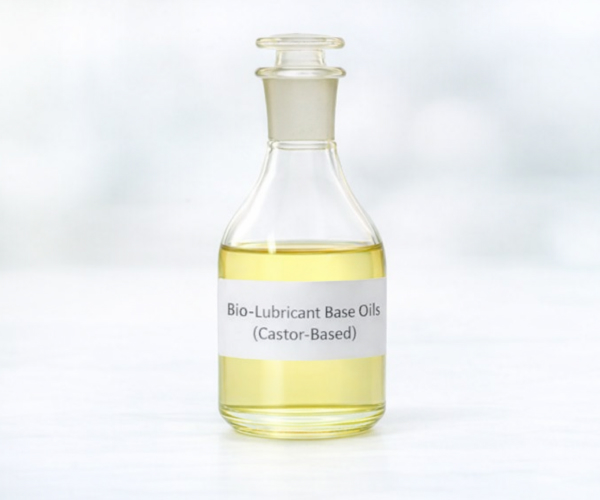
Bio-Lubricant Base Oils (Castor-Based)
- Brand : Nova Industries
- Category : Castor Oil Derivatives
- Sub-Category : Lubricant Base Oils / Bio-Based Fluids
- Compliance Class : Industrial / Lubricant
- Chemical Type : Castor-derived bio-based ester / modified oil fluids
- Grade : Industrial lubricant grade (viscosity-specific grades available)
- Physical Form : Clear to pale yellow viscous liquid
Product Overview
Bio-Lubricant Base Oils (Castor-Based) are renewable lubricant base stocks developed from castor oil and castor-derived intermediates. Naturally rich in ricinoleic structure, castor oil chemistry provides exceptional lubricity, high viscosity index, and strong film strength, making it uniquely suited for lubricant applications where performance and sustainability must coexist.
At Nova Industries, castor-based bio-lubricant base oils are produced through controlled chemical modification and purification processes, allowing tailoring of viscosity, polarity, and thermal behavior. These base oils can be supplied in multiple grades to match the requirements of hydraulic systems, industrial gear oils, metalworking fluids, and specialty lubricant formulations.
Compared to mineral oil base stocks, castor-based bio-lubricants offer superior lubricity, better boundary lubrication, and excellent biodegradability. Buyers select these base oils when they require high-performance lubrication with reduced environmental impact, particularly in sensitive applications such as agriculture, marine, forestry, and food-adjacent industries (as applicable).
Technical Specifications:
| Parameter | Specification / Value |
|---|---|
| Appearance | Clear to pale yellow viscous liquid |
| Odour | Mild |
| Specific Gravity (25°C) | 0.930 – 0.965 g/cm³ |
| Viscosity (40°C) | 64 – 72 cSt (grade-dependent) |
| Viscosity Index | Min 190 |
| Acid Value | <1.0 mg KOH/g |
| Pour Point | -25°C |
| Flash Point | Min 290°C |
| Moisture Content | Max 0.10% |
| Biodegradability | High (OECD 301B basis) |
What the Product Does & Buyer Problems It Solves
What it does
- Acts as a primary lubricant base stock
- Forms strong lubricating films under load
- Provides stable viscosity across temperature ranges
Problems it solves
- Reduces wear and friction compared to mineral oils
- Minimizes lubricant loss due to evaporation
- Supports biodegradable and eco-friendly lubricant formulations
- Improves lubricant performance in boundary and mixed lubrication regimes
Key Properties & Performance Characteristics
Physical & Chemical Characteristics
- Appearance: Clear to pale yellow liquid
- Odor: Mild, characteristic
- Polarity: Naturally high (excellent surface affinity)
- Biodegradability: Readily biodegradable
Functional Performance
- Very high lubricity and film strength
- High viscosity index
- Good thermal and oxidative stability (grade-dependent)
- Excellent load-carrying capability
Stability, Shelf Life & Storage
- Shelf Life: 12–24 months depending on grade
- Storage Conditions:
- Store in clean, sealed containers
- Protect from moisture and prolonged air exposure
- Ambient storage temperature recommended
- Stability: Stable under recommended storage and handling
Manufacturing & Quality Control
Bio-Lubricant Base Oils at Nova Industries are manufactured through castor oil modification, esterification, and finishing processes, followed by filtration and stabilization.
Quality assurance includes
- In-house testing for viscosity, moisture, and appearance
- Batch-wise traceability and documentation
- Performance consistency checks
- Pre-dispatch quality verification
This ensures reliable lubricant performance and long-term supply stability.
Typical Buyer Workflow:
Sample → Lab blending → Performance testing → Bulk supply agreement
Packaging & Supply Information
- Standard Packaging:
- 200 kg HDPE drums
- Bulk Supply: ISO tanks / flexi tanks (volume dependent)
- Minimum Order Quantity (MOQ): Based on grade and packaging
- Lead Time: 7–15 working days
- Custom Viscosity Grades: Available on request
- Sample Availability: Yes, for formulation and testing
Quality, Compliance & Documentation
- Technical Data Sheet (TDS): Available
- Safety Data Sheet (SDS): Available
- Certificate of Analysis (COA): Provided per batch
- Compliance & Certifications:
- ISO-based quality management systems
- REACH documentation support
- Suitable for global industrial lubricant applications
Global Export Readiness
- Export-grade packaging and secure sealing
- Optimized container loading and handling
- Complete export documentation (COA, TDS, SDS, invoices, packing list)
- Consistent batch quality for international buyers
- Importer documentation and customs assistance
We're Here to Help
Drop Us a message Today
Share your requirements and our team will get back to you within 24 hours.



why Us
Why Choose Nova Industries?
A few reasons why we insist you to choose Nova Industries are:
-

Fresh & Pure Products
Sourced and processed with care to retain maximum purity and effectiveness.
-

Export-Ready Standards
Fully compliant with international quality norms, ensuring smooth global shipments.
-

Long Shelf Life
Advanced refining and packaging methods keep our products stable and effective for extended periods.
-

Global Supply Capability
Robust infrastructure and logistics support to serve clients worldwide with on-time delivery.
Your Global Partner for Castor Oil Solutions
Get in touch with us for reliable supply, competitive pricing, and export-ready castor oil and derivatives.
Industry Applications & Use Cases
-
Hydraulic Oils
Used where biodegradability and lubricity are critical, such as agriculture and construction equipment.

-
Industrial & Gear Lubricants
Provides strong film strength and wear protection under heavy loads.

-
Metalworking Fluids
Used as base oil for cutting, forming, and machining lubricants

-
Greases
Acts as a base oil providing high lubricity and thermal stability.

-
Marine & Environment-Sensitive Applications
Ideal for applications where oil leakage risks environmental exposure.

FAQ’s
Buyer Guidance & FAQs
Yes, they are readily biodegradable compared to mineral oils.
Yes, multiple viscosity grades can be supplied based on application.
Yes, castor-based oils provide excellent boundary lubrication and load carrying.
Yes, samples are available for formulation trials.
Testimonials
valuable words from our client
We have been sourcing Hydrogenated Castor Oil and 12HSA from Nova Industries for over three years. Their product consistency and batch quality are highly reliable, which is critical for our manufacturing process. Deliveries are always on time, and their team is very responsive.
Nova Industries stands out for their professionalism and technical understanding. The quality of their castor oil derivatives meets international standards, and their documentation and export support make global sourcing seamless for us.
What we value most is Nova’s consistency and transparency. From inquiry to shipment, the process is smooth and well-managed. Their castor oil grades perform exactly as specified, helping us maintain product quality across our production lines.