
Castor Oil
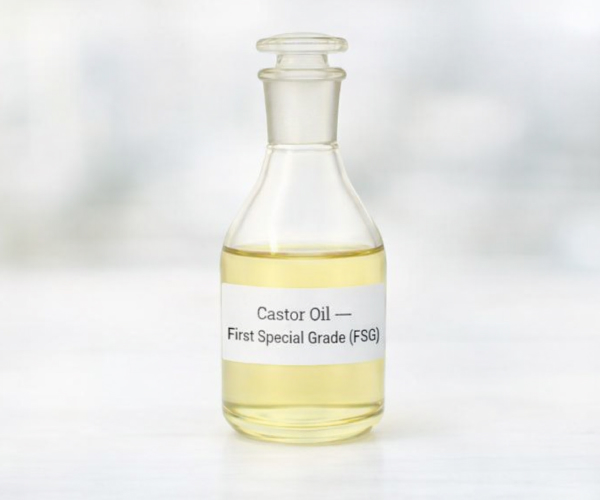
Castor Oil – First Special Grade (FSG)
- Brand: Nova Industries
- Category: Castor Oil
- Sub-Category: Refined / High-Purity Castor Oils
- Compliance Class: Industrial / Cosmetic / Pharmaceutical (as per specification)
- Chemical Type: Refined triglyceride vegetable oil (Ricinus communis)
- Grade: First Special Grade (FSG)
- Physical Form: Clear, pale yellow viscous liquid
Product Overview
Castor Oil – First Special Grade (FSG) is a high-purity refined vegetable oil derived from premium castor seeds through controlled extraction and multi-stage refining. This grade is specifically produced to meet the stringent consistency, clarity, and chemical purity requirements demanded by global industrial buyers.
At Nova Industries, Castor Oil FSG is manufactured under a tightly monitored process that focuses on batch-to-batch uniformity, controlled moisture levels, and stable physicochemical properties. Unlike lower commercial grades, FSG castor oil offers predictable performance, making it suitable for sensitive downstream applications where variability can directly impact product quality or processing efficiency.
FSG grade is widely selected by manufacturers who require a reliable base oil for formulations, reactions, lubrication systems, or finished goods where purity and stability are non-negotiable. Its naturally high ricinoleic acid content gives it excellent lubricity, film strength, and chemical reactivity, while refining removes unwanted impurities that could interfere with performance.
Technical Specifications:
| Parameter | Specification / Value |
|---|---|
| Appearance | Clear, pale yellow viscous liquid |
| Odour | Practically odourless to mild |
| Specific Gravity (25°C) | 0.961 – 0.965 g/cm³ |
| Viscosity (25°C) | 700 – 1,000 cSt |
| Acid Value | Max 2.0 mg KOH/g |
| Saponification Value | 178 – 185 mg KOH/g |
| Iodine Value | 84 – 88 g I₂/100g |
| Hydroxyl Value | 160 – 168 mg KOH/g |
| Moisture Content | Max 0.25% |
| Colour (Gardner) | Max 1.0 (Hazen <= 25) |
| Refractive Index (40°C) | 1.476 – 1.479 |
| Ricinoleic Acid Content | Min 85% |
| Flash Point | Min 229°C |
What the Product Does & Buyer Problems It Solves
What it does
- Acts as a stable base oil for industrial formulations
- Provides consistent viscosity and lubricity
- Serves as a reliable raw material for chemical derivatives
Problems it solves
- Eliminates batch inconsistency seen in lower grades
- Reduces formulation failures caused by moisture or impurities
- Ensures predictable processing in temperature-sensitive applications
- Minimizes downtime caused by raw material variation
Key Properties & Performance Characteristics
Physical & Chemical Characteristics
- Appearance: Clear, pale yellow liquid
- Odor: Mild, characteristic
- Solubility: Insoluble in water, soluble in alcohols and organic solvents
- High natural ricinoleic acid content
Performance Advantages
- Excellent lubricity and film strength
- Stable viscosity across operating conditions
- Good oxidation resistance
- Reliable behavior in both cold and elevated temperatures
Stability, Shelf Life & Storage
- Shelf Life: 12–18 months under recommended storage
- Storage Conditions:
- Store in tightly sealed containers
- Keep away from direct sunlight and moisture
- Ideal storage temperature: ambient, dry conditions
- Stability: Maintains performance characteristics when stored correctly
Manufacturing & Quality Control
Castor Oil FSG at Nova Industries is produced through a vertically integrated manufacturing system, starting from controlled castor seed sourcing to refining and final packing.
Quality assurance includes:
- In-house laboratory testing for each batch
- Monitoring of viscosity, moisture, and purity parameters
- Batch traceability from production to dispatch
- Strict rejection of off-spec material
This approach ensures consistent quality and long-term supply reliability for global buyers.
Buyer Workflow:
Sample → Lab/production trial → Performance validation → Bulk supply contract
Packaging & Supply Information
- Standard Packaging:
- 200 kg HDPE drums (net)
- IBC tanks (on request)
- Bulk Supply: ISO tanks / flexi tanks (subject to order volume)
- MOQ: Depends on packaging type
- Lead Time: Typically 7–15 working days
- Custom Packing: Available based on buyer requirement
- Sample Availability: Yes (for qualification and trials)
Quality, Compliance & Documentation
- Technical Data Sheet (TDS): Available
- Safety Data Sheet (SDS): Available
- Batch COA: Provided with each shipment
- Certifications & Compliance:
- ISO-compliant manufacturing
- REACH-ready for EU exports
- Documentation support for pharma & cosmetic buyers
Global Export Readiness
- Export-grade packaging with palletization
- Suitable for sea, air, and courier shipments
- Full export documentation support (COA, TDS, SDS, invoice, packing list)
- Consistent quality for long-term international contracts
- Support for customs and importer documentation
We're Here to Help
Drop Us a message Today
Share your requirements and our team will get back to you within 24 hours.

why Us
Why Choose Nova Industries?
A few reasons why we insist you to choose Nova Industries are:
-

Fresh & Pure Products
Sourced and processed with care to retain maximum purity and effectiveness.
-

Export-Ready Standards
Fully compliant with international quality norms, ensuring smooth global shipments.
-

Long Shelf Life
Advanced refining and packaging methods keep our products stable and effective for extended periods.
-

Global Supply Capability
Robust infrastructure and logistics support to serve clients worldwide with on-time delivery.
Your Global Partner for Castor Oil Solutions
Get in touch with us for reliable supply, competitive pricing, and export-ready castor oil and derivatives.
Industry Applications & Use Cases
-
Pharmaceutical Industry
Used as a base oil and excipient where consistency and purity are essential for formulation stability.

-
Cosmetics & Personal Care
Preferred in creams, oils, and hair products for its natural emollient properties and refined clarity.

-
Lubricants & Greases
Applied in specialty lubricants where high lubricity and film strength are required.

-
Chemical & Polymer Industry
Used as a raw material for producing hydrogenated castor oil, fatty acids, esters, and specialty chemicals.

FAQ’s
Buyer Guidance & FAQs
Yes, subject to meeting buyer-specific specifications and regulatory requirements.
Yes, samples are available for testing and qualification.
Yes, Nova Industries supplies Castor Oil FSG in bulk quantities with consistent batch quality.
Through in-house testing, batch traceability, and standardized manufacturing controls.
Testimonials
valuable words from our client
We have been sourcing Hydrogenated Castor Oil and 12HSA from Nova Industries for over three years. Their product consistency and batch quality are highly reliable, which is critical for our manufacturing process. Deliveries are always on time, and their team is very responsive.
Nova Industries stands out for their professionalism and technical understanding. The quality of their castor oil derivatives meets international standards, and their documentation and export support make global sourcing seamless for us.
What we value most is Nova’s consistency and transparency. From inquiry to shipment, the process is smooth and well-managed. Their castor oil grades perform exactly as specified, helping us maintain product quality across our production lines.